


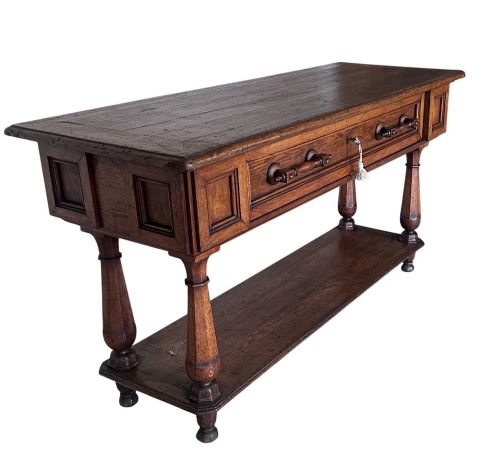
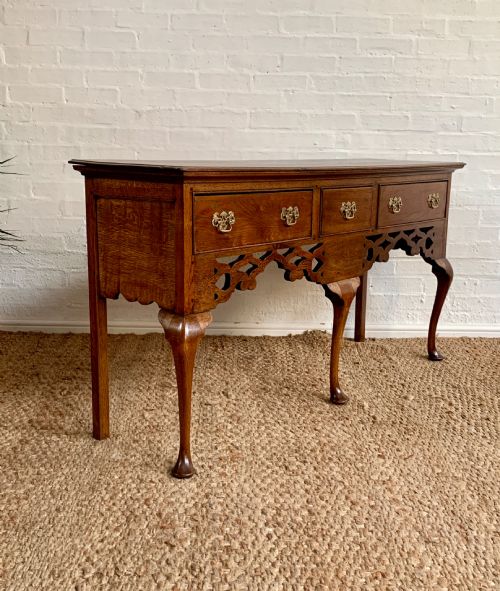
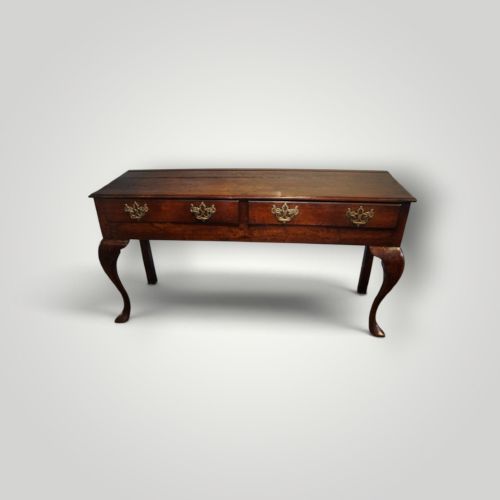
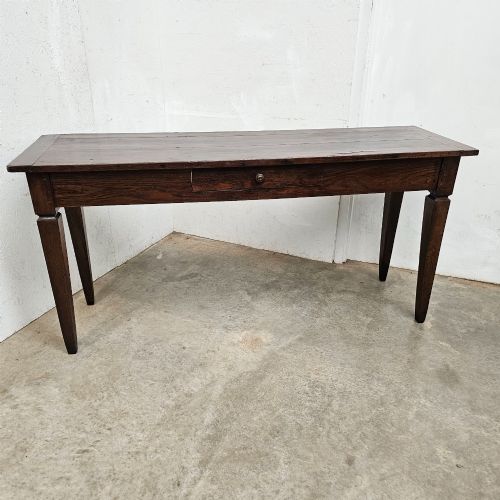
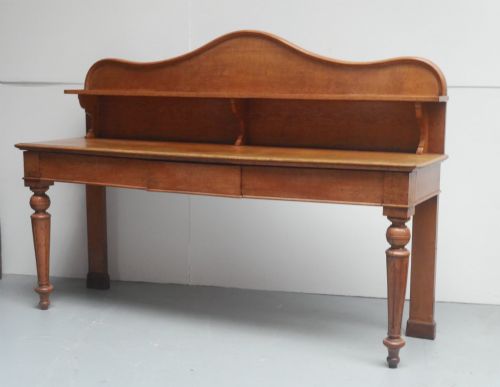
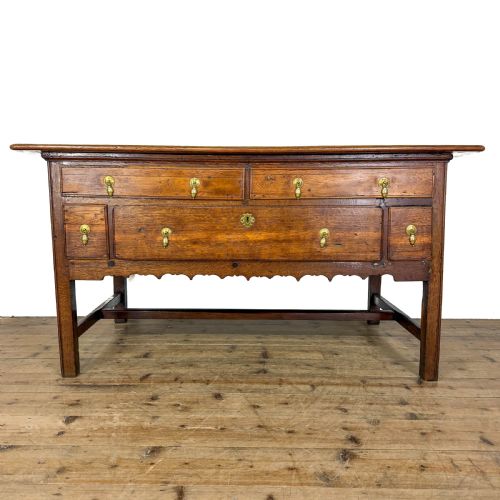
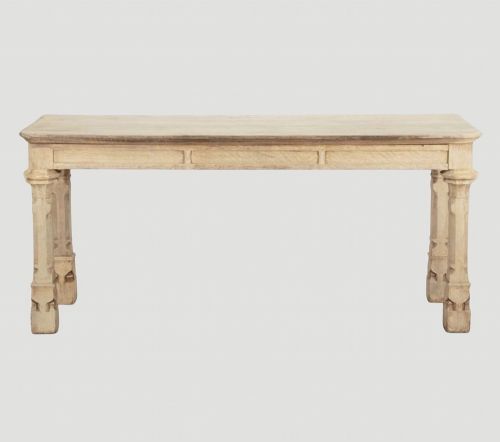
Oak Serving Console
An oak serving console brings practical surface space and centuries of sturdy character to a room.
Oak Serving Console
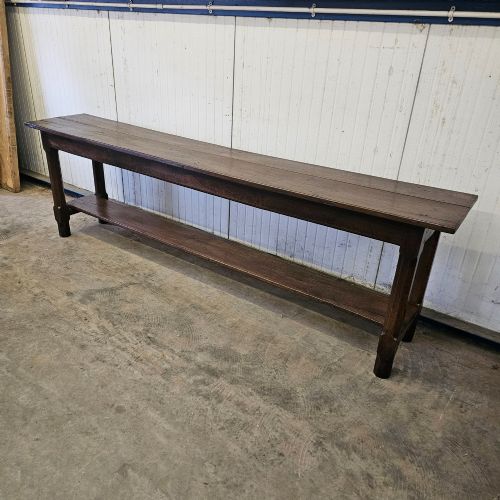
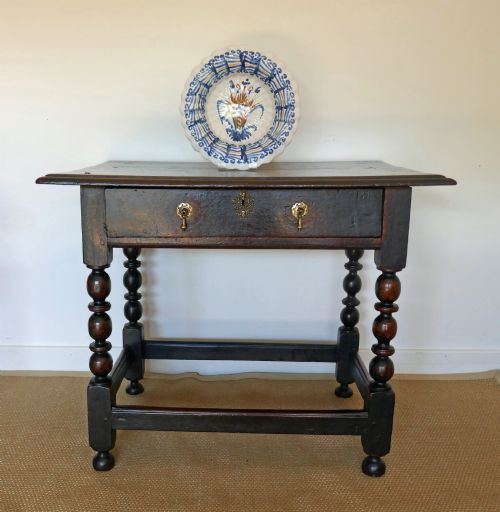
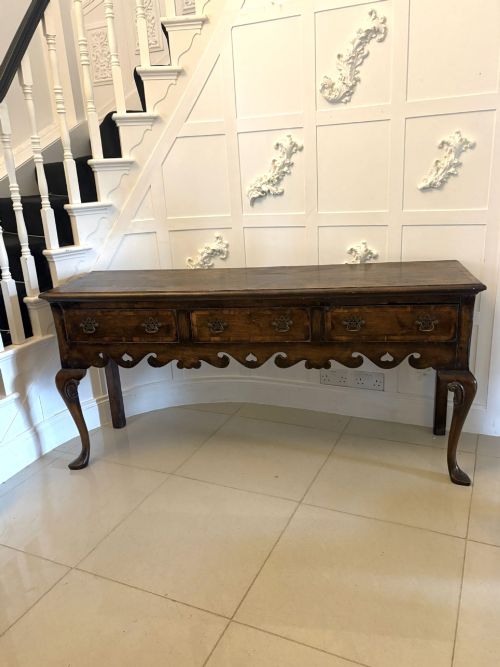
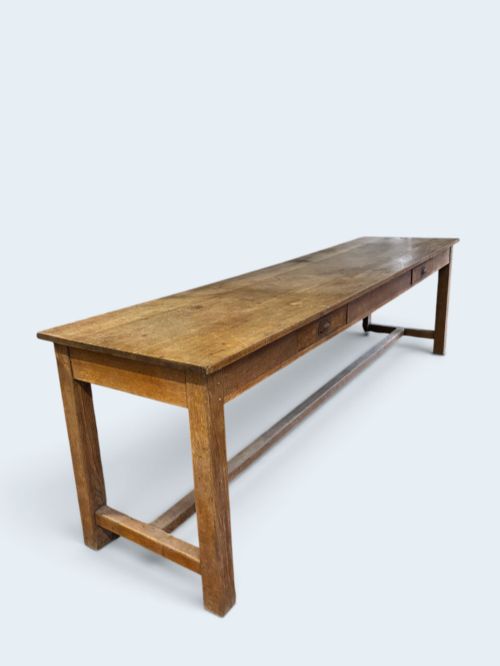
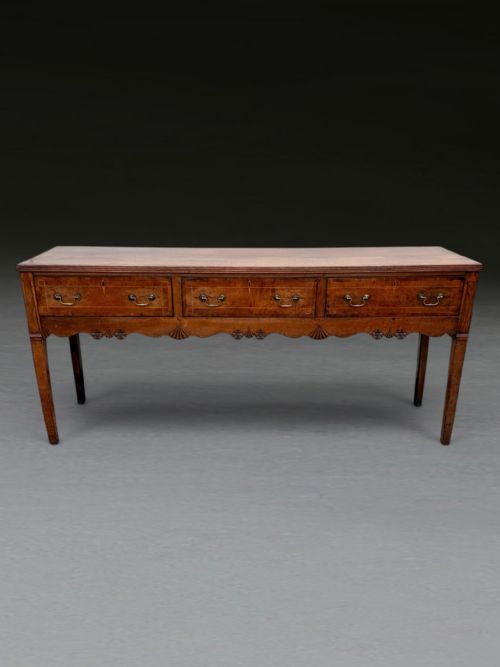
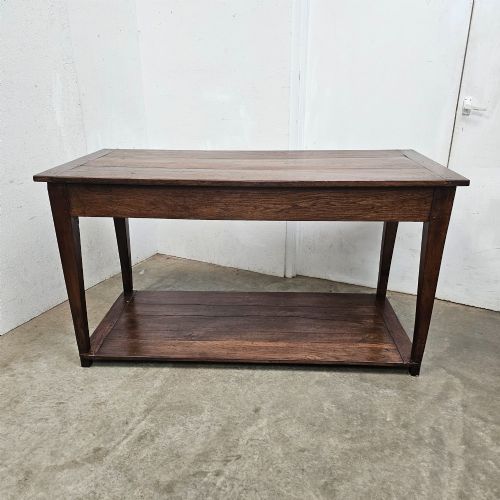
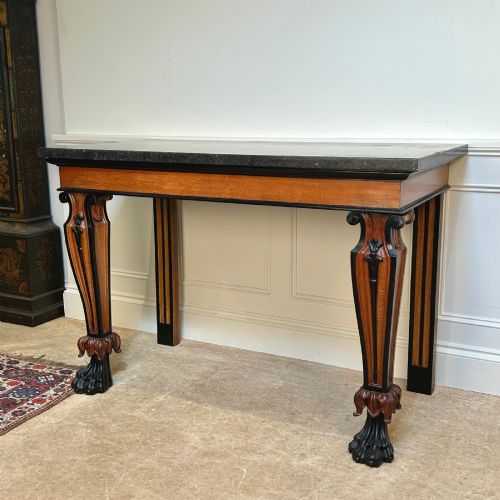
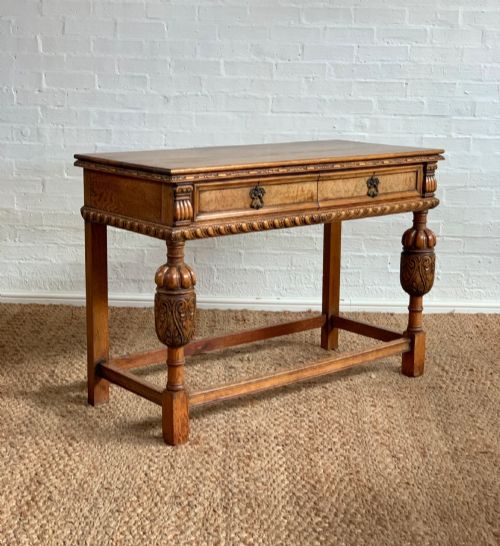
An oak serving console encompasses a broad family of heavy tables, sideboards, dresser bases, and lowboys designed for service and display. When searching for an oak serving console, buyers encounter forms ranging from rustic French harvest tables to formal Georgian and Victorian designs.
The pieces span multiple centuries, with 17th-century vernacular examples sitting alongside 19th-century interpretations and early 20th-century revival pieces. Regional variations emerge clearly, taking in English country pieces, French provincial styles, and Spanish or Flemish furniture.
Primary functions overlap between dining service, hall display, and general storage across multiple drawers or lower tiers. These tables frequently bridge the gap between console, sideboard, and server depending on their height and proportions.
Materials and Construction
Solid oak forms the structural core of these pieces, often paired with secondary woods like pine or walnut in drawer linings and internal framing. Iron and brass hardware appear regularly as drawer pulls, hinges, and structural brackets.
Construction techniques rely on heavy framing, mortise and tenon joints, and occasional carved detailing executed directly into the timber. Bleached finishes and wax treatments alter the natural tone of the oak across different regional traditions and periods.
Oak Serving Console Retail Price Guide 2026
Typical asking prices for oak serving console among the pieces listed under this phrase on Sellingantiques today, from the lower quarter to the upper quarter. They describe what is for sale here now, not the wider market.
Some 19th-century servers throw in a hidden potshelf just in case an impromptu feast breaks out in the hallway.
Judging Quality and Proportion
Quality rests heavily on the integrity of the timber, the depth of the carving, and the balance of proportions between top and supports. Bold, substantial legs and thick top boards indicate a higher tier of construction compared to lighter, more utilitarian builds.
Originality of surface finish and hardware also separates standard pieces from finer examples. Uniform patination and authentic period drawer linings elevate a piece above later adaptations or heavy restorations.
Beresford & Hicks London
The Oak Serving Console Glossary
- Dresser base
- The lower section of a traditional dresser featuring drawers and cupboards, frequently utilised independently as a serving console.
- Lowboy
- A small oak table with one or more tiers of drawers, originating in the late 17th or 18th century.
- Refectory table
- A long, narrow dining or serving table designed for communal use, typically supported by heavy trestles or robust legs.
- Potshelf
- An open lower shelf built into a serving table or dresser to store heavy kitchenware and platters.
- Bobbin turning
- A form of woodturning where the lathe produces a series of rounded, bead-like shapes resembling bobbins along the length of a leg or stretcher.
Oak Serving Console: Frequently Asked Questions
What is an oak serving console?
An oak serving console is a sturdy wooden table or sideboard traditionally used for food preparation, dining service, or hall storage. These pieces combine flat upper surfaces with drawers or lower shelves.
They appear across multiple centuries and regional styles, ranging from rustic French harvest tables to formal English Georgian designs.
How do I date an antique oak table?
Dating relies on examining construction methods, tool marks, joinery, and the style of the carving or turnings. 17th-century pieces often feature heavier framing and pegged joints.
Later Victorian and Edwardian examples introduce machine-cut timber and revival styling that mimics earlier centuries.
Where should I place a serving console?
These tables function well in dining rooms as serving surfaces alongside meals, or in entrance halls for mail and keys. Their narrow profiles suit hallways and corridors.
They also serve as display surfaces for lamps, ceramics, and books in living spaces.
What maintenance does solid oak require?
Solid oak benefits from occasional waxing to nourish the grain and protect the surface from moisture and daily wear. Avoid placing these tables in direct sunlight or near heat sources.
Regular dusting with a soft cloth maintains the natural patination built up over decades.