



Oak Podium
These oak podium pieces combine practical reading surfaces with solid timber construction, offering a functional centrepiece for studies, churches, and reception areas.
Oak Podium
When you search for an oak podium, you are looking at substantial wooden stands designed to hold books, menus, or notes at a comfortable height for reading and presentation. The pieces appearing here span the nineteenth century, nineteen hundred, eighteen ninety, nineteen twenty, and the Victorian era, showcasing a variety of traditional forms.
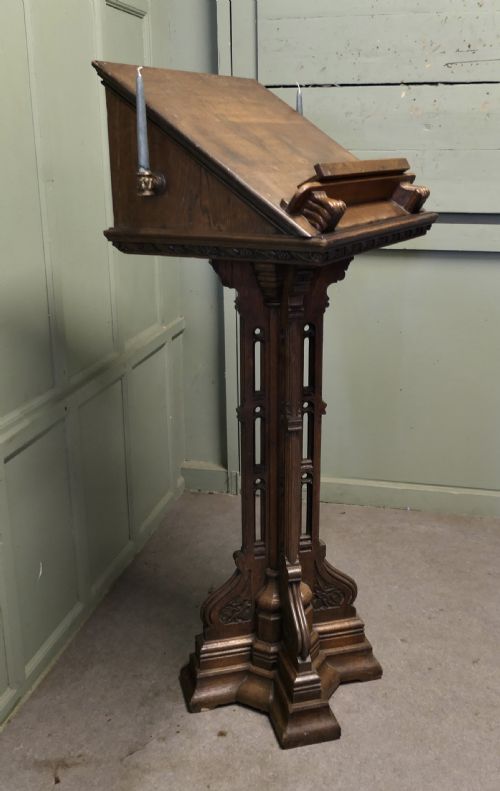
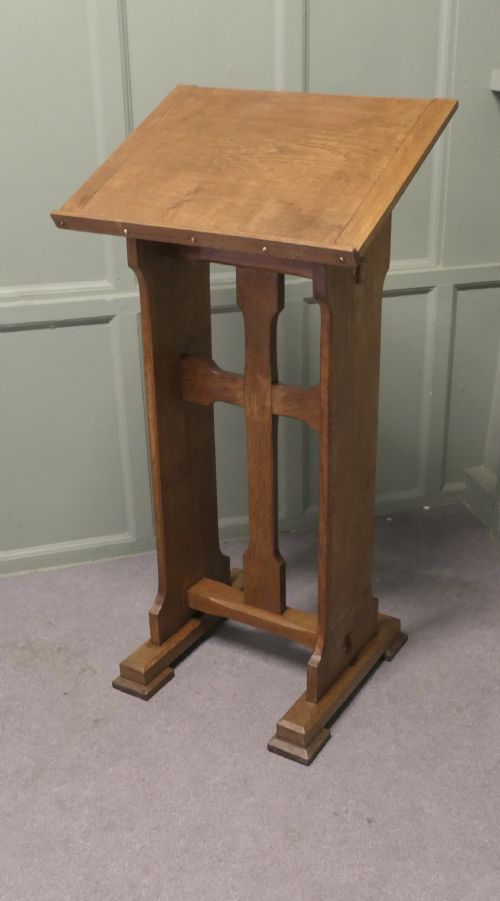
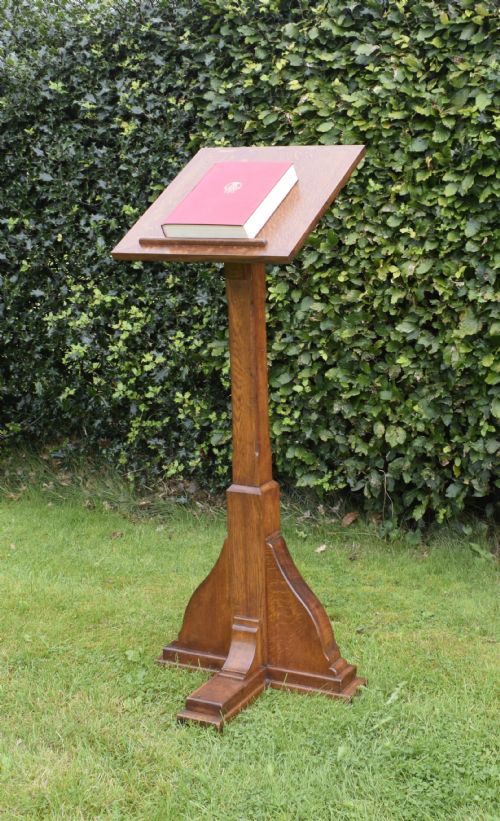
The most common formats you will meet on this page include lecterns, reading desks, reading stands, and book stands, alongside specialised pieces adapted for church use or restaurant reception greeter stations. These functional items frequently incorporate carved detailing and sturdy framing that reflect their period of origin.
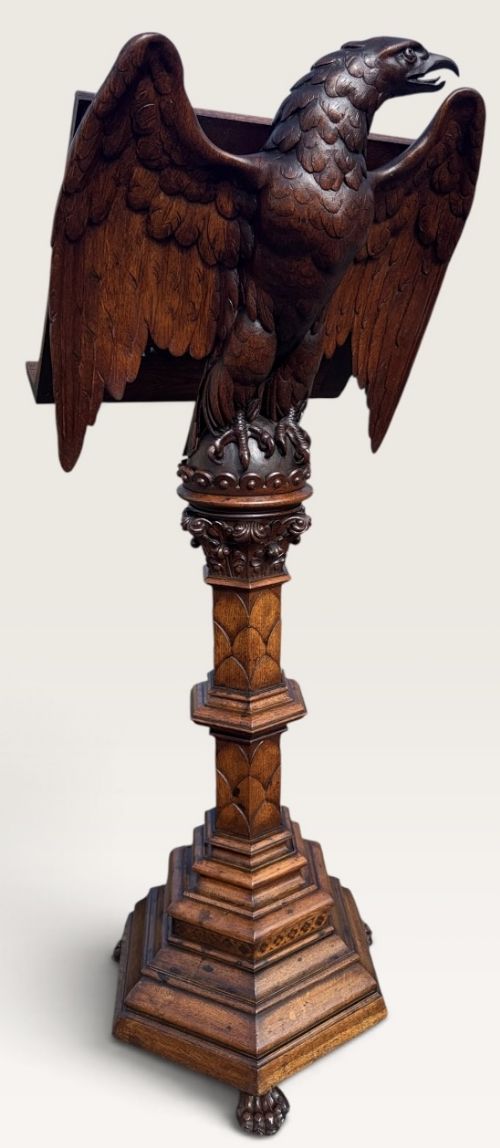
Many examples draw heavily on the Gothic Revival and Arts and Crafts styles, displaying the robust craftsmanship and material honesty characteristic of those movements. Whether configured as a church lectern with an eagle motif or a restaurant reception desk, each piece retains a strong architectural presence.
Materials and construction
Construction relies primarily on solid oak, selected for its durability and prominent grain, sometimes accompanied by secondary elements of mahogany or glass. Timber components are frequently shaped by hand carving, bringing sculptural depth to figures such as eagles and decorative panels.
Metalwork plays a supporting structural and decorative role, with brass work integrated into handles, hinges, or reading ledges. Selected pieces also incorporate electrical lighting elements alongside the traditional woodwork to suit modern reception environments.
Oak Podium Retail Price Guide 2026
Typical asking prices for oak podium among the pieces listed under this phrase on Sellingantiques today, from the lower quarter to the upper quarter. They describe what is for sale here now, not the wider market.
Some reception greeters secretly moonlighted as menu stands before finding new careers greeting diners.
Judging quality in oak podiums
Quality rests heavily on the depth and definition of the carving, distinguishing sharply between crisp, hand-chiselled detailing on figures like eagles and flatter, more perfunctory surface work. The choice of timber also dictates standard, with well-figured golden oak demonstrating superior visual appeal over plain equivalents.
Structural integrity and the integration of secondary materials, such as finely fitted brass work, separate standard utility pieces from finer decorative examples. The cohesion of period design elements, particularly within Gothic Revival and Arts and Crafts pieces, determines the overall success of the object.
The Oak Podium Glossary
- Lectern
- A tall desk with a slanted top designed to hold a book or notes for someone reading standing up. These often feature decorative carving and solid timber construction.
- Gothic Revival
- An architectural and decorative style drawing inspiration from medieval forms, featuring pointed arches, tracery, and rich ornamentation. Pieces in this style often display dramatic proportions.
- Arts and Crafts
- A design movement valuing traditional craftsmanship, simple forms, and visible construction methods using native woods like oak. It prioritises honest materials and utility.
- Reading Stand
- A smaller adjustable or fixed support designed to hold texts at an angle for easier viewing. They frequently incorporate brass adjustments or hinged ledges.
Oak Podium: Frequently Asked Questions
What is an oak podium used for?
These pieces function primarily as elevated surfaces for reading texts, holding menus, or greeting visitors in public spaces. Historically designed for churches or studies, many examples now serve dual purposes in commercial hospitality environments.
Their solid construction provides a stable platform that supports heavy volumes or electronic devices while maintaining a formal aesthetic.
How do I date an oak podium?
Dating relies on observing stylistic markers such as Gothic Revival motifs or Arts and Crafts construction details, alongside the specific patination of the oak. Nineteenth-century examples often feature heavier hand carving and traditional joinery methods.
Hardware elements like brass work also offer clues to the manufacturing period, helping distinguish Victorian pieces from later early-twentieth-century designs.
How do I care for antique oak?
Maintain the timber by keeping it away from direct heat sources and dramatic humidity shifts that can cause the wood to split. Regular dusting with a soft, dry cloth preserves the finish without building up unwanted residues.
Applying a traditional beeswax occasionally helps nourish the grain and protects the surface from everyday wear and tear.
Where do eagle lecterns come from?
Eagle lecterns have a long history rooted in ecclesiastical tradition, where the bird symbolises Saint John the Evangelist or the spread of the Gospel. Carvers utilised the majestic form to create dramatic focal points in church interiors.
Over time, these large carved figures became sought-after examples of nineteenth-century woodworking skill, appreciated for their intricate detail and commanding presence.