

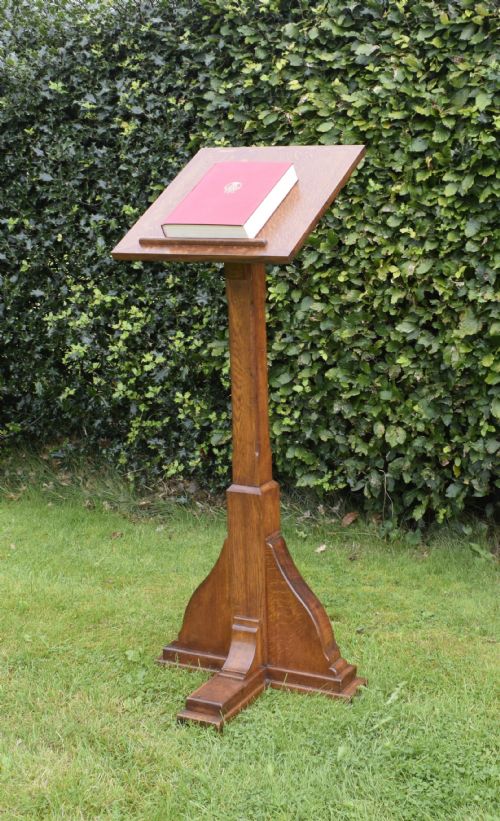


Oak Podium Stand
An oak podium stand brings architectural presence and utility into a room, serving as a striking focal point for reading or greeting.
Oak Podium Stand
An oak podium stand encompasses pieces designed for reading and reception work, drawing heavily from ecclesiastical and institutional forms. Buyers searching for an oak podium stand encounter sturdy reading desks, church lecterns, and restaurant reception greeter stations.
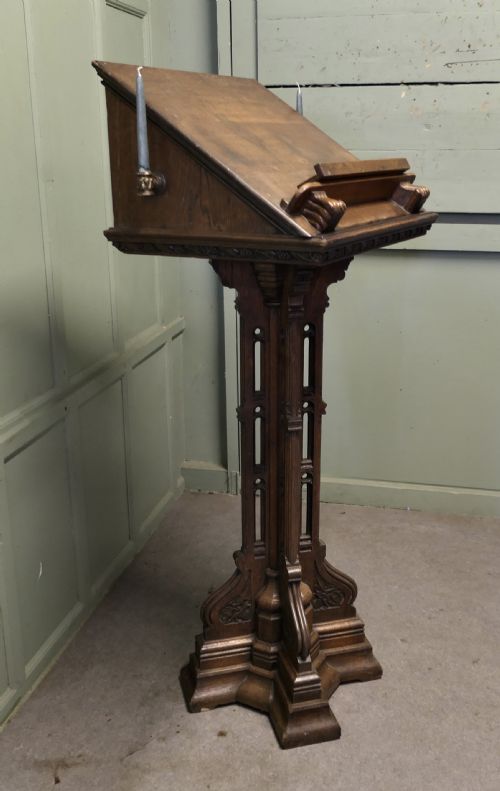
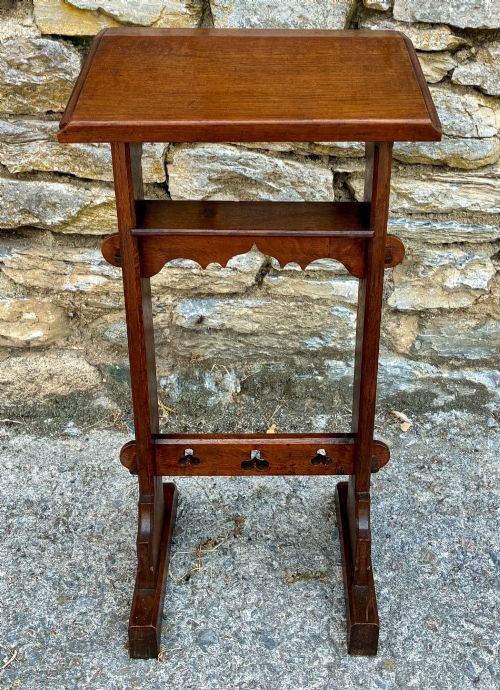
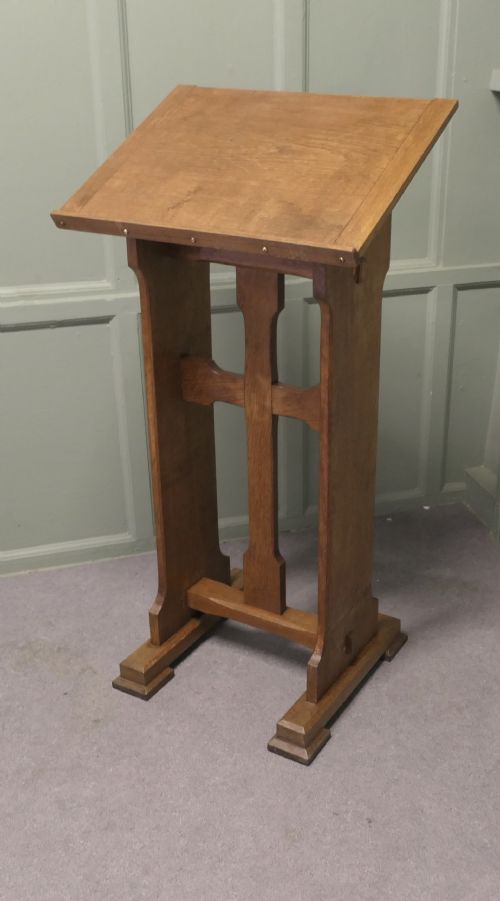
The pieces on this page span the nineteenth century, the Victorian era, and the early twentieth century, including the nineteen-twenties. These works frequently adopt distinct design vocabularies such as Gothic Revival and Arts and Crafts.
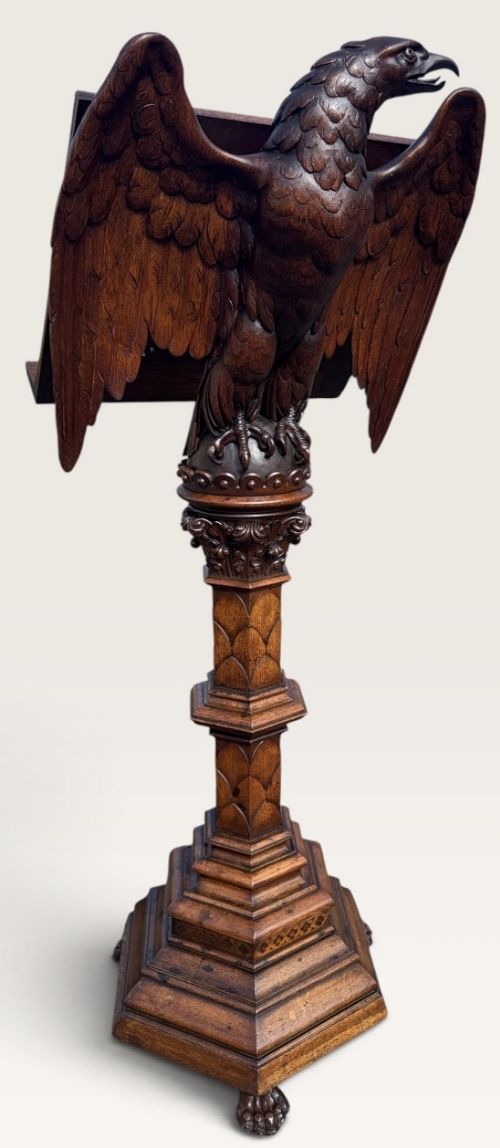
Forms range from small church lecterns to large carved eagle lecterns and illuminated reception stations. Oak remains the primary timber across these functional items, supplemented by occasional brass fittings and glass elements.
How they were made
Maker construction relies heavily on solid oak, shaped through traditional woodworking and deep carving techniques to achieve ornate surface decoration. Artisans built these stands to withstand heavy daily use in churches, restaurants, and libraries.
Metalwork integration appears through brass work, providing structural support, illumination fittings, or decorative accents on reading stands and reception stations. Glass elements also feature in specific illuminated configurations.
Oak Podium Stand Retail Price Guide 2026
Typical asking prices for oak podium stand among the pieces listed under this phrase on Sellingantiques today, from the lower quarter to the upper quarter. They describe what is for sale here now, not the wider market.
Styles represented across the selection include Gothic Revival alongside Arts and Crafts and Victorian design movements.
What varies in quality
The depth and execution of carved ornamentation distinguish finer examples from plain utility pieces, particularly on Gothic Revival and figural pieces like eagle lecterns. Crisp hand-chiselled details show superior craftsmanship compared to mechanical production.
The integration of secondary materials such as brass work and integrated lighting alters the sophistication of the station. Cohesion between the timber frame and functional hardware dictates the overall success of the piece.
The Oak Podium Stand Glossary
- Lectern
- A tall stand with a slanted top designed to hold a book or notes for a speaker. These often double as reading podiums and church furniture.
- Gothic Revival
- An architectural and decorative style drawing on medieval forms, featuring pointed arches, tracery, and heavy carving. It appears frequently on nineteenth-century ecclesiastical stands.
- Arts and Crafts
- A design movement prioritising traditional craftsmanship, visible grain, and simple honest construction. Pieces in this style often display golden oak tones.
- Brass work
- Metal components made from an alloy of copper and zinc used for hinges, reading ledges, or light fittings attached to the stand.
Oak Podium Stand: Frequently Asked Questions
What is an oak podium stand used for?
These stands serve as functional furniture for holding books, notes, or menus during reading and public speaking.
They also function as reception greeter stations in hospitality settings or architectural display pieces in home studies.
How do I date an oak podium stand?
Dating relies on stylistic markers such as Gothic Revival tracery, Arts and Crafts simplicity, or Victorian proportions.
Material choices, construction methods, and the presence of period brass work help narrow down the decade of manufacture.
Are these pieces suitable for modern interiors?
The warm timber tones and solid construction allow these stands to anchor contemporary spaces as statement furniture.
They integrate well into studies, libraries, and large hallways as functional reading desks or greeting points.
What styles are common in these stands?
Gothic Revival and Arts and Crafts dominate the stylistic landscape of these functional pieces.
Other items reflect general Victorian craftsmanship with straightforward joinery and practical desk surfaces.