
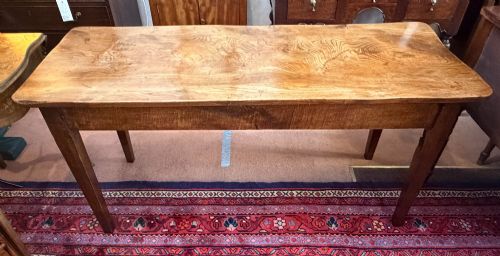
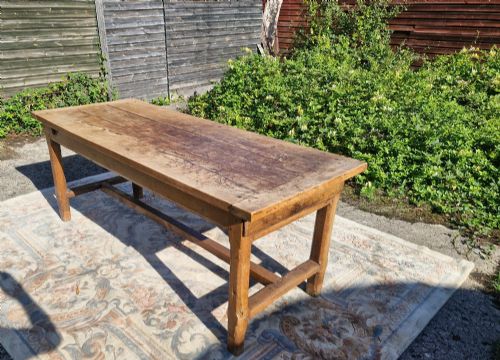
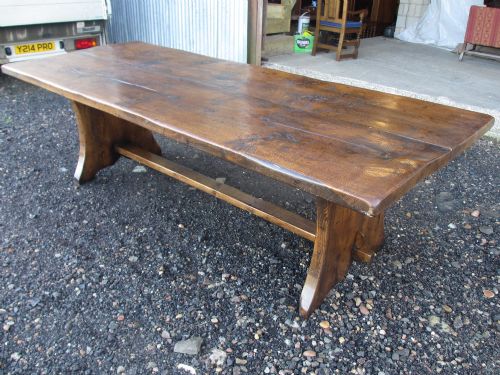
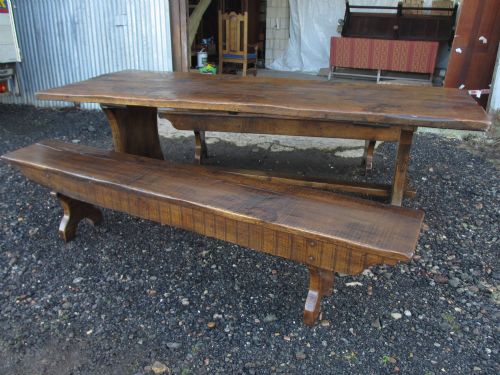
Oak Plank Dining Table
An oak plank dining table brings tactile timber grain and centuries of utility straight into the heart of a modern home.
Oak Plank Dining Table
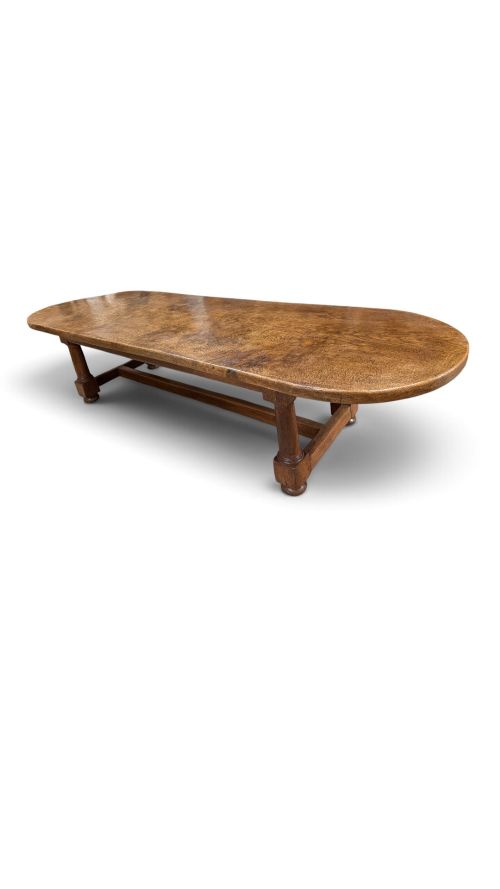
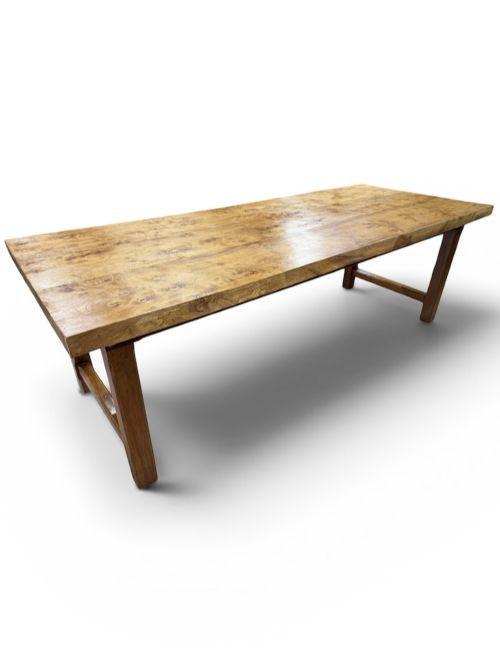
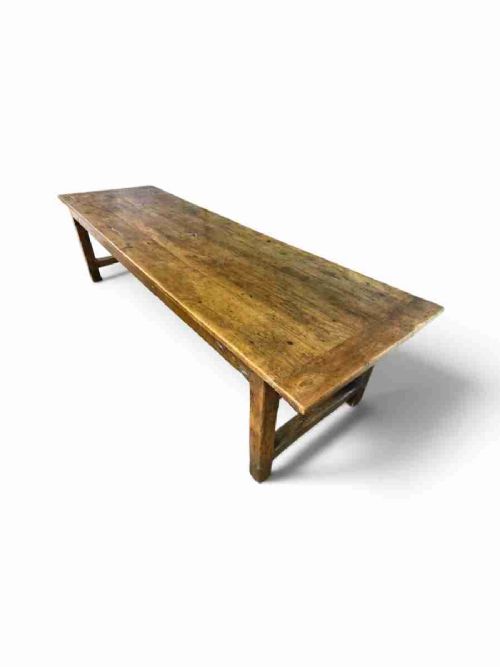
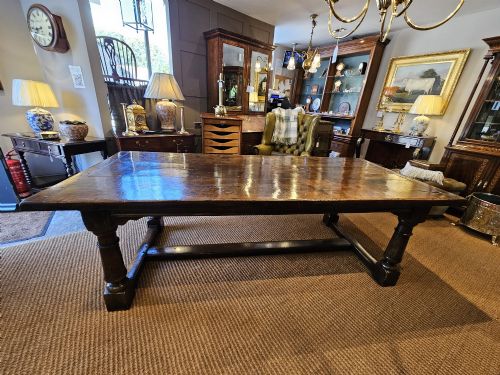
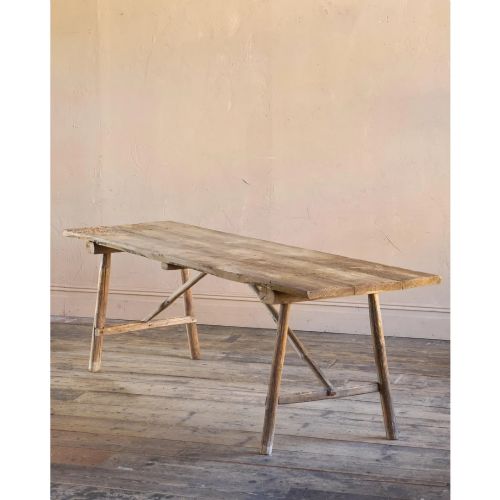
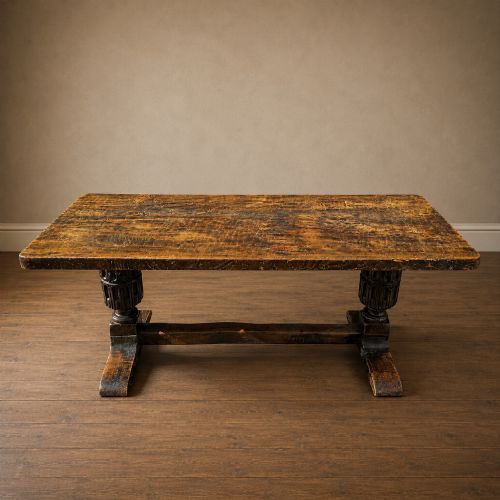
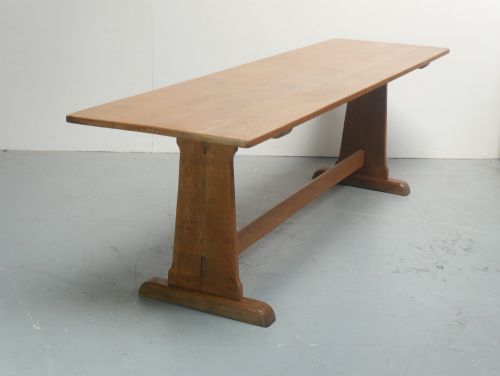
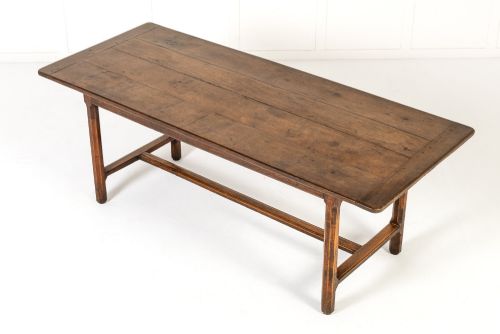
An oak plank dining table is a robust piece built for communal dining, often stretching to accommodate large gatherings with ease. Buyers searching this phrase typically encounter sturdy refectory or farmhouse forms spanning from the seventeenth century through to the early twentieth century.
The heavy timber surfaces show the natural character of domestic wood, sometimes utilising secondary boards of elm or fruitwood for contrast. French and English country styles dominate the selection, bringing honest proportions and practical construction to everyday dining spaces.
Materials and construction
Makers relied primarily on solid domestic timber, joining thick planks with sturdy cross braces and pegged joints rather than modern fasteners. Iron brackets and stretchers occasionally reinforced the structural frame to support heavy daily use in kitchens and halls.
The surfaces were finished by hand, leaving tool marks and natural grain patterns visible across the timber top. Secondary woods such as beech or pine were sometimes introduced for structural legs or internal framing.
Some provincial kitchen examples retain concealed bread slides underneath, ready for bakers who needed an extra surface close at hand.
Factors of quality
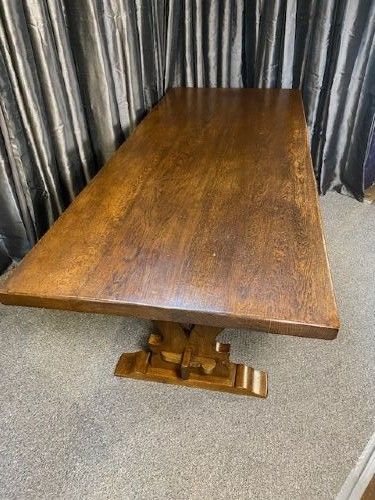
The calibre of an oak plank dining table rests on the thickness of the top boards and the integrity of the original joins. Single or double plank surfaces cut from wide timber denote superior standing compared to multi-board tops.
Proportion and structural balance dictate the visual success of the piece, with well-turned legs and substantial stretchers elevating the standard of craftsmanship. The retention of original surface patination without aggressive intervention preserves the authentic character of the wood.
Heals
The Oak Plank Dining Table Glossary
- Refectory table
- A long, narrow dining table originally designed for communal dining halls in monasteries and large estates. They typically feature heavy legs joined by low floor stretchers for stability.
- Plank top
- A table surface constructed from boards laid side by side, often showcasing the natural width and grain of the timber. Single and double plank versions are particularly prized for their unbroken expanses of wood.
- Bread slide
- A pull-out wooden board integrated beneath the tabletop, historically used for slicing bread or expanding workspace in provincial kitchens. They appear frequently on French country tables.
- Gateleg table
- A drop-leaf table featuring hinged flaps supported by swing-out legs that pivot like a gate. This design allowed furniture to be folded down and moved against a wall when not in use.
Oak Plank Dining Table: Frequently Asked Questions
How do I care for a plank top?
Clean the surface simply with a damp cloth and dry it immediately to protect the historic timber. Avoid harsh chemical polishes that can break down the natural wax patination built up over generations.
Applying a traditional beeswax periodically nourishes the wood and maintains a soft lustre without sealing the grain completely.
Are these tables suitable for daily use?
These pieces were built for active kitchens and dining rooms from their inception, making them exceptionally durable for modern family life. The sturdy construction handles regular meals and gatherings without issue.
Existing marks and dings acquired over the centuries mean new daily use simply adds to the ongoing history of the timber.
How do I determine the period?
Examine the underframe construction, tool marks, and joinery methods to gauge the age of the table. Hand-pegged joints and wide single planks often point towards earlier craftsmanship.
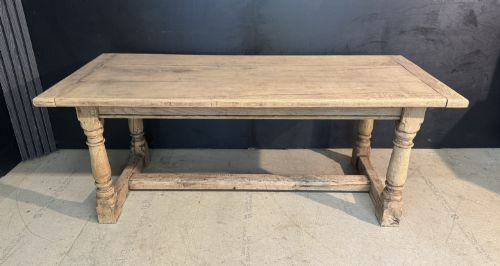
Hardware details like turned baluster legs or H stretchers also provide clear stylistic clues linking pieces to Georgian, Victorian, or earlier eras.
What is a refectory base?
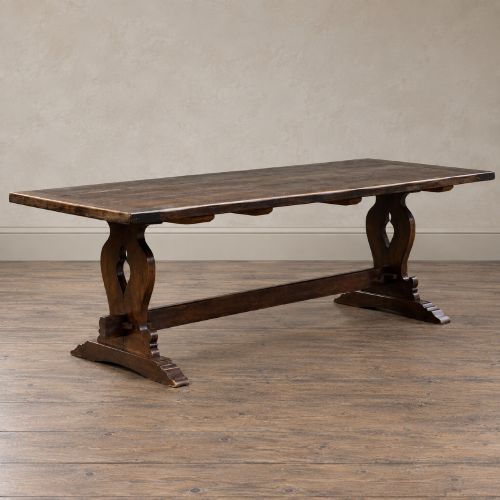
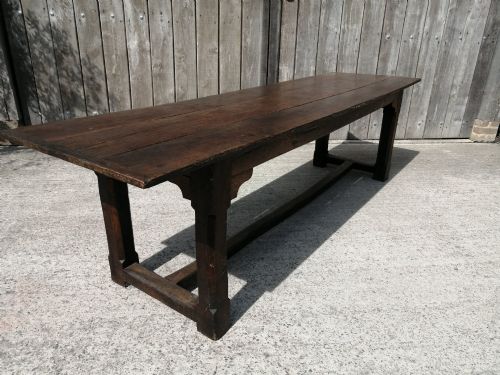
A refectory base typically consists of four legs connected near the floor by horizontal wooden stretchers that add rigidity. Trestle ends are another common variation found on these long dining formats.
This arrangement ensures ample legroom along the sides while keeping the heavy timber top completely stable during use.