


Oak Office Desk Furniture
Solid timber and practical pigeonholes define oak office desk furniture, built for serious work across Victorian and Edwardian rooms.
Oak Office Desk Furniture
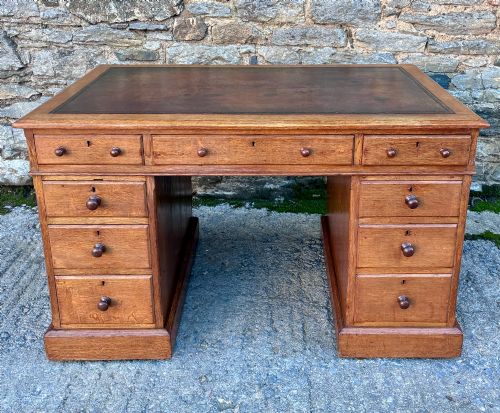
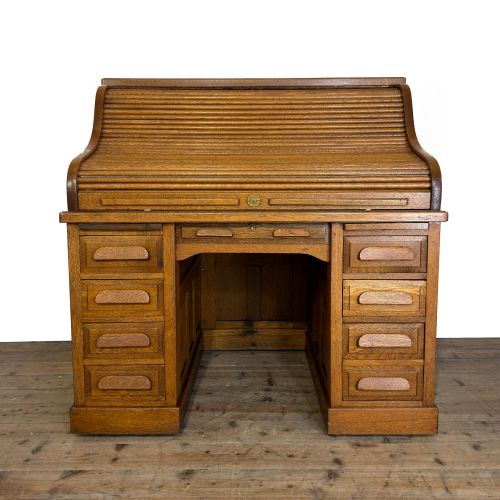
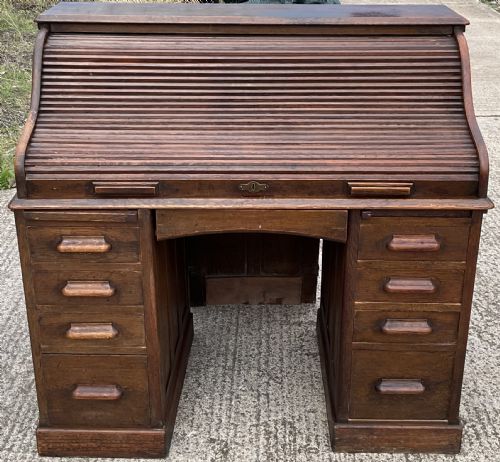
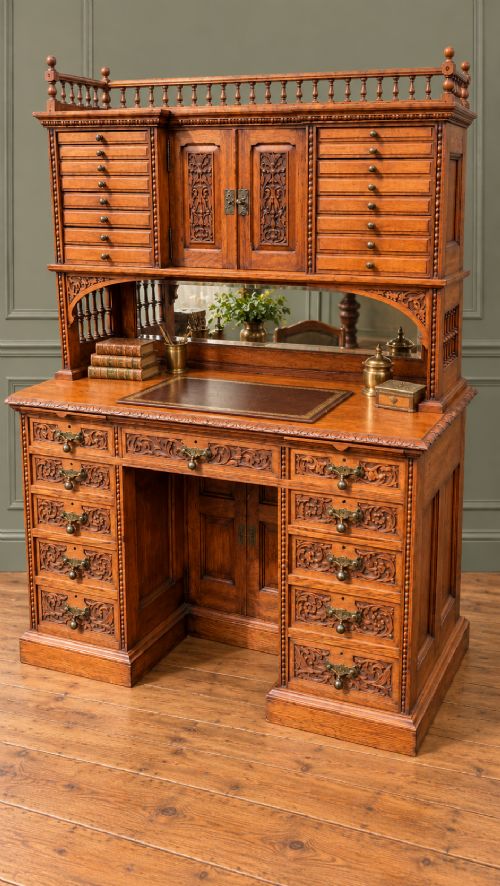
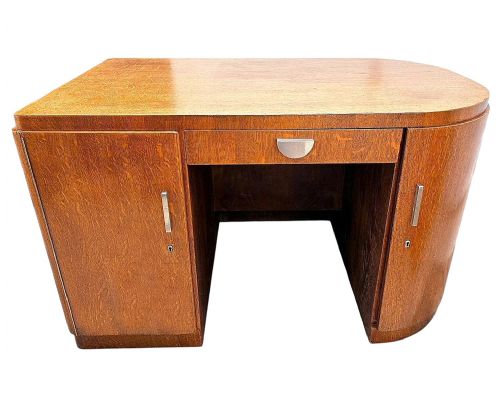
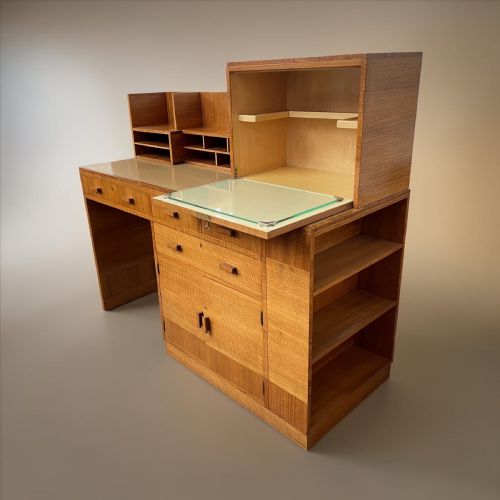
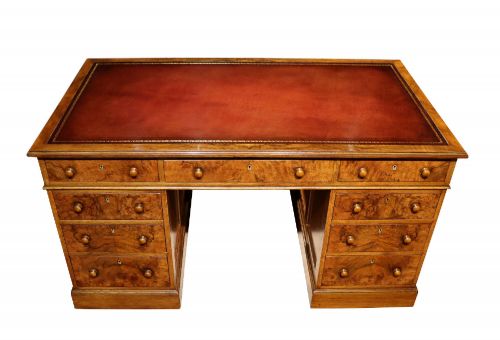
Oak office desk furniture centres on substantial partners desks, pedestal writing tables, and enclosed roll-top models designed for heavy administrative use. These pieces emerge chiefly from Victorian and Edwardian workshops, alongside later interwar Art Deco designs.
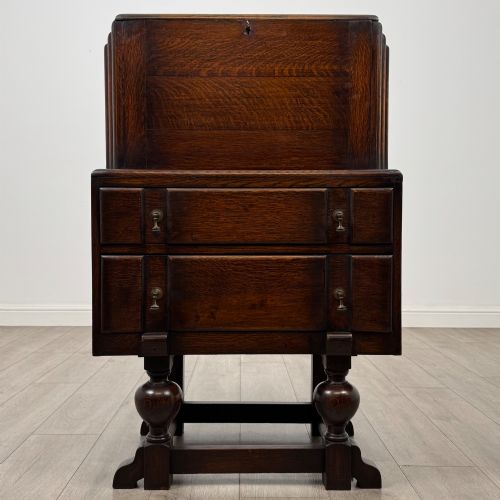
Buyers frequently encounter pedestal desks and writing tables fitted with multiple drawers, alongside bureau bookcases and specialised filing cabinets. The selection spans straightforward country house utility to grand civic commissions.
Origins range from large London retailers to provincial cabinet makers, utilising domestic timber and robust construction methods built to last.
Materials and Technique
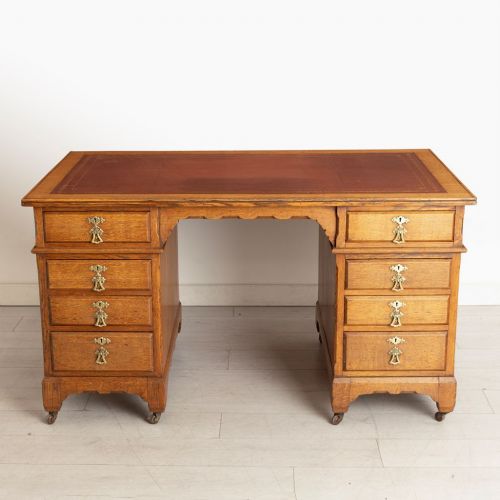
Solid oak and quarter-sawn oak form the primary structure of these desks, frequently complemented by inset leather writing surfaces and brass campaign handles. Secondary timbers like mahogany or ash appear in drawer linings and internal compartments.
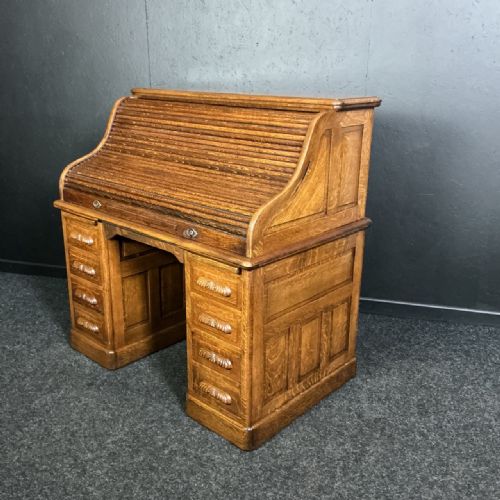
Joinery relies on traditional dovetailed drawers and panelled construction, while roll-top variants incorporate flexible tambour slats running in channeled tracks. Hardware typically consists of cast brass or iron pulls, key escutcheons, and swivel mechanisms on matching desk chairs.
Oak Office Desk Furniture Retail Price Guide 2026
Typical asking prices for oak office desk furniture among the pieces listed under this phrase on Sellingantiques today, from the lower quarter to the upper quarter. They describe what is for sale here now, not the wider market.
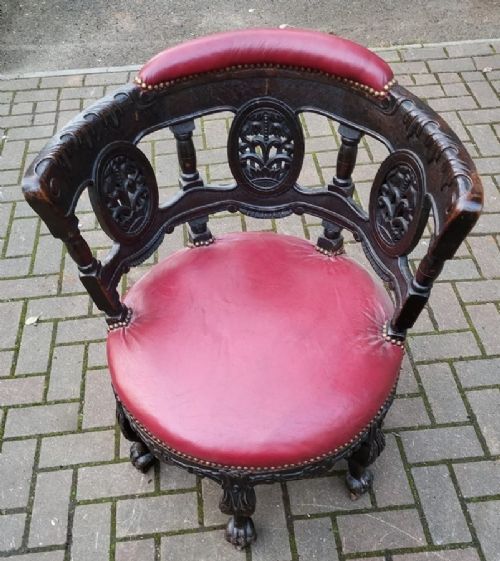
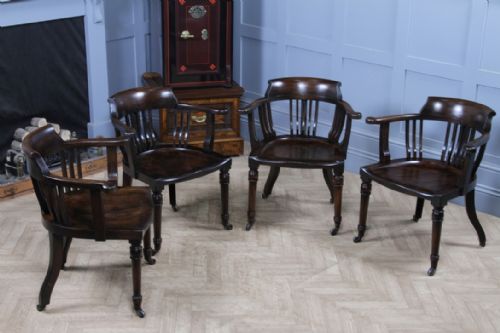
Smoker's bow armchairs frequently join these desks, offering sturdy seating for long hours of administrative work.
Grading Quality
Quality rests upon the selection of timber figure, particularly quarter-sawn oak showing distinct medullary rays, combined with the weight and integrity of the internal framing. Substantial partners desks with panelled backs demonstrate superior construction compared to simpler single-sided writing tables.
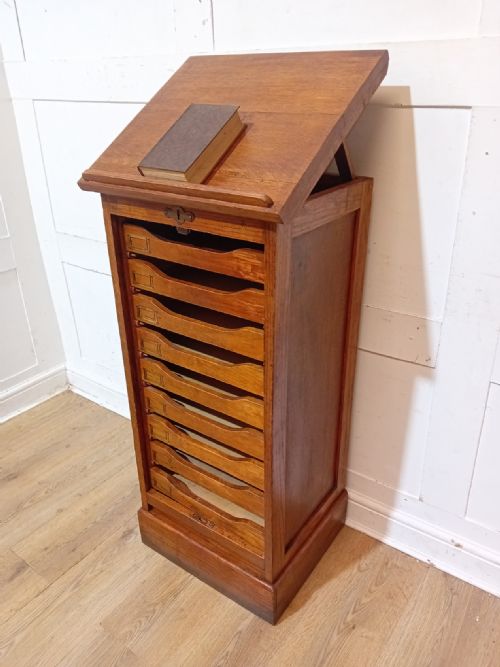
The execution of fitted interiors - such as secret compartments, pigeonholes, and panelled tambour doors - separates standard commercial production from bespoke cabinet work made for civic offices or estate managers.
S&H Jewell·Heal's·Jenners·Simpsons of Kendall·Maples of London and Paris
The Oak Office Desk Furniture Glossary
- Partners desk
- A large double-sided desk designed for two people to work opposite each other, featuring cupboards or drawers on both flanks.
- Roll-top desk
- A writing desk featuring a flexible tambour shutter that pulls down from the back to conceal the pigeonholes and drawers.
- Pedestal desk
- A heavy writing table supported by two banks of small drawers reaching down to the floor.
- Tambour
- A flexible shutter made of narrow wooden slats glued to a canvas backing, allowing it to slide around a curved track.
- Quarter-sawn oak
- Timber cut radially from the log, producing a distinct striped grain pattern known as medullary rays.
Oak Office Desk Furniture: Frequently Asked Questions
How do I care for a leather desk top?
Apply a neutral leather cream sparingly with a soft cloth to nourish the hide and prevent drying or cracking.
Avoid placing hot cups directly on the leather and keep the desk away from direct sunlight to preserve the colour.
Can I dismantle a large partners desk?
Most pedestal and partners desks separate into three main sections: the two drawer pedestals and the heavy top.
Unscrew any internal fixings beneath the top before attempting to lift the components apart with help.
What is the difference between a pedestal desk and a writing table?
Pedestal desks feature two solid banks of drawers supporting the top, offering substantial storage capacity on both sides.
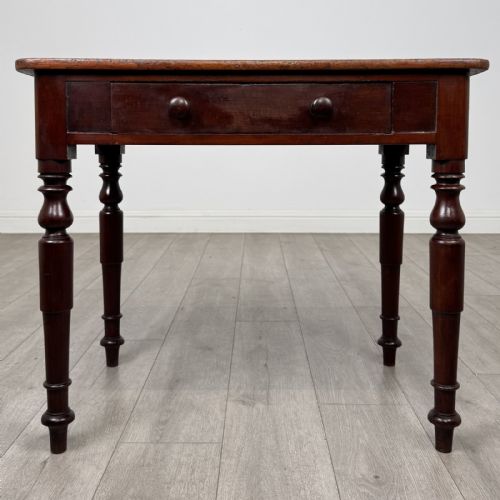
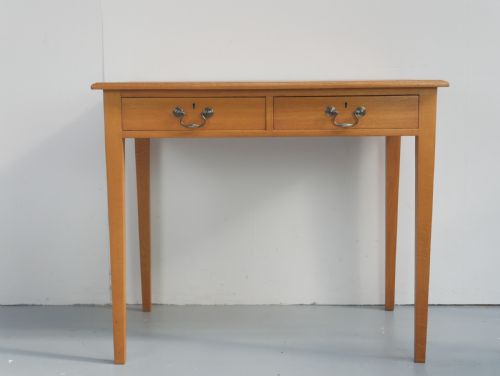
Writing tables rest on four legs with a shallow drawer frieze beneath the top, presenting a lighter profile.
How do I maintain oak furniture?
Dust regularly with a dry lint-free cloth and apply a traditional beeswax polish occasionally to feed the timber.
Keep the wood away from extreme temperature fluctuations and direct heat sources to prevent warping.