

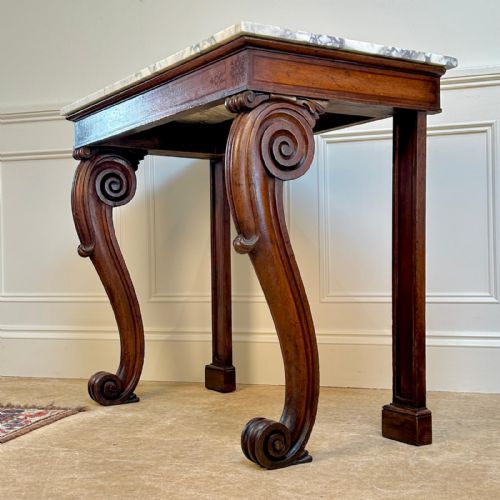


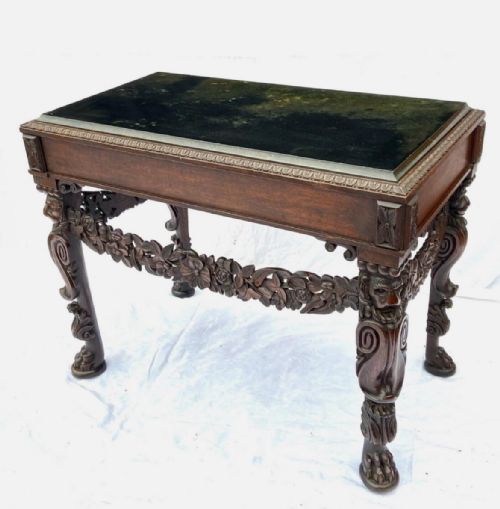


Oak Marble Top Console
An oak marble top console brings heavy timber and cool stone together in a sturdy hallway or dining room centrepiece.
Oak Marble Top Console
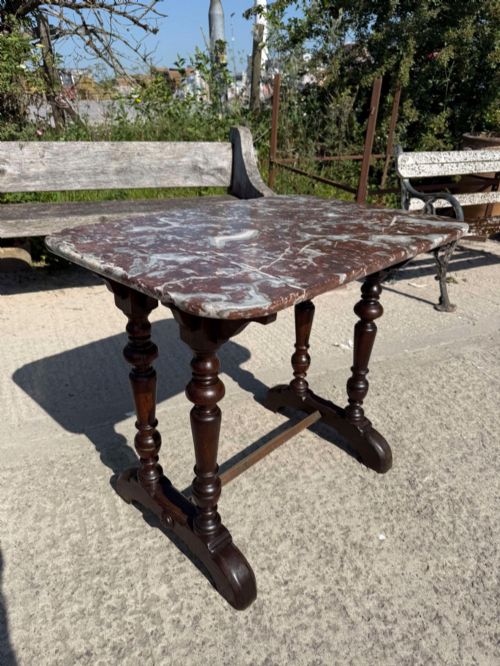
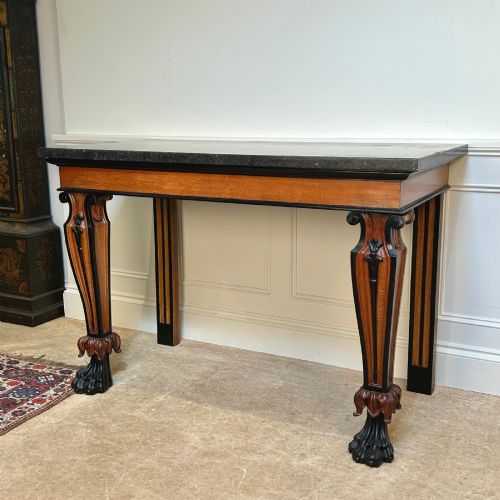
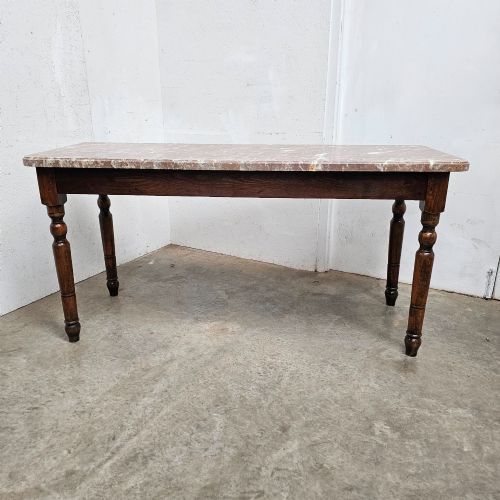
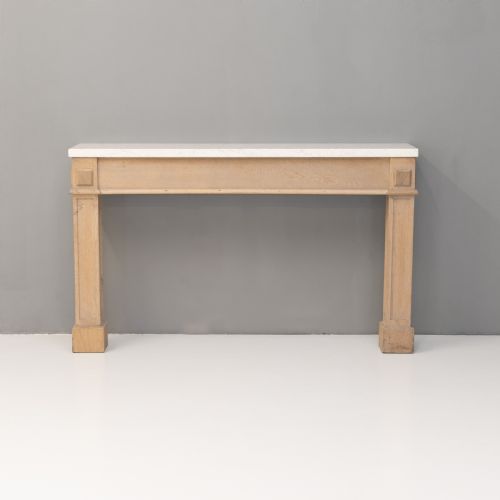
An oak marble top console spans robust 18th century country house forms and lighter Regency or Victorian interpretations. These pieces combine heavy timber frames with smooth stone surfaces designed for display or utility.
The selection ranges from carved serving tables and narrow hall stands to washstands and pastry displays. French provincial and Neoclassical influences appear frequently alongside British country house styles.
Most examples date from the 19th century or the Victorian period, though earlier 18th century carved oak pieces and later 1930s variations also surface. Buyers encounter everything from simple side tables to grand hall umbrella stands.
Materials and construction
Makers built the structural frames primarily from solid oak, sometimes utilising ebonised wood or giltwood highlights for decorative contrast. Carved details such as lion masks and paw feet appear on heavier regional pieces.
The top surfaces feature slabs of white marble, Siena marble, or granite fitted directly onto the wooden bases. Ceramic components and brass fittings also appear on washstands and hall stands within the grouping.
Oak Marble Top Console Retail Price Guide 2026
Typical asking prices for oak marble top console among the pieces listed under this phrase on Sellingantiques today, from the lower quarter to the upper quarter. They describe what is for sale here now, not the wider market.
Object forms on this page include console tables, hall stands, centre tables, washstands, and pastry display tables.
Evaluating quality and execution
The caliber of the carving distinguishes standard joinery from exceptional work, particularly on 18th century and Victorian examples where hand-carved details define the legs and aprons. Crisp lines in the oak indicate skilled workshop production.
The choice and thickness of the stone slab matter greatly, with premium pieces employing richly coloured Siena marble or heavy granite rather than standard white marble. The integration between the heavy stone top and the wooden frame determines the overall stability.
KRIEGER of Paris
The Oak Marble Top Console Glossary
- Console table
- A table designed to stand against a wall, traditionally supported by fixed brackets or front legs. These items often feature decorative front supports while relying on the wall for total stability.
- Siena marble
- A distinctive yellow and grey-brown marble quarried in Italy. It was frequently utilised on high-end Regency and 19th century tables.
- Ebonised wood
- Timber treated with a chemical stain or finish to imitate ebony. This dark treatment provides sharp contrast against pale marble tops.
- Hall stand
- A tall piece of furniture placed near an entrance for hanging coats, storing umbrellas, and holding hats. Some incorporate small marble surfaces or console bases.
- Neoclassical
- A style drawing inspiration from classical antiquity. It introduces restrained geometric lines and formal symmetry to 19th century furniture.
Oak Marble Top Console: Frequently Asked Questions
Where should I place a console table?
These tables suit hallways, living rooms, and dining spaces where floor space is relatively restricted. Their flat backs allow them to sit flush against walls without obstructing thoroughfares.
The stone surface provides a practical landing spot for keys, mail, or decorative objects. Placing one in an entryway immediately sets a formal tone for the home.
How do I care for a marble top?
Marble is porous and vulnerable to acidic liquids like wine, lemon juice, and vinegar. Wipe spills immediately with a damp cloth and mild soap.
Avoid using abrasive cleaners or scouring pads that can dull the polished finish. Periodic sealing helps protect the stone from staining over time.
Are these tables sturdy enough for daily use?
Solid oak frames provide substantial weight and structural integrity. The addition of a heavy marble or granite slab adds further stability to the base.
While robust, very tall hall stands or narrow console tables benefit from wall attachment if placed in busy family corridors.
How do I distinguish 18th century pieces from later copies?
Examine the construction methods, tool marks, and timber shrinkage visible on the underside and back panels. Hand-cut joints and irregular grain patterns often point to earlier origin.
Later 19th century and 18th century style reproductions tend to display more uniform machining and standardised proportions.