





Oak Mahogany Floor Clock
An oak mahogany floor clock combines solid timber construction with contrasting crossbanding, offering a traditional tall timekeeper for the hallway or living space.
Oak Mahogany Floor Clock
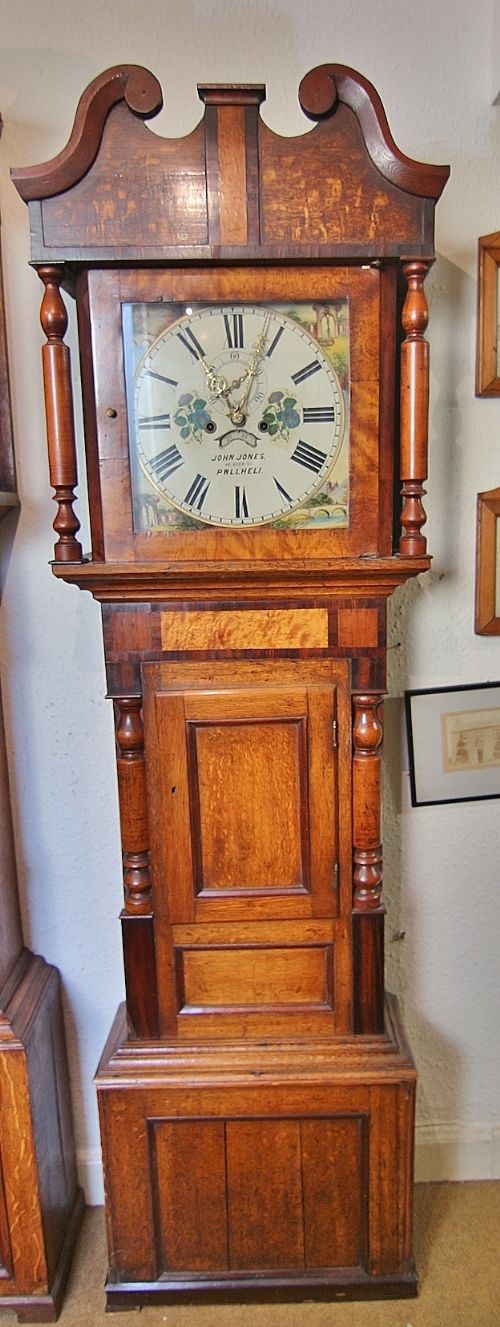
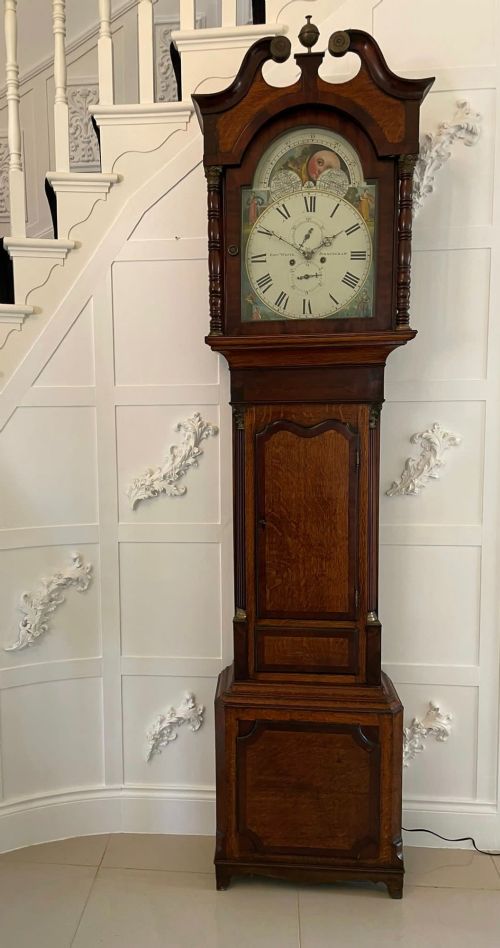
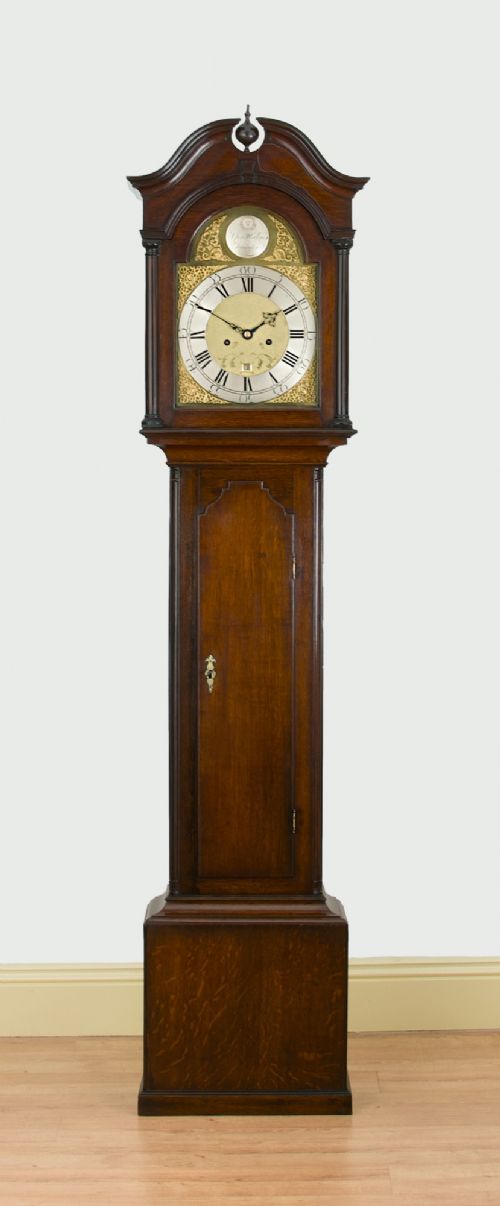
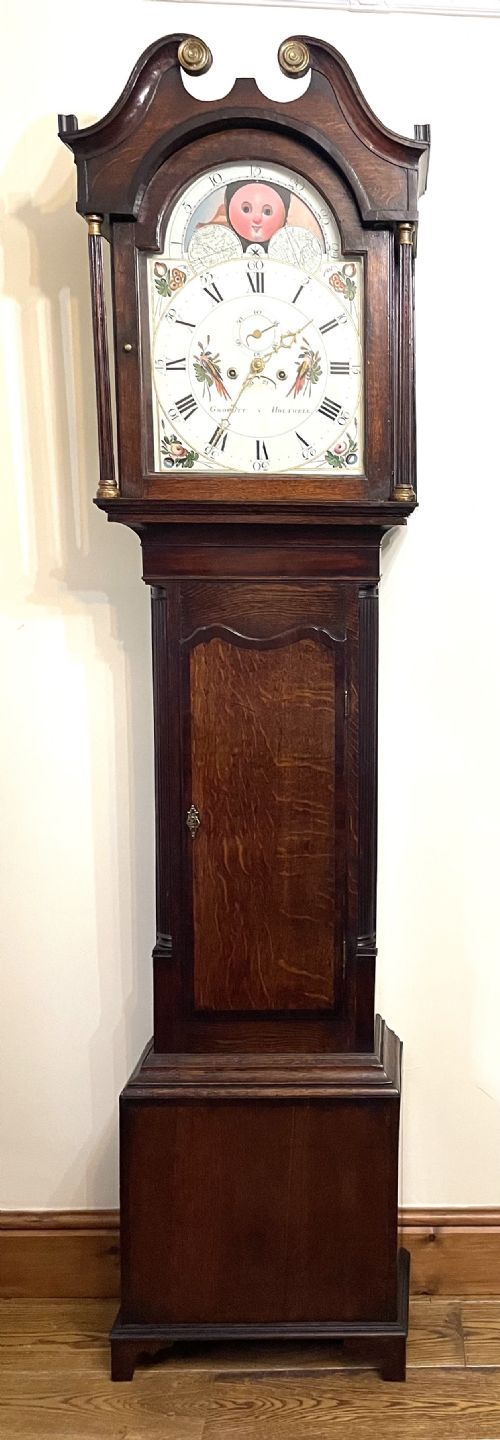
An oak mahogany floor clock is a tall domestic timekeeper, commonly referred to as a longcase or grandfather clock, designed to stand upright against a wall. The pieces listed now originate primarily from the Georgian and 19th Century periods, incorporating styles such as George III and Classical Revival.
The version most frequently met on this page combines a sturdy oak carcase with contrasting mahogany crossbanding or veneers. These tall clocks typically house eight-day movements behind brass or painted metal dials, often featuring subsidiary seconds and calendar indicators or rolling moon phases.
Originating from regional clockmakers across Britain, these tall timepieces range from simple country designs to sophisticated urban examples. Their proportions and dial layouts reflect the aesthetic preferences of provincial makers working in the eighteenth and nineteenth centuries.
Quality and Proportion
The distinction between standard and superior examples rests upon the crispness of the cabinetwork and the integration of the movement with the case. Finer pieces display precise mahogany crossbanding, well-figured timber grain, and harmonious dial proportions that complement the height of the trunk.
Movement execution also dictates standing: dials signed by recorded provincial makers with subsidiary complications such as moon phases or automated automata represent higher levels of original craftsmanship. The relationship between the dial, hands, and the fitted case reflects the care taken during initial production.
Oak Mahogany Floor Clock Retail Price Guide 2026
Typical asking prices for oak mahogany floor clock among the pieces listed under this phrase on Sellingantiques today, from the lower quarter to the upper quarter. They describe what is for sale here now, not the wider market.
Certain nineteenth-century specimens incorporate moving automata into the dial arch, allowing painted lions to roll their eyes in time with the ticking pendulum.
George Hallifax Of Doncaster·Edward White Birmingham·JOHN SALMON NANTWICH·GROCOTT HOLYWELL·STANYER NANTWICH·Preddy of Langport·W Prior Skipton·Hudfon Of Nottingham·ROB PARRY PWLLHELI·FOXTON SUTTON ASHFIELD·Raine of Durham·VURLEY OF WISBECH·WINSTANLEY WIGAN
The Oak Mahogany Floor Clock Glossary
- Crossbanding
- A strip of veneer applied across the grain of the primary wood panel to form a decorative border. This technique is frequently seen framing the trunk doors of oak and mahogany floor clocks.
- Longcase clock
- An alternative term for a tall pendulum clock housed in a wooden case resting directly on the floor. These instruments are also commonly known as grandfather clocks.
- Rolling moon phase
- A specialised dial mechanism that tracks the lunar cycle behind a shaped aperture. It rotates twice during a lunar month to show the phases of the moon.
- Arch dial
- A clock face featuring a curved upper section above the main square chapter ring. This space often houses painted moon mechanics, subsidiary dials, or maker inscriptions.
Oak Mahogany Floor Clock: Frequently Asked Questions
How do these tall clocks function?
These tall timekeepers operate via internal brass movements driven by suspended lead or iron weights. A pendulum regulates the escapement, ensuring steady measurement of time over an eight-day period.
Striking trains utilise a rack and snail or countwheel mechanism to sound the hours on a cast bronze bell mounted inside the hood. Winding keys are inserted through the dial face to draw the hanging weights back upward each week.
Where should a floor clock be placed?
Position your tall clock against a solid interior wall where it can stand entirely upright without rocking. Avoid damp corners, direct sunlight, and locations near active heating vents that might dry out the timber.
Ensure the floor provides a stable, level surface so the pendulum swings symmetrically behind the glazed trunk door. Securing the upper hood to the wall with a discreet bracket prevents accidental tipping in busy hallways.
How do I identify the period?
Examine the dial architecture, wood combinations, and case proportions to determine the likely era of manufacture. Georgian examples often pair oak carcases with mahogany crossbanding and square or arched brass dials.
Later nineteenth-century iterations frequently incorporate painted metal faces with regional maker signatures and more robust mouldings. Case feet, hood columns, and door shapes also shift from rectilinear eighteenth-century styles toward heavier Victorian interpretations.
Were these clocks made in London?
While London supported notable clockmakers, the majority of pieces on this page originated from regional workshops across Britain. Inscribed dials frequently point to provincial towns in Lancashire, Yorkshire, and Wales.
Local cabinetmakers built the wooden cases to house movements sourced from specialised regional makers or urban trade suppliers. This regional distribution produced distinct local variations in hood design and dial ornamentation.