

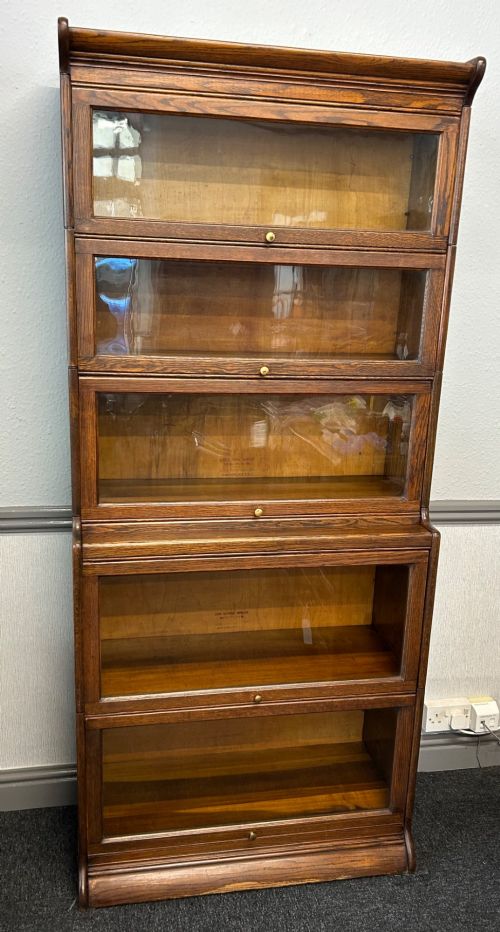
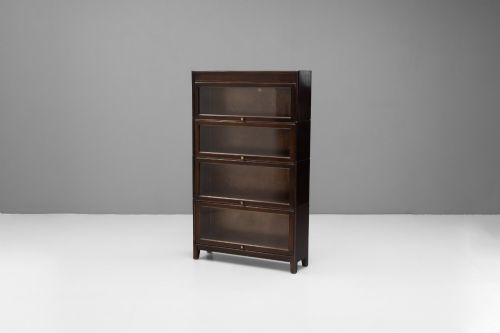
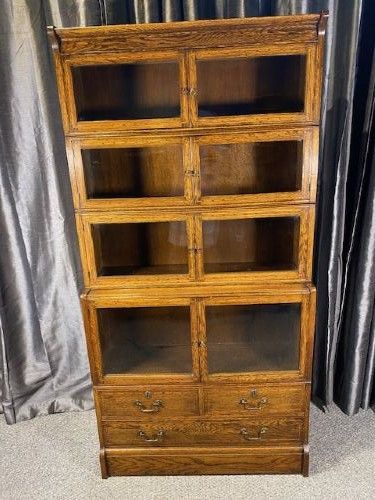
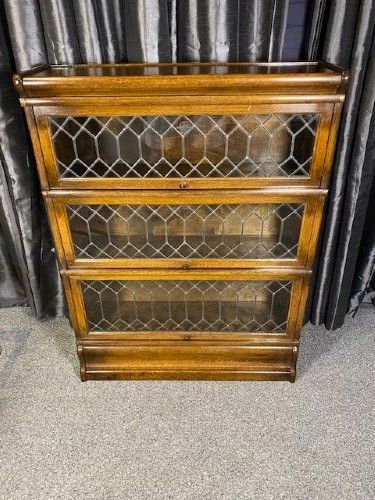


Oak Lawyer Cabinet
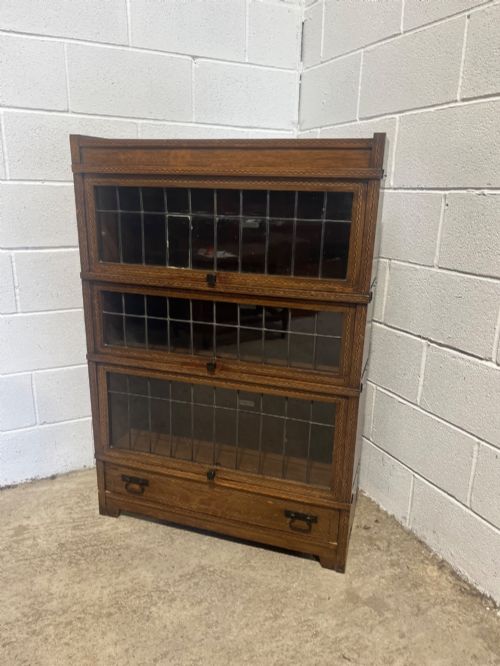
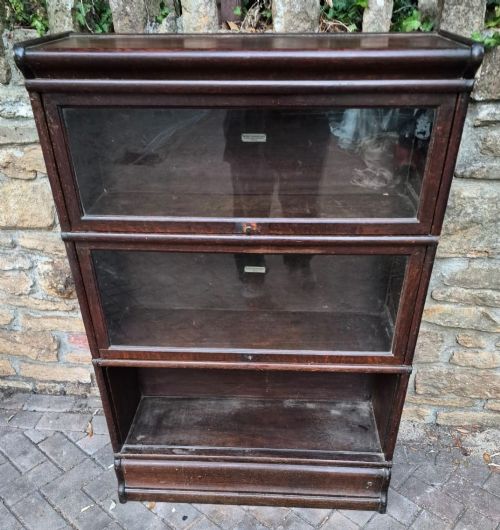
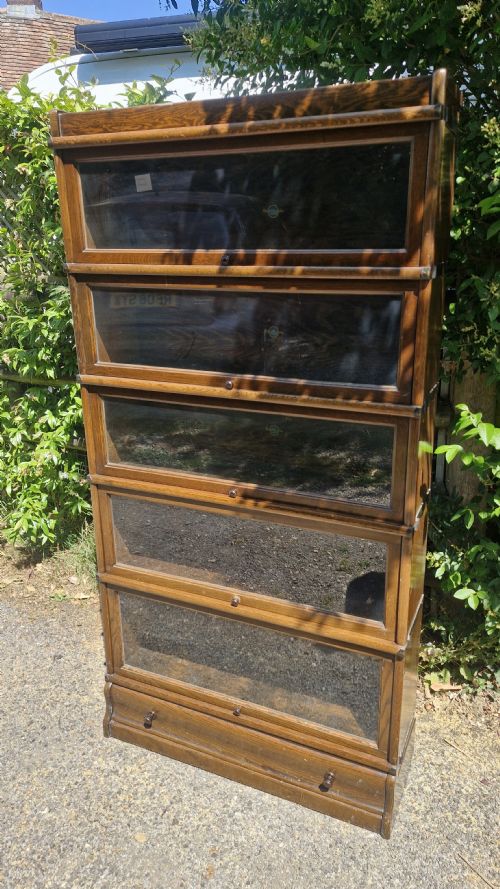
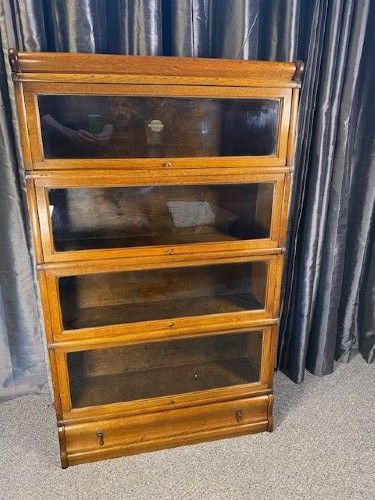
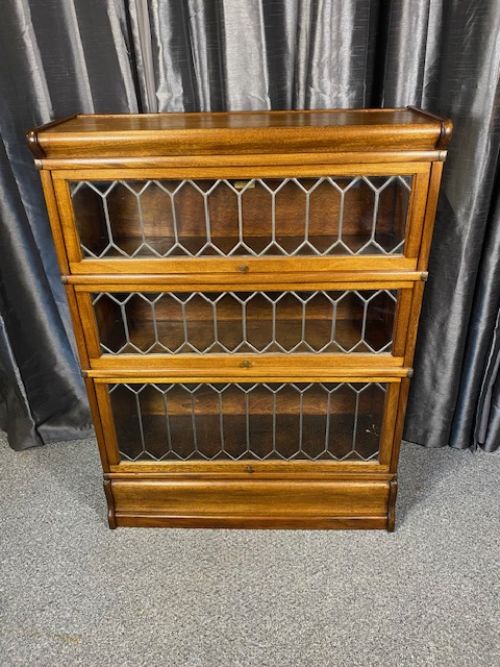
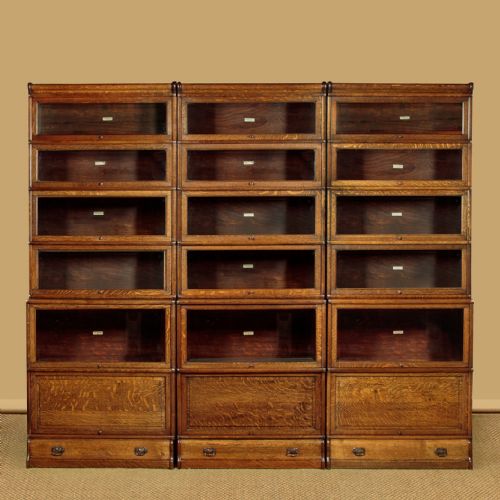
An oak lawyer cabinet brings modular practicality to a room, offering glazed stacking sections that keep volumes tidy while displaying them clearly.
Oak Lawyer Cabinet
An oak lawyer cabinet, also known as a barristers bookcase or stacking bookcase, is a modular office and library piece designed with individual tiers that lift and slide back. You are most likely to encounter Edwardian examples originating from the early twentieth century, specifically from decades such as nineteen ten and nineteen twenty.
The form typically comprises separate glazed sections stacked one upon another beneath a cornice top and above a drawer or plain base. Makers arranged these tiers to protect valuable books from dust while allowing the library to expand vertically one section at a time.
How they were made
Cabinet makers constructed these stacking bookcases primarily from solid oak and golden oak, sometimes incorporating wood inlay for decorative detail. The doors feature glass panes, occasionally held in lead, allowing full visibility of the contents within each tier.
Functional brass and metal hardware facilitates the lifting and internal sliding mechanism of each modular shelf unit. Joinery prioritised durability to support heavy rows of books across the multiple removable sections.
Oak Lawyer Cabinet Retail Price Guide 2026
Typical asking prices for oak lawyer cabinet among the pieces listed under this phrase on Sellingantiques today, from the lower quarter to the upper quarter. They describe what is for sale here now, not the wider market.
A lawyer cabinet lets you slam three doors at once with a satisfying mechanical click, assuming all the books are pushed back far enough.
What varies in quality
The distinction between standard office utility items and finer examples often rests upon the quality of the oak timber figure and the subtlety of any wood inlay. Uniformity across matching tiers and the crisp execution of the sliding door mechanisms also set superior pieces apart.
Original maker branding or plaques embedded within the wood add notable distinction to particular sectional cabinets. The presence of matching sets or pairs further elevates the desirability of these modular bookcases.
Gunn Furniture·Globe Wernicke·Warwick
The Oak Lawyer Cabinet Glossary
- Sectional
- A piece of furniture built from separate, interchangeable tiers that stack vertically. This modular design allowed owners to purchase additional shelf units as their libraries grew.
- Glazed
- Fitted with glass panels in doors or windows. In these cabinets, glazed tiers protect books from dust while maintaining visibility.
- Cornice
- The ornamental moulding running around the top edge of a cabinet or piece of furniture. It provides a finished architectural cap above the topmost stacking tier.
- Inlay
- A decorative technique where pieces of contrasting wood or other materials are inserted into recessed portions of the base surface. This adds subtle visual detail to the oak body.
Oak Lawyer Cabinet: Frequently Asked Questions
What is an oak lawyer cabinet?
An oak lawyer cabinet is a modular bookcase built from horizontal stacking sections with glazed lifting doors. It was originally designed for offices and legal chambers to keep growing collections of books clean and accessible.
The modular format allowed owners to add individual tiers as their libraries expanded without replacing the entire piece of furniture.
Where can I place one at home?
These cabinets suit studies, living rooms, and hallways where vertical storage preserves floor space. The narrow footprint and glass fronts make them ideal for displaying books, ceramics, or collections without overwhelming a room.
Because the sections separate, moving and positioning the cabinet in different spaces is straightforward.
How do I date an oak lawyer cabinet?
Dating relies on stylistic clues, construction methods, and maker marks found on the wood or hardware. Most examples date from the Edwardian era through the nineteen twenties and nineteen thirties.
Earlier pieces often feature specific patent dates stamped into the metal brackets by prominent manufacturers like Globe Wernicke.