
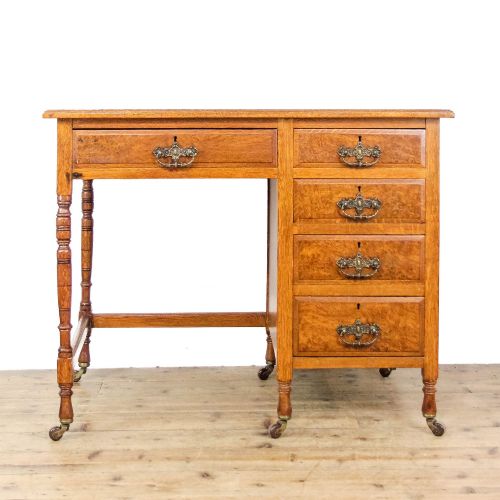
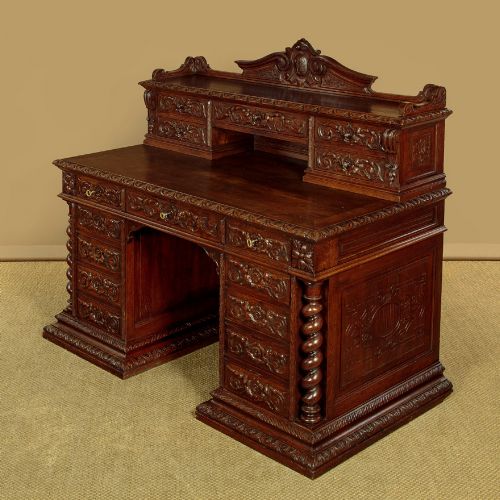


Oak Kneehole Writing Desk
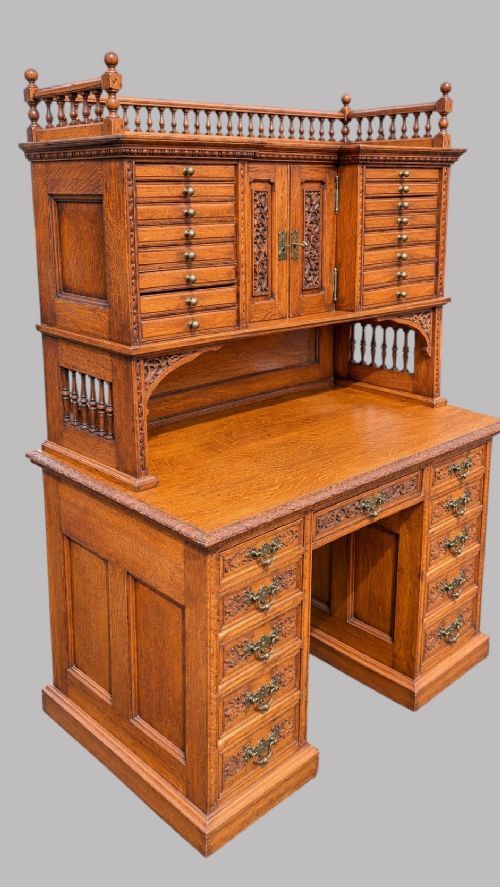
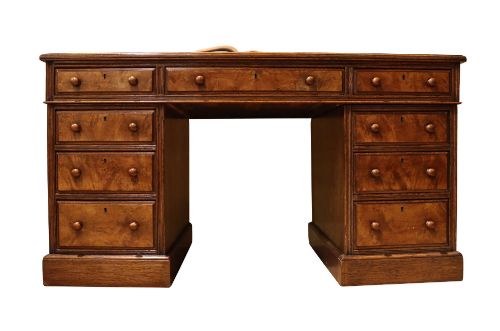
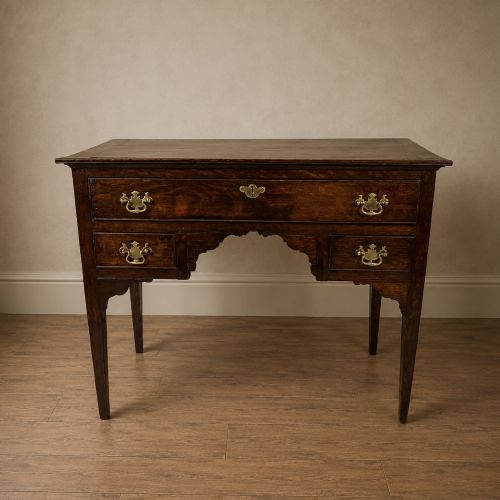
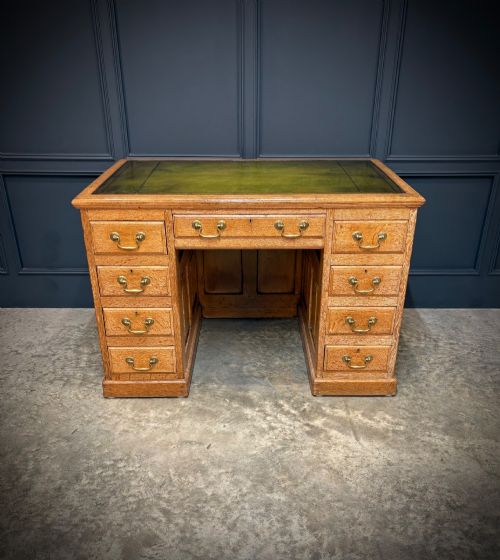
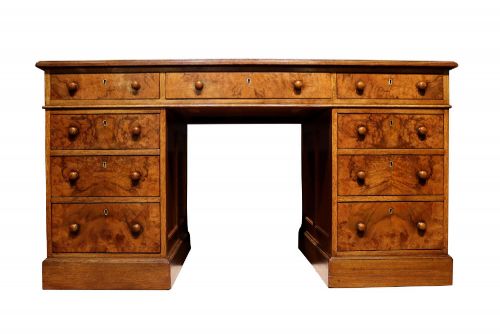
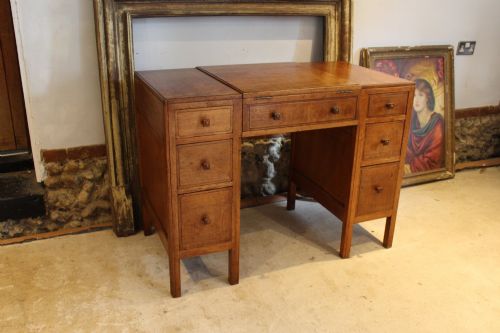
An oak kneehole writing desk offers sturdy timbers and a recessed central cupboard flanked by pedestals of small drawers.
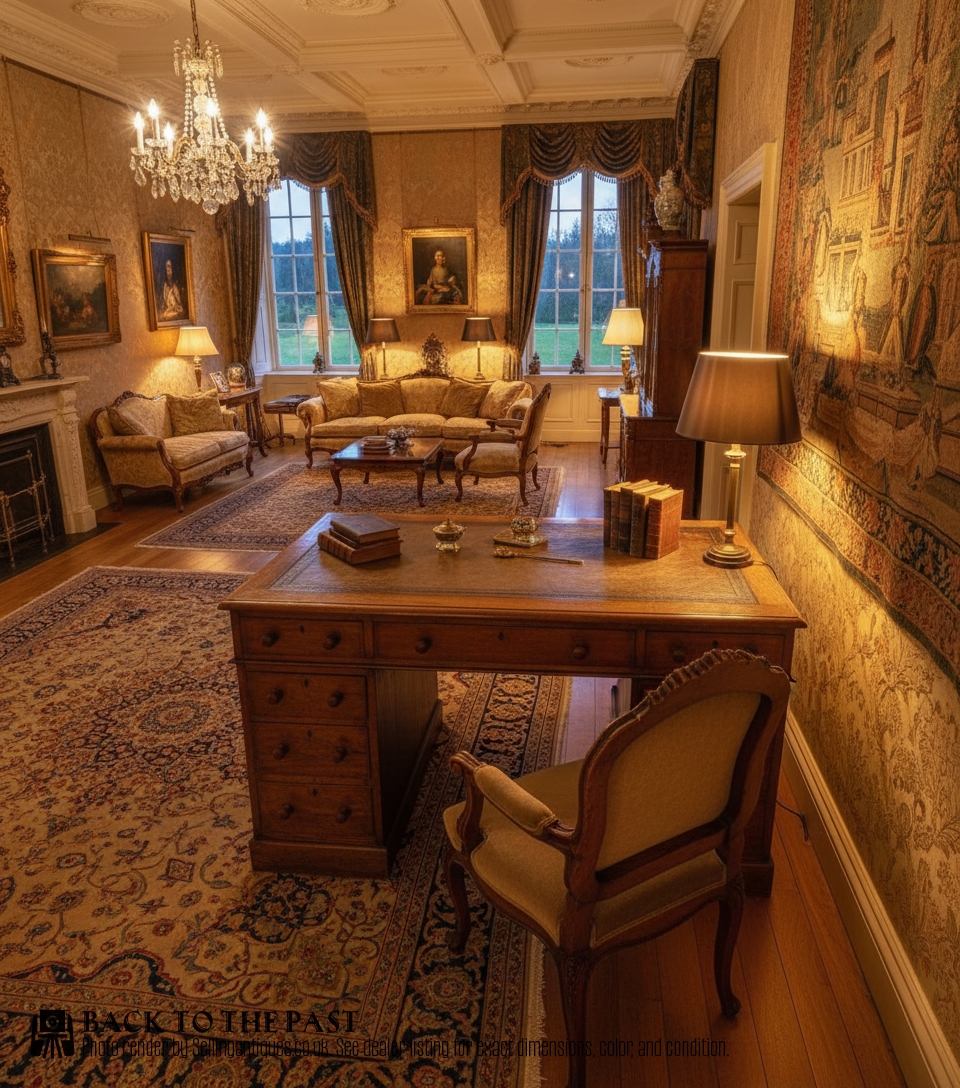
Oak Kneehole Writing Desk
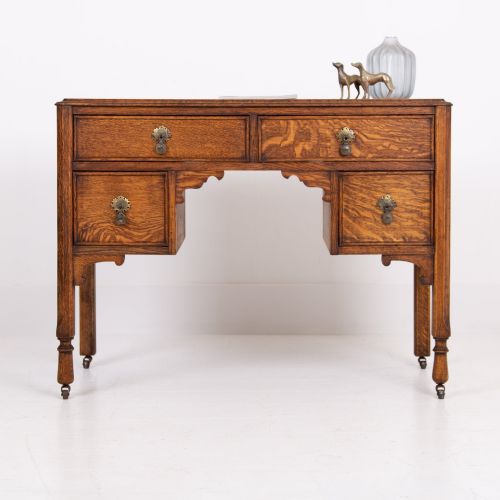
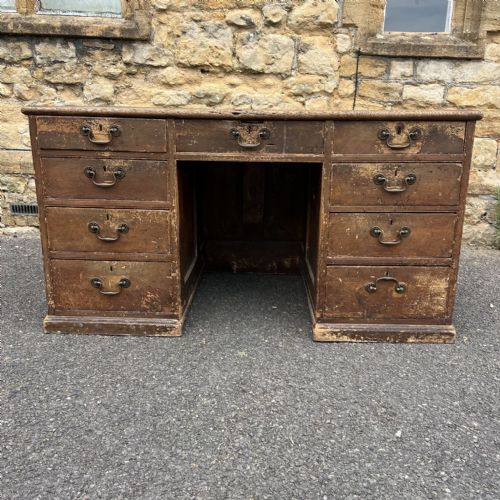
An oak kneehole writing desk provides a dedicated workspace incorporating two pedestals of drawers beneath a main writing surface, separated by a central recess for the legs. These pieces emerge in various forms across the eighteenth century, Victorian period, and Edwardian era.
The layout typically arranges multiple small drawers around a central cupboard door or kneehole space, originally designed for correspondence and keeping account ledgers. Examples range from compact country pieces to large twin pedestal office desks.
Victorian and Edwardian versions appear frequently on this page, often utilising golden oak or incorporating panelled sides and carved details. Earlier eighteenth century examples draw influence from Georgian proportions and cabinetmaking standards.
Assessing quality
Quality reveals itself in the selection of timber grain, the precision of the dovetail joints, and the integrity of the original drawer linings. Finer desks maintain balanced proportions and thoughtful decorative carving rather than surface embellishment applied to hide inferior timber.
The presence of maker stamps, original brass hardware, and intact leather writing surfaces elevates a piece. Desks built with solid framing and uniform grain selection represent the higher tier of domestic and office furniture production.
Some Victorian desks hide secret compartments behind the central kneehole cupboard door, designed for storing private ledgers away from prying eyes.
Heal And Sons·Gillow And Co·Thomas Turner·Lebus
The Oak Kneehole Writing Desk Glossary
- Kneehole
- A recessed space beneath the desktop designed to accommodate the user's legs while seated. This central void separates banks of supporting drawers on either side.
- Pedestal desk
- A heavy freestanding desk consisting of two independent drawer units supporting a single writing top. These structures often divide into modular sections for ease of movement.
- Lowboy
- A small seventeenth or eighteenth century table with drawers, functioning as a dressing table or writing surface. These precursors often display slender cabriole or straight legs.
- Burr walnut
- A decorative timber veneer taken from the knotted growth of a walnut tree. This material provides swirling, highly figured patterns on drawer fronts and panels.
Oak Kneehole Writing Desk: Frequently Asked Questions
What is a kneehole desk?
A kneehole desk is a specific form of writing furniture featuring a central recess for the user's legs, flanked by two pedestals containing banks of small drawers.
This layout allows for an organised arrangement of correspondence and writing materials while maintaining a compact footprint against a wall or in the centre of a room.
How do I date an oak desk?
Dating relies on examining construction techniques such as dovetailing, drawer lining timbers, handle hardware, and overall stylistic proportions.
Eighteenth century pieces often display simpler country construction or Georgian elegance, while Victorian and Edwardian examples incorporate machine-sawn elements and varied revival ornamentation.
Where were these desks used?
These desks served primarily in domestic studies, libraries, morning rooms, and estate offices for private correspondence and household management.
Larger pedestal versions also functioned in commercial offices and country house administrative spaces for handling ledgers and business documents.
How do I care for an antique oak desk?
Maintenance involves applying traditional beeswax to nourish the timber and protect the surface from drying out or sustaining moisture damage.
Keeping the desk away from direct sunlight and sudden temperature shifts preserves the polish and prevents warping in the solid oak timbers and decorative veneers.