

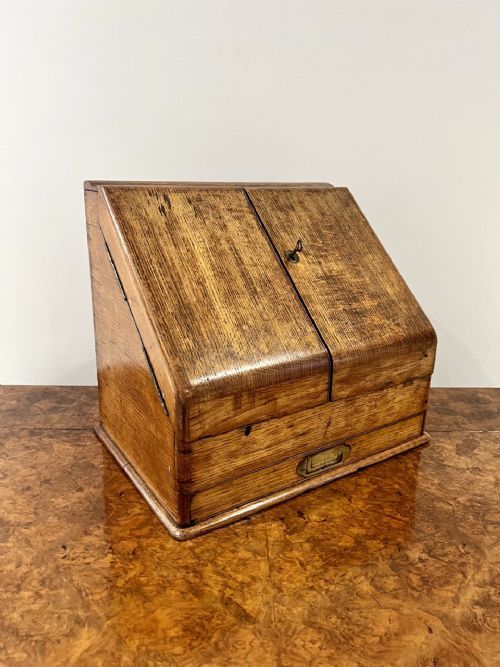


Oak Key Box
These oak key box pieces are solid timber containers built to secure small valuables, offering robust construction and period character for any hallway.
Oak Key Box
When you search for an oak key box, you encounter a selection of solid timber containers and small cabinets spanning the Victorian, Edwardian, Georgian, and nineteenth-century periods. These items range from dedicated key cabinets to stationery boxes, correspondence boxes, and tantalus sets incorporating functional brass locks.
The version you are most likely to meet on this page is a Victorian or Edwardian desk accessory or wall-mounted cabinet built from sturdy oak, often featuring visible grain and original hardware. Pieces span various utility forms including cutlery canteens, collector cabinets, and letter boxes that share the defining characteristic of secure wooden construction.
How they were made
Makers utilised solid oak timbers, selected for durability and pronounced grain, supplemented by golden oak variants particularly favoured during the Arts and Crafts period. These wooden structures were joined using traditional carpentry methods to ensure longevity under daily household use.
Metal components played a critical role in construction, with brass hinges, mounts, and working locks fitted securely to the timber bodies. Some pieces incorporate iron, steel, leather linings, cut glass, and mirror glass elements to enhance both the utility and visual appeal of the containers.
Oak Key Box Retail Price Guide 2026
Typical asking prices for oak key box among the pieces listed under this phrase on Sellingantiques today, from the lower quarter to the upper quarter. They describe what is for sale here now, not the wider market.
Listings feature oak material paired with brass, iron, cut glass, mirror glass, leather, and steel across Victorian, Edwardian, and Georgian periods.
What varies in quality
The standard of an oak key box is defined by the selection of timber and the precision of the joinery, with finely figured grain and clean dovetail or rebate joints marking superior examples. Inferior pieces rely on plain timber boards with simpler fixings and less attention to the finishing of interior surfaces.
Hardware integrity distinguishes finer items, specifically the quality of the brass mounts and whether the original lock mechanism remains fully operational with its key. Secondary materials such as leather linings, bevelled mirror glass, and cut glass inserts add further distinction to the upper tier of pieces.
Walker & Hall
The Oak Key Box Glossary
- Tantalus
- A locking drink cabinet that holds decanters securely visible behind a wooden and metal bar. This design prevents unauthorized access while displaying cut glass bottles.
- Arts and Crafts
- A design movement emphasising handcraftsmanship, simple forms, and natural materials like golden oak. Pieces from this style highlight honest construction over elaborate ornamentation.
- Canteen
- A fitted chest or box designed to hold flatware or cutlery securely in slotted trays. These sturdy oak containers protected silver and steel utensils from tarnish and damage.
- Escutcheon
- A protective plate surrounding a keyhole, usually made of brass or iron on these wooden boxes. It prevents the surrounding timber from wearing down with repeated use.
Oak Key Box: Frequently Asked Questions
What is an oak key box?
An oak key box is a small wooden cabinet or container designed for domestic storage, featuring secure locks and durable timber construction. These items were built to keep household or office keys organised and protected.
They appear across Victorian and Edwardian periods, often combining practical compartments with decorative brass hardware and solid oak panels.
How do I date an oak key box?
Dating these pieces involves examining the combination of timber selection, construction techniques, and period-specific stylistic details like Arts and Crafts influence or Victorian brass mounts. Hardware such as working locks and hinges also provides clear chronological indicators.
Makers' marks or stamps, when present, help narrow the origin down to specific workshops or silversmiths active during the nineteenth or early twentieth centuries.
Were these boxes only used for keys?
While some containers served strictly for key storage, the category encompasses diverse utility forms including stationery boxes, letter boxes, and collector cabinets. Many share similar locking mechanisms and box forms regardless of their intended contents.
Domestic interiors of the nineteenth century required various small locking chests to safeguard correspondence, cutlery, and personal valuables.
How do I care for antique oak?
Antique oak benefits from stable indoor humidity levels away from direct heat sources and strong sunlight to prevent timber splitting. Regular dusting with a soft, dry cloth preserves the finish without requiring harsh chemical polishes.
Leather elements and brass mounts require gentle maintenance, using specialised metal cleaner applied carefully to avoid staining the surrounding wood.