


Oak Hexagonal Table
An oak hexagonal table brings unconventional geometry and sturdy timber into a room, offering a distinct alternative to the usual round or square occasional furniture.
Oak Hexagonal Table
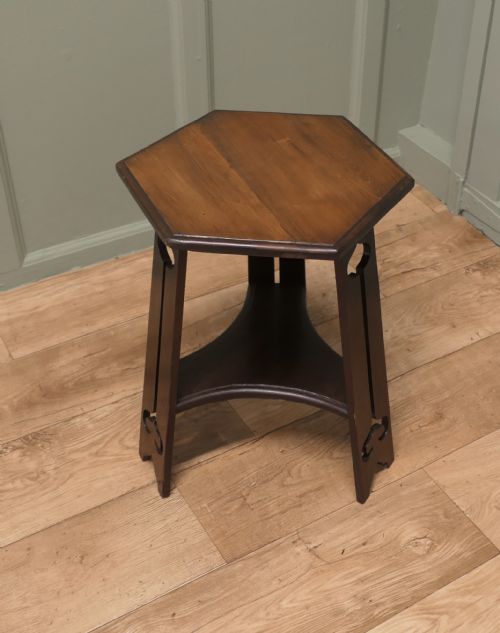
An oak hexagonal table is a multi-sided piece of furniture designed primarily as an occasional, side, or coffee table, shaped with six distinct angles rather than four. These tables frequently emerge from the Arts and Crafts movement of the late nineteenth and early twentieth centuries, alongside later Art Deco iterations and revival pieces.
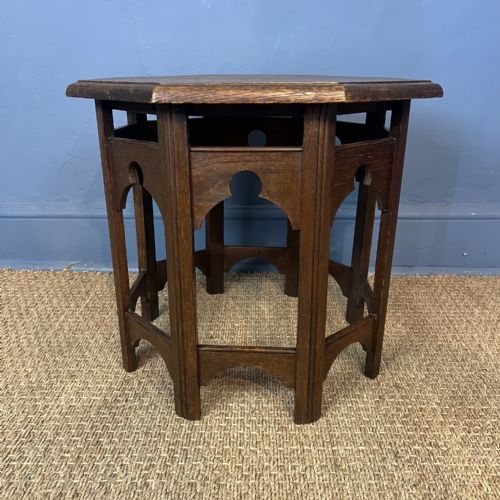
Buyers encountering this search phrase find formats ranging from simple two-tier window tables and book tables to plant stands and heavily carved Gothic or Jacobean revivals. The form suits corners and tight spaces well, breaking up straight lines in a traditional interior without dominating the floor plan.
Most examples date from the nineteenth and twentieth centuries, utilising the rich grain and durability of oak to handle daily use as a lamp table, coffee surface, or display stand.
What varies in quality
Quality in an oak hexagonal table rests on the integrity of the timber selection and the precision of the six-sided geometry, where minor misalignments in the angles disrupt the symmetry of the top. Superior examples employ quarter-sawn oak that displays distinct medullary rays, indicating careful milling rather than fast commercial production.
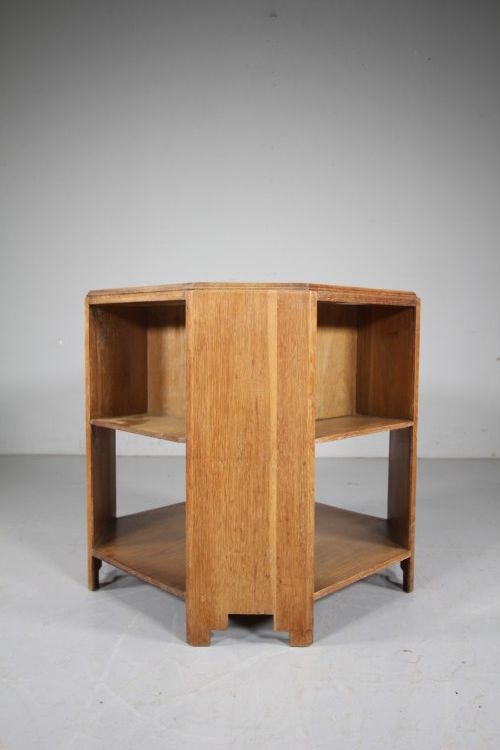
The sophistication of the underframe and leg assembly dictates the tier of the piece, moving from straightforward turned legs to complex slatted supports, undertiers, or integrated book troughs. Maker attribution also elevates certain pieces, particularly those associated with known retail houses or regional schools of design.
Listings feature oak alongside decorative accents in mother-of-pearl and brass.
Heal s·Liberty and Co·Simpson s of Kendal
The Oak Hexagonal Table Glossary
- Quarter-sawn oak
- Timber cut radially from the log to expose decorative silver flake markings known as medullary rays. This method produces a stable board less prone to warping over time.
- Occasional table
- A small, movable piece of furniture designed for a specific, transient use in a living space. These tables are easily shifted between chairs or beside a window.
- Arts and Crafts
- A design movement spanning the late nineteenth and early twentieth centuries that emphasised handcrafting, local materials, and honest construction. Pieces from this era often feature exposed joinery and minimal surface decoration.
- Torchere
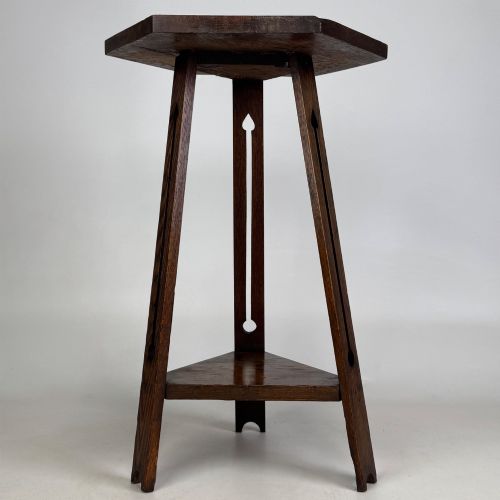
- A tall, slender stand originally designed to hold a candle, later adapted to support electric lamps or house plants. They share a similar vertical emphasis with plant stands found in this category.
Oak Hexagonal Table: Frequently Asked Questions
Where does an oak hexagonal table work best?
These six-sided tables fit comfortably into awkward corners or beside armchairs where a standard square table might jut out awkwardly into the walkway. Their geometry naturally draws the eye, making them effective as central lamp stands or window display points.
Because many include lower shelves or book troughs, they also serve well beside a sofa to hold reading material and smaller household items without cluttering the surface.
How do I identify an Arts and Crafts hexagonal table?
Arts and Crafts examples usually display visible construction details such as pegged joints, chamfered edges, and a reliance on the plain grain of the oak rather than heavy veneers or excessive polish. They often date from around the turn of the twentieth century and carry a sturdier, more architectural presence.
Later revival pieces sometimes imitate these traits, but genuine period pieces tend to have a straightforward utility and handcrafted weight that distinguishes them from mass-produced furniture.
Did these tables have lower tiers?
Many hexagonal tables feature an undertier or secondary shelf connecting the legs partway down, which adds structural stability and provides extra space for books or small objects. Two-tier variations were particularly popular during the Edwardian period for use in drawing rooms and window bays.
Single-surface versions without lower shelves also appear frequently, often designed as plant stands, torcheres, or compact coffee tables.
How do I care for antique oak furniture?
Maintaining oak surfaces requires minimal intervention, typically involving a soft cloth to remove dust and an occasional application of beeswax to nourish the timber. Avoiding direct sunlight and extreme humidity changes prevents the wood from drying out or splitting.
Harsh chemical sprays should be avoided, as they can strip the historic finish and dull the natural lustre of the grain over time.