
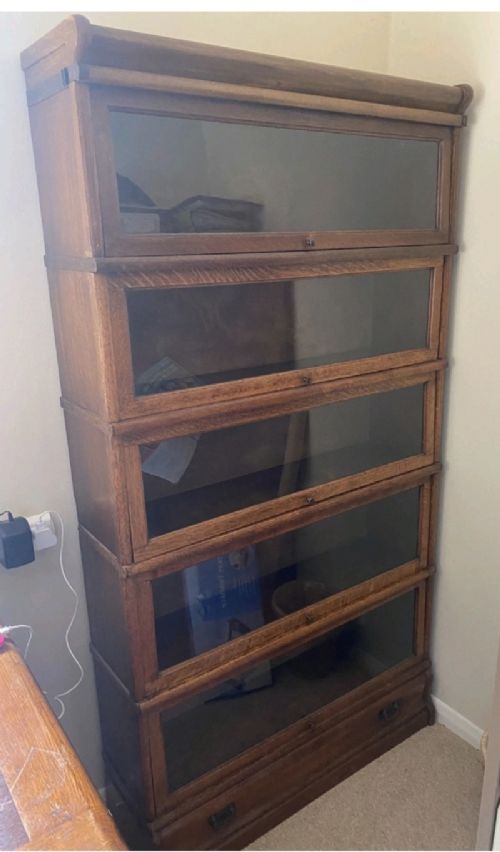
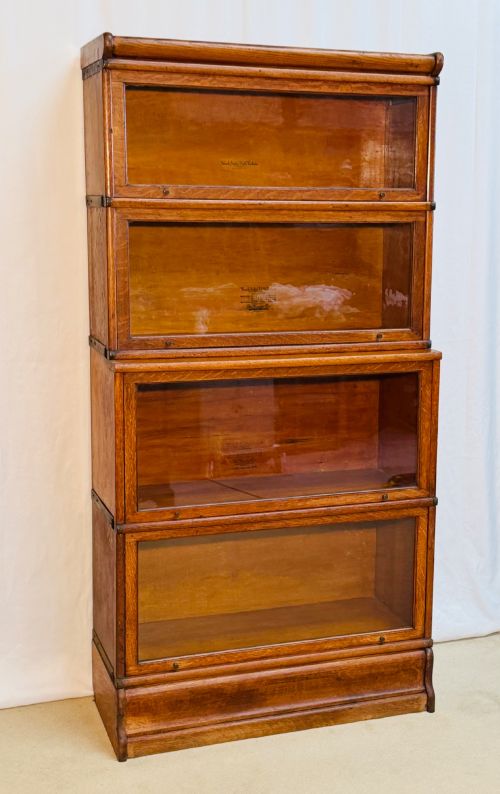
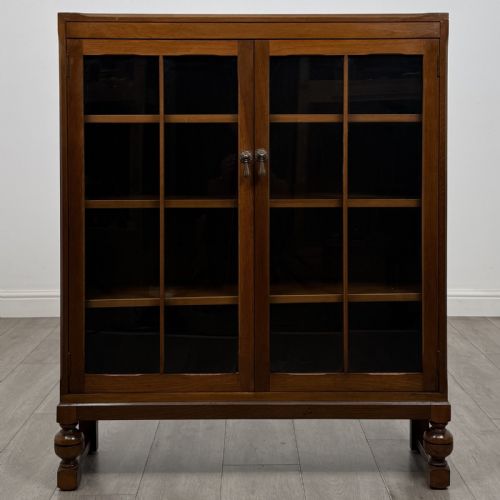
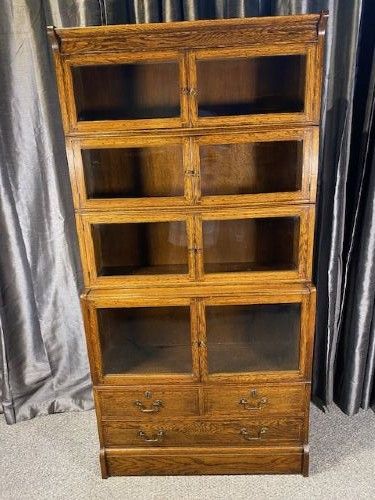
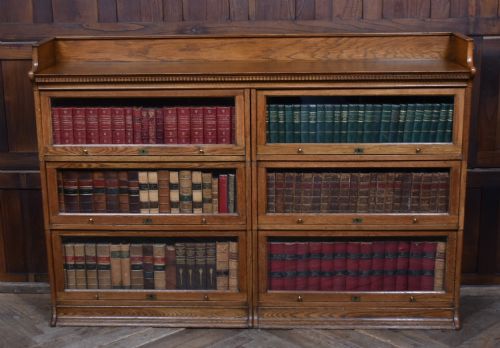
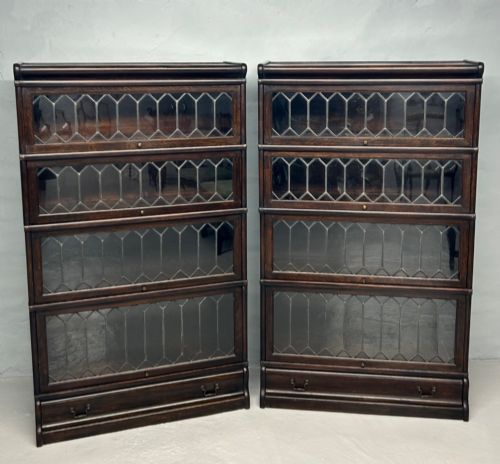
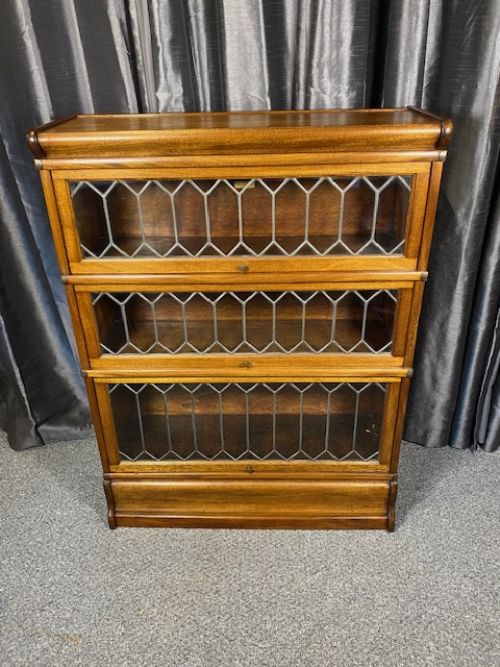

Oak Glass Front Bookcase
An oak glass front bookcase brings both robust timber and clear visibility to your library, keeping volumes clean while showing their spines.
Oak Glass Front Bookcase
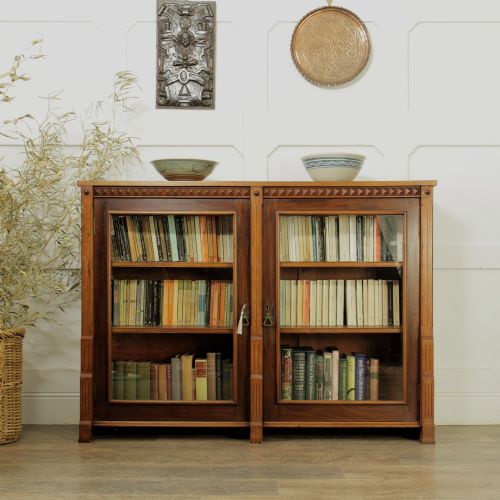
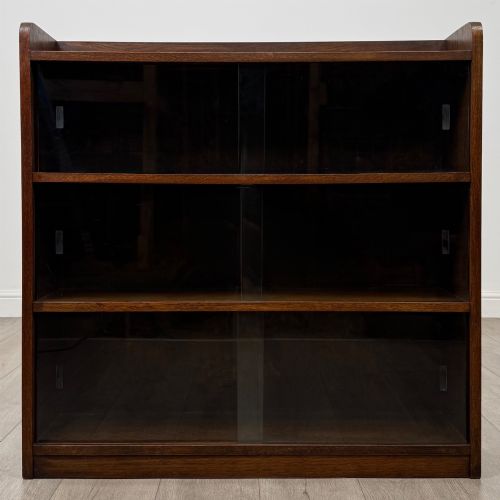
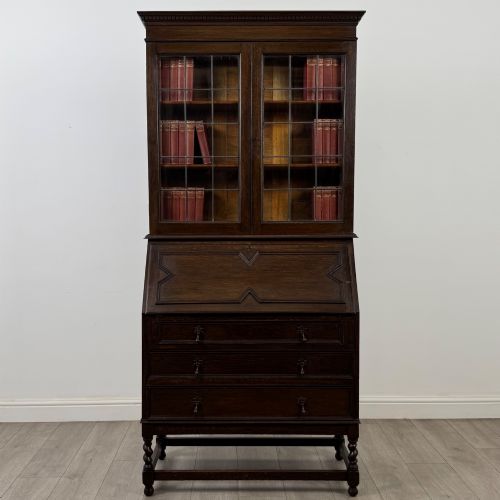
An oak glass front bookcase offers practical storage for books and display items, appearing across periods from the nineteenth century through the 1930s. The selection spans straightforward floor bookcases, tall stacking versions, and bureau bookcases that combine a writing slope with shelving.
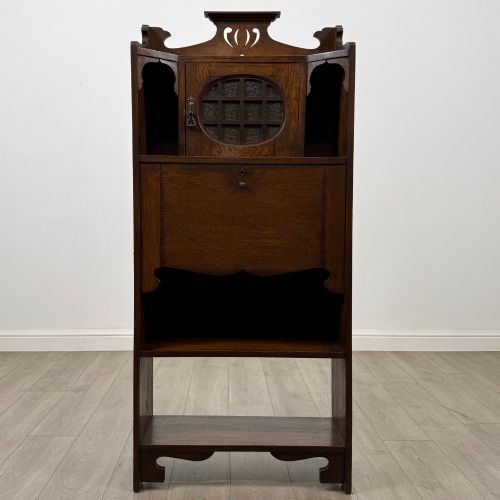
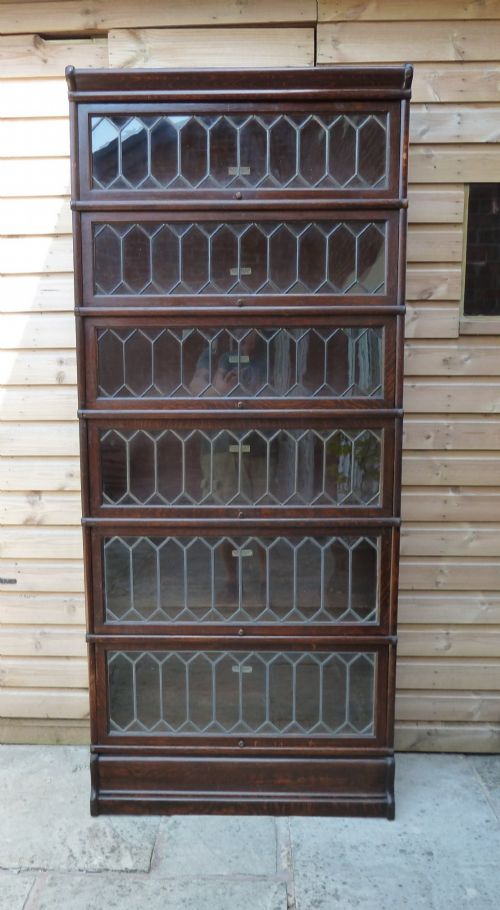
Most examples date from the Edwardian era and the 1920s, often adopting styles such as Arts and Crafts, Jacobean Revival, or Art Deco. Pieces range from double glazed doors to sectional barrister designs with leaded glass panels.
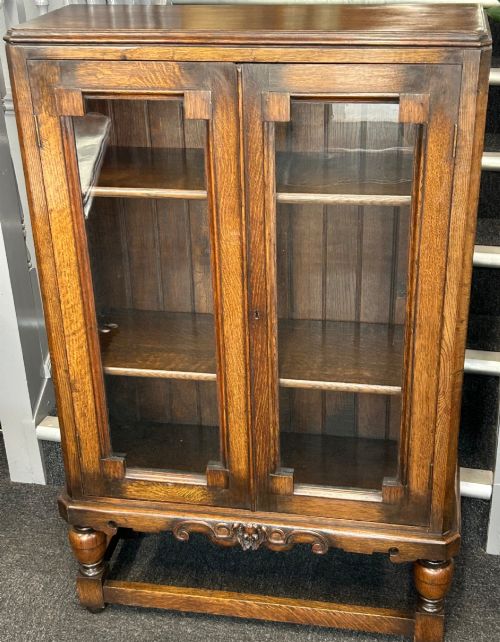
Buyers also encounter related display cabinets and counter-top versions that share the same timber and glazing. These forms suit various room sizes, from compact two-door cabinets to six-section modular towers.
Materials and construction
The primary structure relies on oak, frequently paired with glass panes for doors and fronts. Brass, iron, copper, and lead appear in the hardware, hinges, and decorative glazing strips.
Makers utilised sectional engineering for stacking and barrister designs, allowing individual tiers to lift and slide. Glazed doors protect contents from dust while maintaining a clear view of the interior.
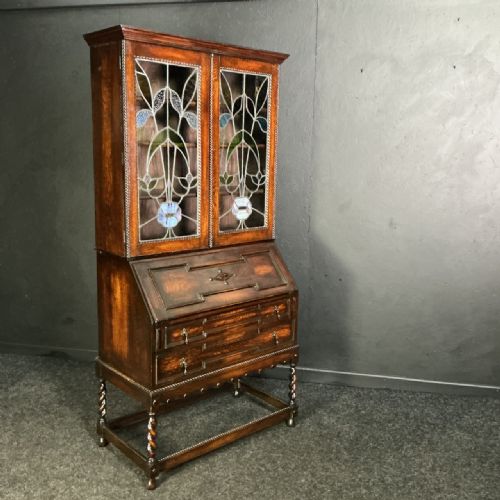
Some barrister bookcases feature leaded glass windows so charmingly stubborn they demand a gentle touch and a friendly nod to open.
Distinguishing quality in construction and style
Quality shows in the execution of specific stylistic details, such as the joinery on Arts and Crafts pieces or the precise mechanism of sectional stacking bookcases. Finer examples display thoughtful proportion, substantial timber selection, and well-fitted doors that operate smoothly.
The integration of secondary materials like lead, brass, and walnut veneer distinguishes standard production from more ambitious workshop pieces. Maker attribution, whether through physical labels or distinct regional design traits, also elevates certain cabinets.
Globe Wernicke·Lebus·Heals·Liberty & Co
The Oak Glass Front Bookcase Glossary
- Barrister bookcase
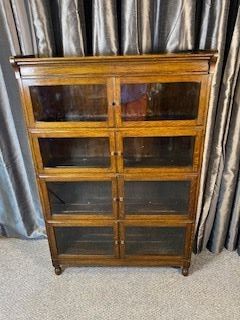
- A sectional bookcase with glass doors that lift and slide into the cabinet above each shelf. This design was originally built to protect law books in offices.
- Bureau bookcase
- A combination furniture form featuring a sloping writing flap above shelving or enclosed cabinet space. These pieces serve both writing and display functions.
- Leaded glass
- Glass panes held together by narrow strips of lead, forming geometric or decorative patterns within the door frame. This technique appears frequently on Edwardian sectional cases.
- Jacobean Revival
- A style popular in the late nineteenth and early twentieth centuries that imitates seventeenth-century English furniture through heavy turnings and dark oak panels.
Oak Glass Front Bookcase: Frequently Asked Questions
How do barrister bookcases work?
Barrister bookcases consist of individual stacking tiers, each fitted with a glass door that pivots upwards and slides into the recess above the books. This mechanism allows easy access to individual shelves while keeping the contents protected.
Most stacking designs permit the sections to be separated for transport and rearranged to suit different ceiling heights or room layouts.
What is a bureau bookcase?
A bureau bookcase combines a drop-front writing desk with enclosed shelving or cabinet space above. The hinged flap folds down to provide a writing surface with small interior compartments for stationery.
Above the writing area, glazed doors protect books from dust while keeping titles visible from across the room.
How do I date an oak bookcase?
Dating relies on stylistic clues, hardware materials, and construction methods. Edwardian and 1920s pieces often feature leaded glass, modular stacking sections, or revival details like Jacobean turning.
Earlier nineteenth-century examples tend to show simpler upright floor cabinet forms with heavy brass pulls and solid timber backing.
Are these bookcases suitable for small rooms?
Yes, many variations suit compact spaces. Tall stacking cases use vertical wall space rather than floor area, while two-door glazed cabinets maintain a shallow depth.
Counter-top display cabinets and narrow bureau forms also offer practical storage without dominating a room.