

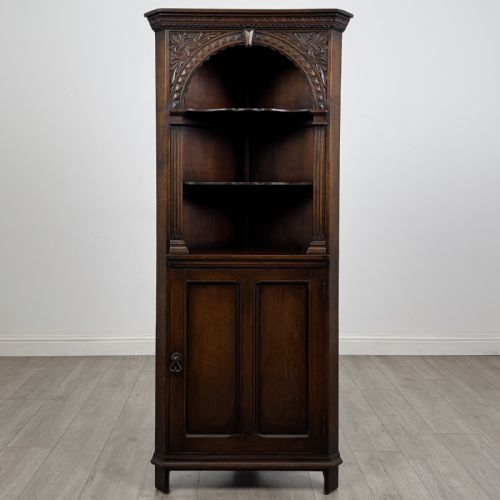
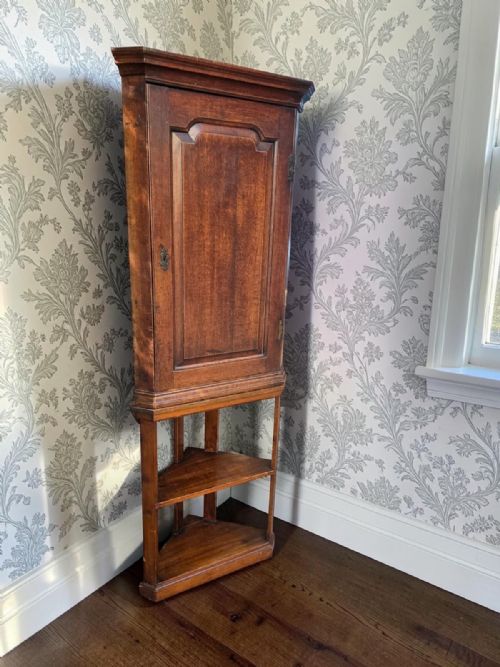
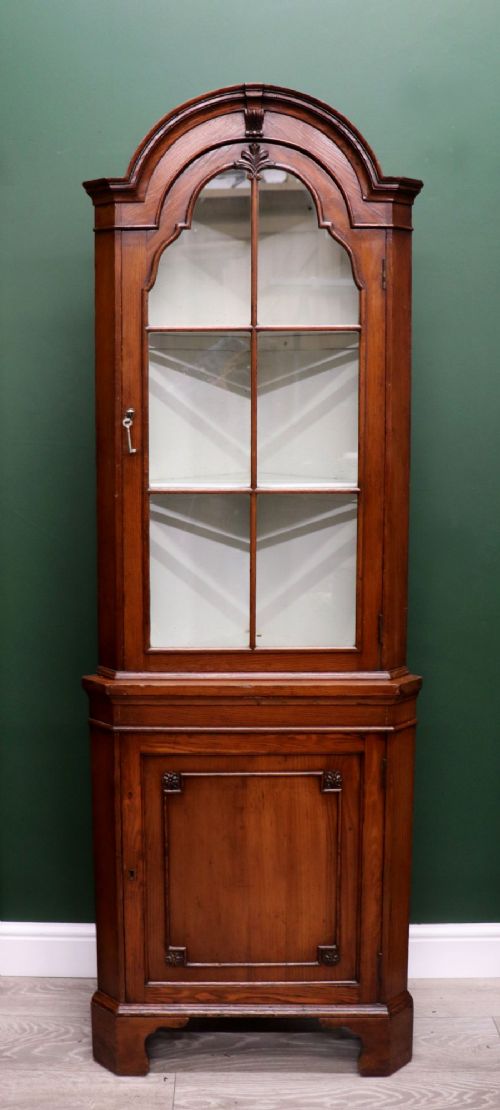


Oak Freestanding Corner Cabinet
An oak freestanding corner cabinet solves a difficult room layout by turning wasted angles into useful storage.
Oak Freestanding Corner Cabinet
An oak freestanding corner cabinet stands directly on the floor without requiring wall fixings, making it a flexible addition to a room. These pieces appear in forms ranging from tall two-part cupboards to single-door units raised on stands.
The pieces on this page span several eras including Georgian, Victorian, Edwardian, and the 1930s. The Georgian examples often feature clean lines and panelled doors, whereas Victorian and revival pieces frequently incorporate carving or stands.
Makers designed these cabinets specifically to fit snuggly into ninety-degree room junctions. They serve as practical display or storage vessels that utilise dead space while adding timber warmth to an interior.
How they were made
Cabinet makers constructed these bodies predominantly from solid oak, sometimes combining panels with fruitwood inlay for decorative contrast. They utilised traditional joinery methods such as panelling and pegged joints to accommodate the natural movement of timber over centuries.
Hardware played a functional and visual role, with brass hinges and iron fittings securing the heavy doors. Some examples from the later periods introduced glass panels into the upper sections for display purposes.
Oak Freestanding Corner Cabinet Retail Price Guide 2026
Typical asking prices for oak freestanding corner cabinet among the pieces listed under this phrase on Sellingantiques today, from the lower quarter to the upper quarter. They describe what is for sale here now, not the wider market.
The listings span multiple centuries, uniting Georgian panelled forms with Jacobean Revival and Edwardian interpretations of the corner cupboard.
What varies in quality
The refinement of the timber grain and the crispness of the panel mouldings distinguish finer examples from simpler provincial work. Early pieces demonstrate thoughtful selection of quarter-sawn oak boards that display attractive medullary rays.
Structural integrity depends upon the original form remaining intact, particularly where tall cupboards sit upon separate stands. Finer cabinets retain their original brassware and stable door alignment without excessive timber shrinkage.
The Oak Freestanding Corner Cabinet Glossary
- Quarter-sawn
- Timber cut radially from the growth rings to produce a durable board with a distinct figured grain pattern. This method reduces the likelihood of the wood warping over time.
- Panelled
- Construction method where solid timber panels float within grooved frames to allow for natural expansion and contraction. It provides structural strength without adding excessive weight to the cabinet door.
- Stand
- A separate base frame or set of legs that elevates the main cupboard off the floor. This configuration appears frequently on Victorian and earlier tall corner pieces.
- Fruitwood inlay
- Contrasting lighter timber inserted into recesses on the oak surface to form geometric or floral patterns. It adds a decorative flourish to otherwise plain panels.
Oak Freestanding Corner Cabinet: Frequently Asked Questions
How do I know if an oak corner cabinet is genuine Georgian?
Examine the construction methods visible on the interior and the backboards for hand-cut marks and traditional joinery. Georgian pieces generally show pegged joints and secondary timbers appropriate to the eighteenth century.
Compare the timber patina and hardware fixings against known examples from the period. Alterations and later additions often disrupt the visual consistency of early pieces.
Can these cabinets fit into modern rooms?
Freestanding corner units adapt well to modern living because they occupy neglected angles while providing substantial interior shelving. Their independent structure means you can position them without drilling into plaster walls.
Measure the height and the depth of the corner space carefully before selection. Taller two-part cupboards require adequate ceiling clearance and wall width to sit flush.
What is the difference between a wall-hanging and a freestanding cupboard?
Freestanding corner cupboards incorporate their own base or stand to rest directly upon the floor. Wall-hanging versions rely on brackets or fixings to support their weight at eye level.
The listings on this page focus entirely on floor-standing formats that offer greater storage capacity and presence within a room.
How should I care for antique oak furniture?
Maintain a stable room environment away from direct heat sources and dramatic humidity shifts to protect the timber. Apply a microcrystalline wax occasionally to nourish the surface without building up sticky residues.
Avoid commercial polishes containing silicone, which can penetrate the grain and damage the historic finish. Dust the carvings and mouldings gently with a dry, soft cloth.