
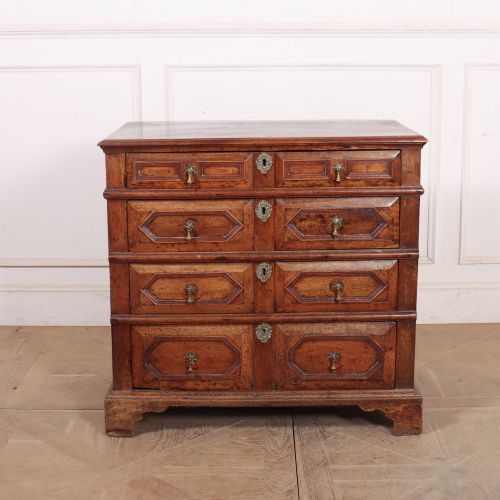


Oak Drop Handle Dresser
An oak drop handle dresser brings together sturdy timber and early metalwork, offering practical storage with genuine historic character for the home.
Oak Drop Handle Dresser
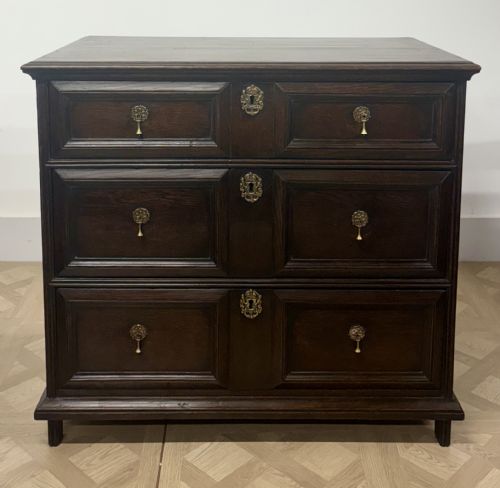
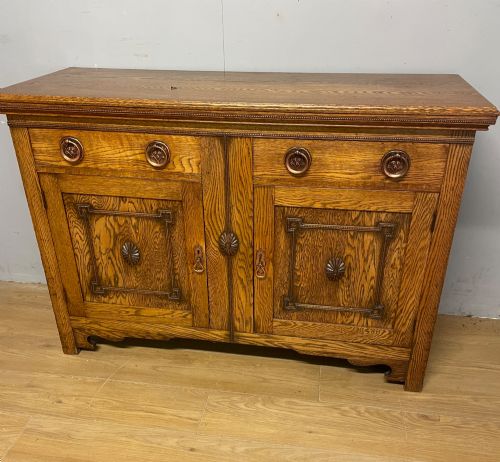
When you search for an oak drop handle dresser, you are looking at substantial storage furniture built primarily from native hardwoods during the seventeenth and eighteenth centuries, alongside later revival pieces. The examples you encounter on this page span several distinct eras, notably the seventeenth century, the Georgian period, and Edwardian revivals.
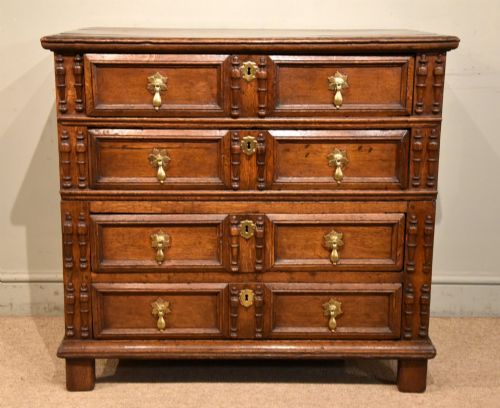
The forms appearing here include chests of drawers and sideboards rather than traditional kitchen dressers with plate racks, showcasing the versatility of early terminology. You are most likely to meet seventeenth-century pieces featuring geometric mouldings and two-part constructions, alongside eighteenth-century variants and Arts and Crafts interpretations from nineteen ten.
Makers and craftsmen of these periods utilised durable construction methods to create functional storage, resulting in pieces that range from plain utilitarian chests to highly decorative examples. The surviving items demonstrate the enduring appeal of oak and walnut construction combined with distinctive drop handles.
Materials and construction techniques
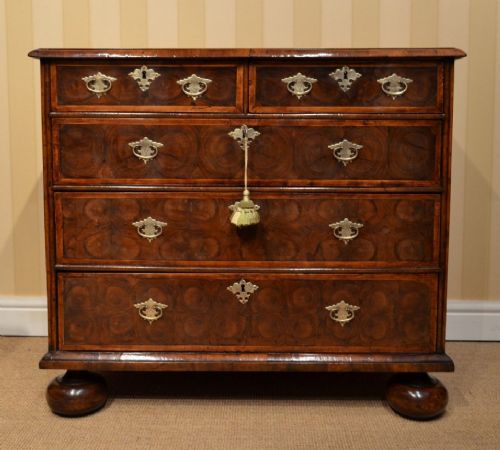
The construction relies heavily on solid oak and walnut, frequently enhanced by decorative oyster veneers arranged in intricate geometric patterns across the drawer fronts. Cabinetmakers employed heavy timber frames, often utilising a two-part chest format for ease of movement and structural stability.
Metal components such as brass, copper, and iron provide the characteristic drop handles and escutcheons that punctuate the dark timber surfaces. These fixtures are secured with period fixings, completing the union of sturdy woodwork and contrasting metal hardware.
Branch wood sliced thin to mimic seafood makes for remarkably hypnotic drawer fronts.
Assessing quality in early furniture
The degree of sophistication in the geometric mouldings and the precision of the oyster veneering separate standard pieces from exceptional examples. Cabinetmakers who invested greater time in grain matching and intricate panel work produced items with significantly stronger visual presence.
The retention of original brass, copper, or iron drop handles and associated hardware plays a major role in the overall integrity of the piece. Consideration also rests on the condition of the primary oak and walnut timbers, where uniform patination and minimal timber replacement elevate the standing of the work.
The Oak Drop Handle Dresser Glossary
- Drop handle
- A pendant-style metal pull that hangs down from a fixed mounting plate, commonly cast in brass or iron on seventeenth-century furniture. These fittings swing freely and often feature decorative backplates.
- Oyster veneer
- Slices of branch wood cut transversely to produce circular or oval patterns resembling oyster shells. Craftsmen arranged these decorative sections across drawer fronts during the seventeenth century.
- Geometric moulding
- Raised wooden strips applied to drawer fronts and door panels in rectilinear or intersecting patterns. This technique adds depth and shadow to seventeenth-century case furniture.
- Two-part chest
- A piece of case furniture built in two separate stacking sections to facilitate transport and placement. This construction method appears frequently in seventeenth-century chests.
- Linenfold
- A carved wooden panel motif designed to resemble folded fabric linen. This style occurs on Edwardian revival pieces listed within this group.
Oak Drop Handle Dresser: Frequently Asked Questions
What is an oak drop handle dresser?
It is a term used to describe early wooden storage furniture, primarily chests of drawers and sideboards constructed from oak and walnut. These pieces feature pendant metal pulls and date from the seventeenth century onwards.
The survivals reflect domestic storage needs of past centuries, combining heavy timber frames with functional hardware designed for daily use.
How do I date a seventeenth century chest?
Dating relies on examining construction methods, timber types, and decorative elements such as geometric mouldings and oyster veneers. Seventeenth-century examples often utilise two-part frames and hand-cut joints.
Hardware styles also provide clues, as drop handles evolved in shape and metal composition from the Charles II period through later centuries.
Where were these pieces used?
These items served as essential domestic storage in bedrooms, parlours, and living spaces for keeping clothing, linens, and household goods. Their sturdy construction suited the daily demands of historic households.
Today, they function effectively in modern interiors as sideboards or bedroom storage units, bringing historic timber textures into living spaces.
How do I care for antique oak furniture?
Maintenance involves keeping the timber away from direct heat sources and sudden humidity changes to prevent wood splitting. Regular dusting with a soft cloth preserves the finish.
Occasional application of appropriate wax feeds the old wood without building up heavy chemical layers that could obscure the natural grain and patination.