



Oak Drinking Table
An oak drinking table brings sturdy timber and social hospitality together, offering a practical surface for glassware and bottles in any room.
Oak Drinking Table
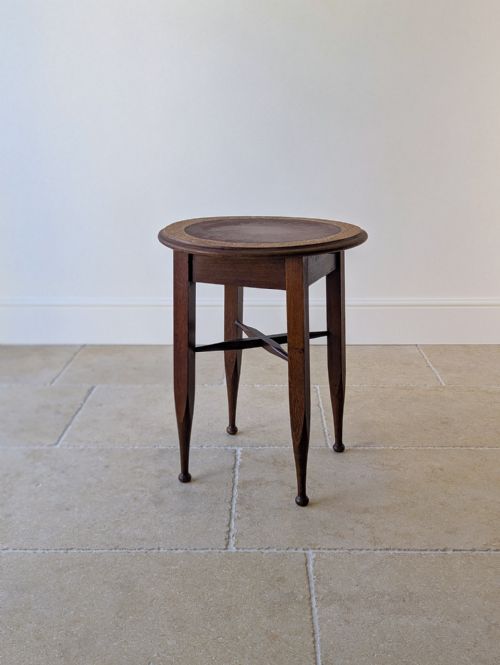
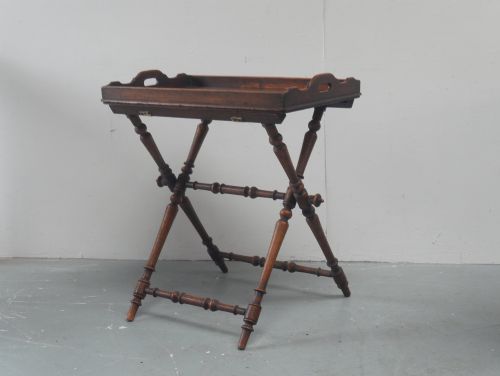
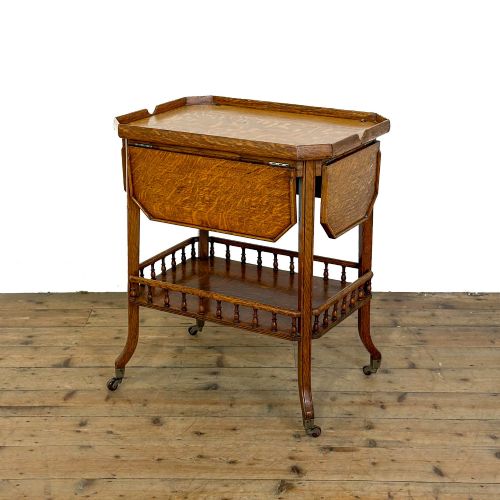
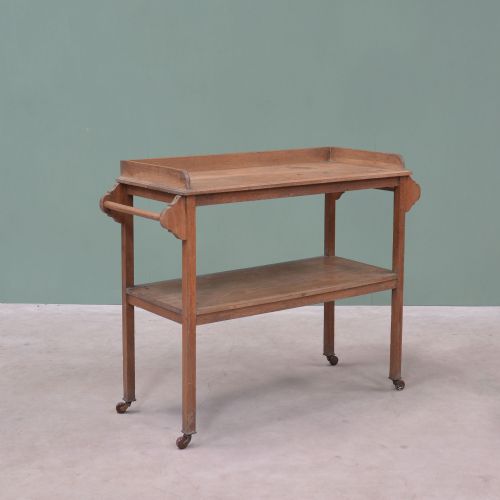
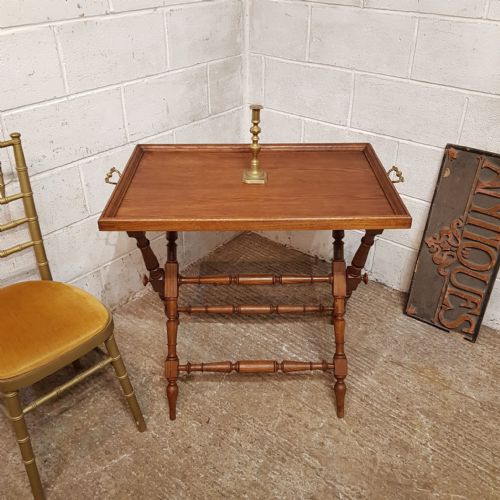
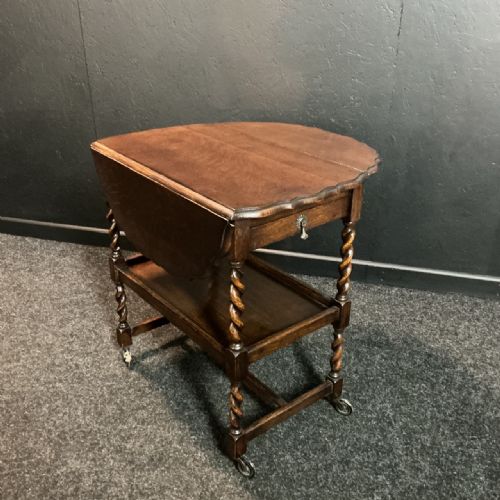
An oak drinking table encompasses various serving and hospitality surfaces found in domestic spaces, ranging from butler trays on stands to specialised tea trolleys and cricket tables. When searching for an oak drinking table, buyers encounter pieces intended for holding beverages, glasses, and decanters across several distinct historical periods.
The selections span from 18th-century English vernacular examples to Victorian and Edwardian iterations featuring folding stands, multiple tiers, and wheeled trolleys. Many designs incorporate lift-off trays or drop leaves, prioritizing utility alongside solid timber construction.
Jacobean Revival, Arts and Crafts, and Gothic Revival styles frequently appear within this category, demonstrating how makers adapted traditional drinking furniture to suit changing domestic habits throughout the nineteenth and early twentieth centuries.
How they were made
Construction relies heavily on solid oak and associated hardwoods, chosen for their durability and strength when supporting heavy glassware and bottles. Joinery methods vary from traditional pegged frames on early cricket tables to hinged mechanisms and folding wooden stands on later tray tables.
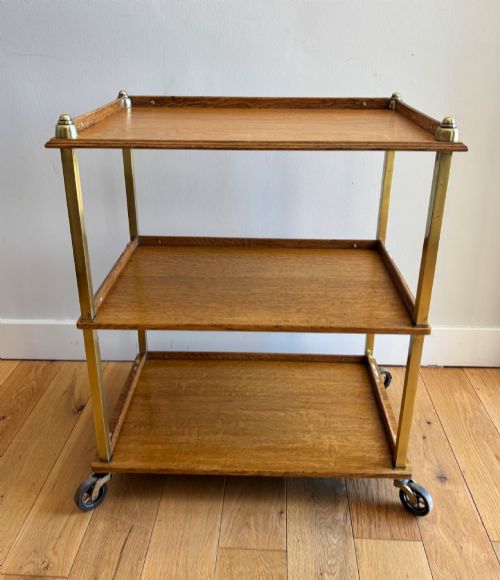
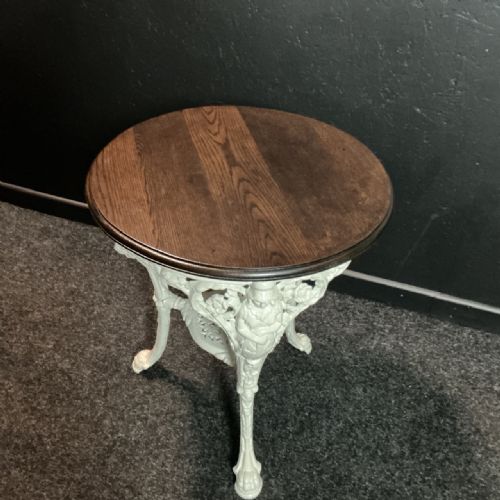
Secondary materials such as brass, cast iron, and metal appear frequently in the form of hinges, handles, castors, and protective rim bindings. Glass inserts and wheeled undercarriages emerge particularly in Edwardian and later trolley designs, combining mobility with wipe-clean surfaces.
One unexpected survivor originated directly from Bäckaskog Castle, proving that grand historical estates took their casual drink service just as seriously as country cottages.
What varies in quality
Quality rests upon the selection of timber and the integrity of the structural joints, particularly where folding stands and drop leaves meet daily weight. Tables featuring well-figured oak boards and substantial brass or iron hardware demonstrate superior manufacture compared to simpler utilitarian variants.
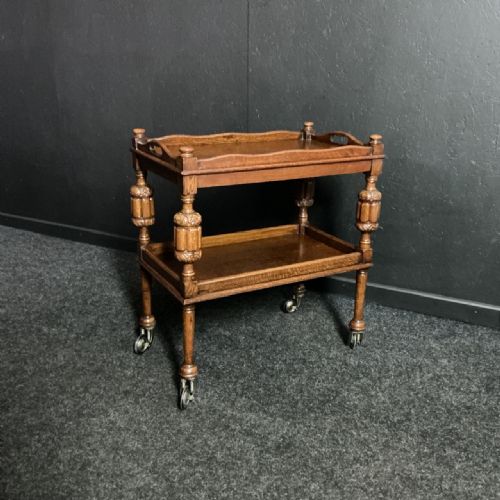
The integration of functional elements - such as smoothly operating castors, tightly fitted lift-off trays, and crisp carving on stylistic details like Gothic tracery or barley twist supports - distinguishes finer workshop production from standard domestic utility pieces.
The Oak Drinking Table Glossary
- Butler's tray
- A removable wooden tray designed to sit upon a folding or fixed wooden stand for serving refreshments. These pieces often feature hinged sides that can be locked flat or raised.
- Cricket table
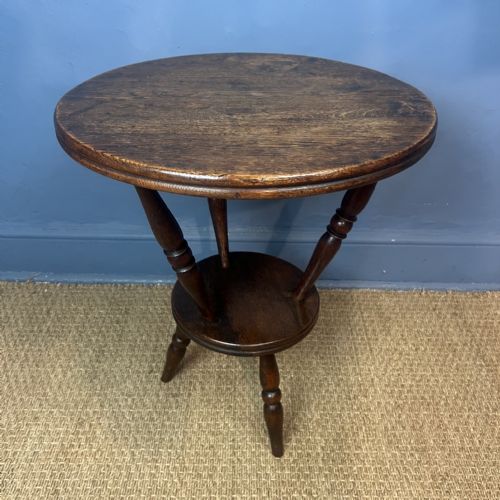
- A small, three-legged circular table originating in domestic vernacular furniture. The three-legged design provided stability on uneven cottage floors.
- Dumb waiter
- A tiered piece of furniture used to hold dishes, bottles, and glasses without requiring a servant present. 19th-century examples often utilise heavy pollard oak.
- Etagere
- A set of open shelves or tiers used for displaying or serving items. These function similarly to tea trolleys in multi-level hospitality settings.
- Tilt top
- A table top hinged to a central pillar, allowing the surface to fold vertical when not in use. This mechanism saved valuable floor space in smaller rooms.
Oak Drinking Table: Frequently Asked Questions
What is an oak drinking table used for?
These tables serve primarily for holding beverages, glassware, and serving vessels within living spaces and dining rooms. Many incorporate trays or multiple tiers specifically designed for pouring tea, wine, or spirits.
Historically, movable versions allowed hosts to transport drinks between rooms or position refreshments close to guests without relying on permanent sideboards.
How do I date an oak drinking table?
Dating relies on observing construction methods, timber characteristics, and stylistic markers such as Gothic Revival tracery or Arts and Crafts simplicity. Earlier pieces from the 18th century display hand-worked vernacular joinery, whereas Edwardian and 1920s examples often feature machine-turned barley twists or wheeled castors.
Hardware components like brass hinges, bottle storage barrels, and cast iron framing also help narrow down the manufacturing decade.
Are these tables sturdy enough for daily use?
Solid oak and hardwood construction provides inherent strength suitable for supporting heavy decanters, bottles, and glassware. Tables with folding stands or wheeled trolleys benefit from occasional checks on hinge pins and castors to maintain stability.
Their robust timber framing ensures they handle everyday domestic service reliably while maintaining their historic character.