
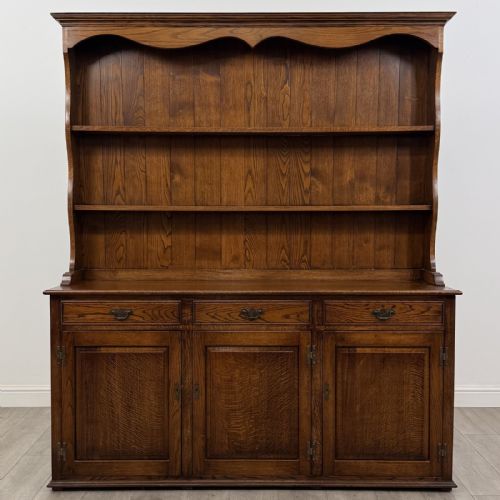
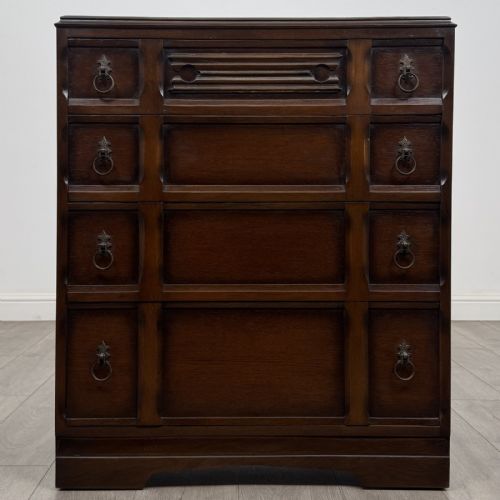
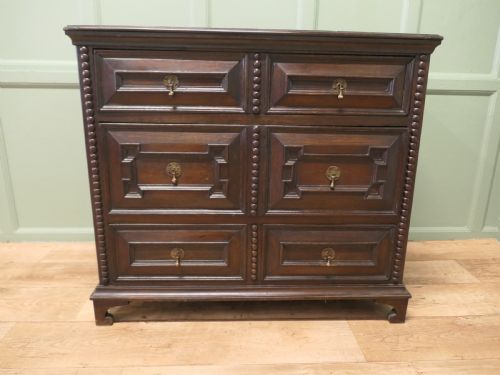
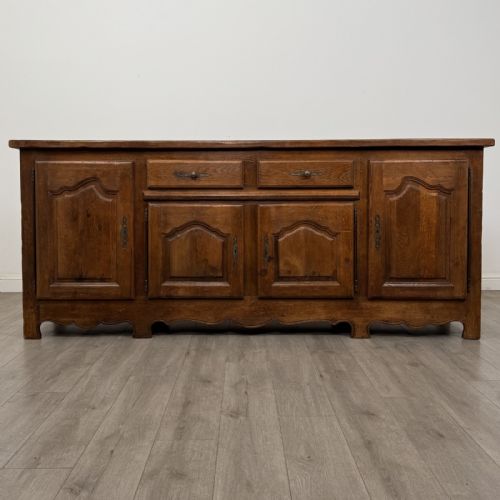
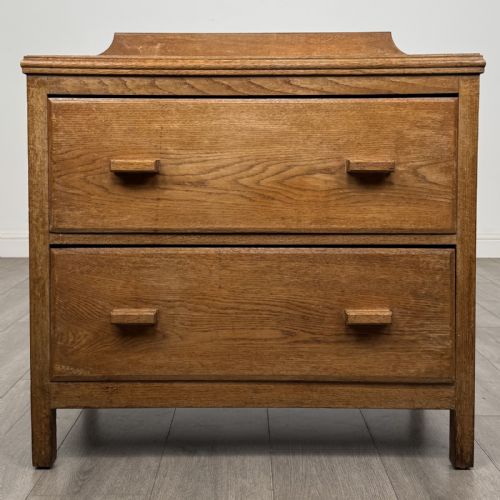
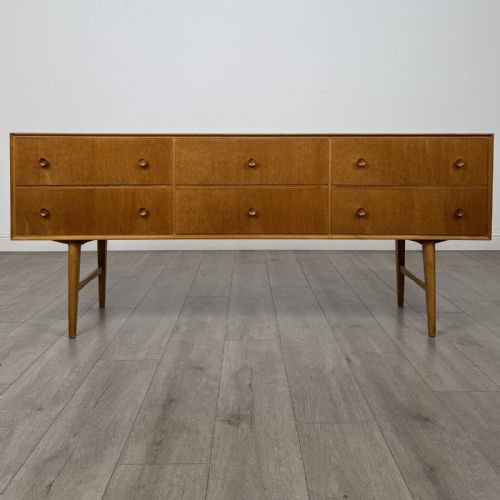
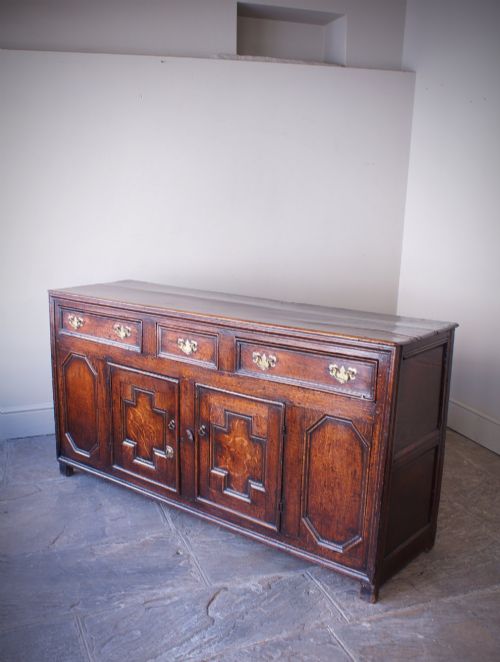
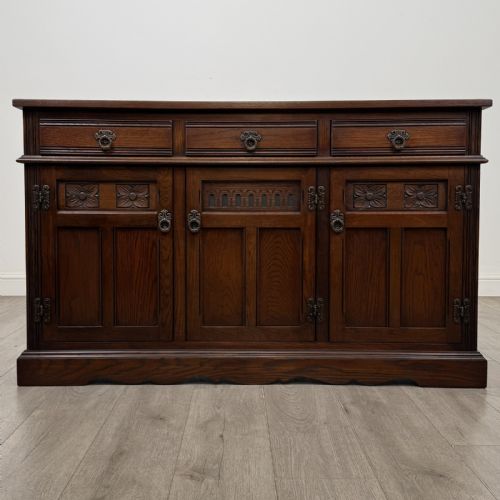
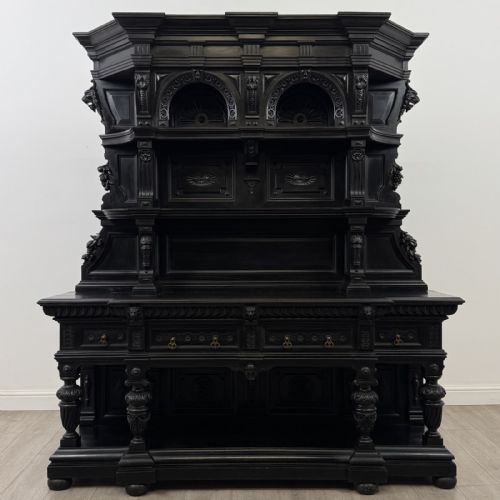
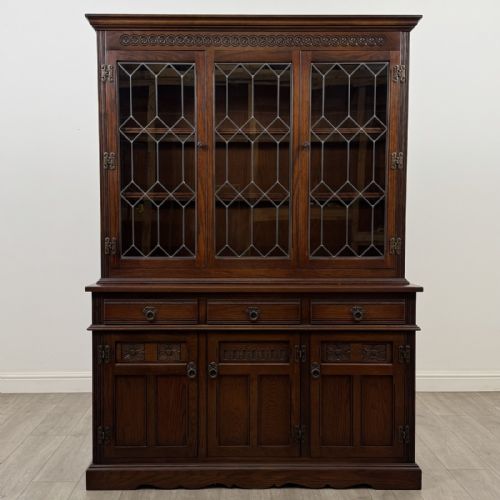
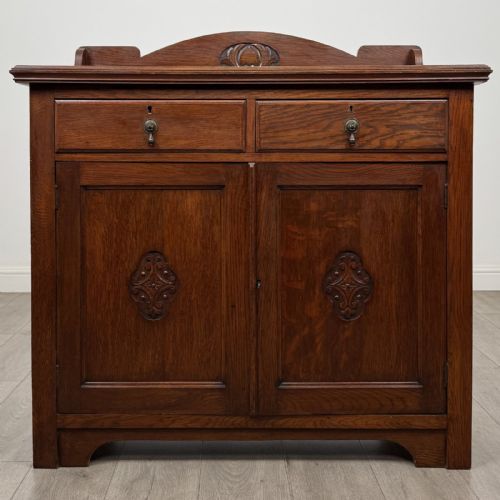
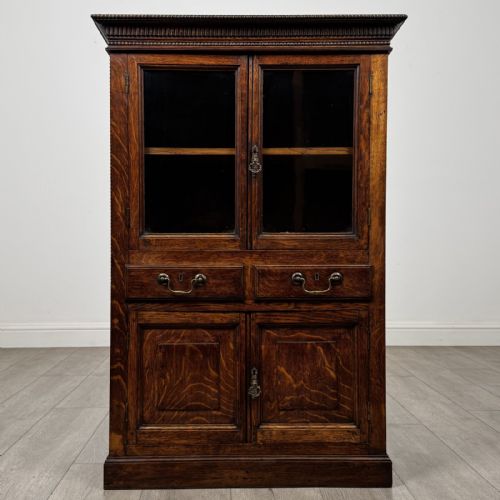
Oak Dresser Cabinet
When you search for an oak dresser cabinet, you seek a robust timber storage piece combining display shelving and enclosed base compartments.
Oak Dresser Cabinet
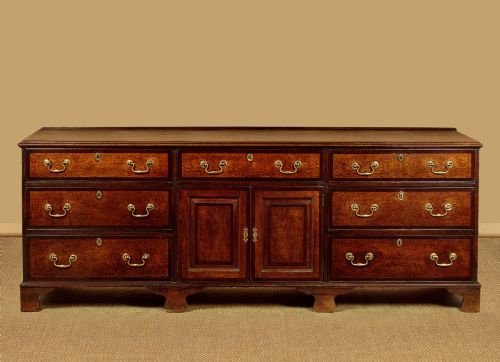
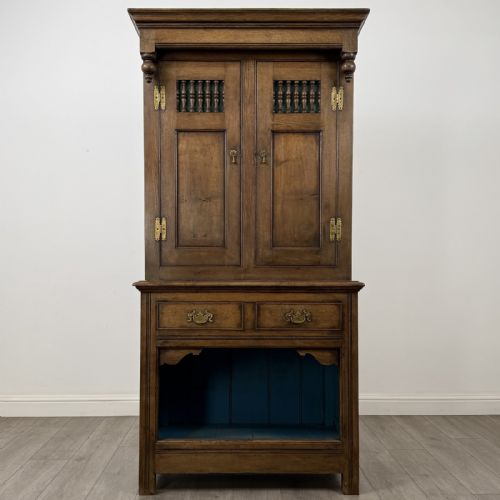
An oak dresser cabinet encompasses traditional Welsh dressers with plate racks, dresser bases, court cupboards, and glazed bookcases originating from the Georgian, Victorian, and Edwardian eras.
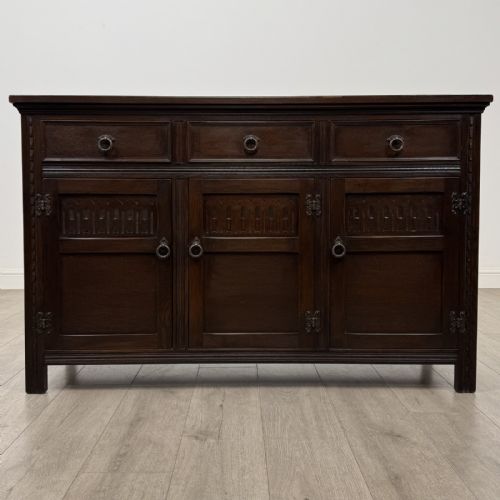
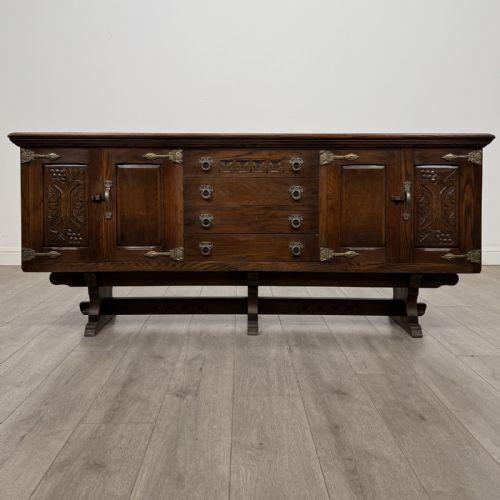
The version most commonly met on this page is the Edwardian or late nineteenth-century oak sideboard and display combination, reflecting domestic utility and revivalist decorative tastes.
Makers and workshops utilised regional English styles alongside French provincial influences to create functional kitchen and dining room storage forms.
Materials and Construction
Cabinet makers built these pieces primarily from solid oak, sometimes incorporating golden oak, tiger oak, or limed finishes, paired with brass handles and iron hardware.
Glazed sections frequently feature leaded or stained glass panels, while structural elements utilise panelled construction, linenfold carving, and barley twist turnings.
Listings feature oak storage pieces spanning from the eighteenth-century Georgian period through the Victorian era into Edwardian and 1930s revivals.
Craftsmanship and Proportion
Quality separates through the crispness of hand-carved detailing, such as Gothic revival motifs or Jacobean panels, compared to machine-routed uniformity.
Balanced proportions, original brass or iron hardware, and intact glazed elements distinguish superior regional furniture from standard utilitarian workshop output.
Ambrose Heal·Heal and Son·Liberty
The Oak Dresser Cabinet Glossary
- Dresser base
- A low wooden storage unit featuring drawers and cupboards beneath a flat surface, historically used for food preparation and serving.
- Court cupboard
- An enclosed antique cabinet featuring recessed upper tiers supported by short columns, originating in the sixteenth and seventeenth centuries.
- Plate rack
- Open wooden shelving mounted above a dresser base designed specifically to display ceramic plates and platters upright.
- Linenfold
- A decorative wood carving style depicting folded vertical parchment or fabric, popular during the Tudor and later revival periods.
- Enfilade
- A long sideboard or cabinet featuring a series of adjoining doors, commonly found in French provincial dining rooms.
Oak Dresser Cabinet: Frequently Asked Questions
What is an oak dresser cabinet used for?
These versatile pieces serve as both storage units and display furniture in dining rooms, kitchens, or living spaces. The upper shelves or glazed cabinets showcase china and books, while drawers and lower cupboards store linens or tableware.
Historically, they evolved from utilitarian farmhouse furniture into prominent dining room furnishings for displaying domestic wealth and hospitality. Today, they integrate into modern homes for organising dinnerware or collections while adding traditional warmth to a room.
How do I identify a Georgian piece?
Georgian examples, typically dating from the eighteenth century, display restrained classical proportions, fielded panels, and minimal carving compared to later Victorian revivals. Look for hand-cut dovetail joints in the drawers and signs of pegged mortise and tenon construction.
Timber choice also offers clues, as eighteenth-century makers relied on indigenous English oak with deep patination developed over centuries. Secondary woods like mahogany or pine might appear in internal linings or backing boards.
How do I care for oak furniture?
Maintain antique oak by placing it away from direct heat sources and strong sunlight, which cause timber to dry out and split. Apply high-quality beeswax occasionally to nourish the grain and protect the finish from moisture.
Avoid commercial silicone sprays and liquid polishes, as they build up residue over time and attract dust. Gentle dusting with a dry, soft cloth preserves the historic patina and safeguards carved details.