

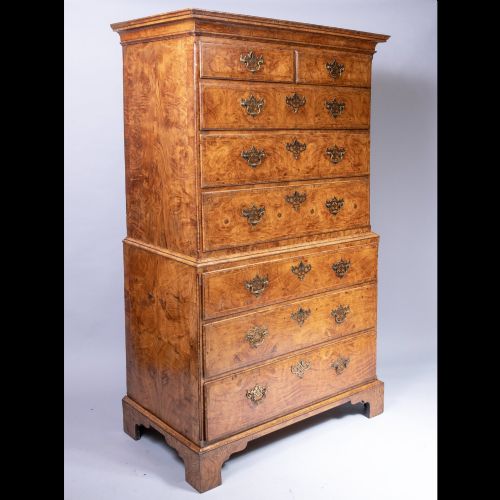
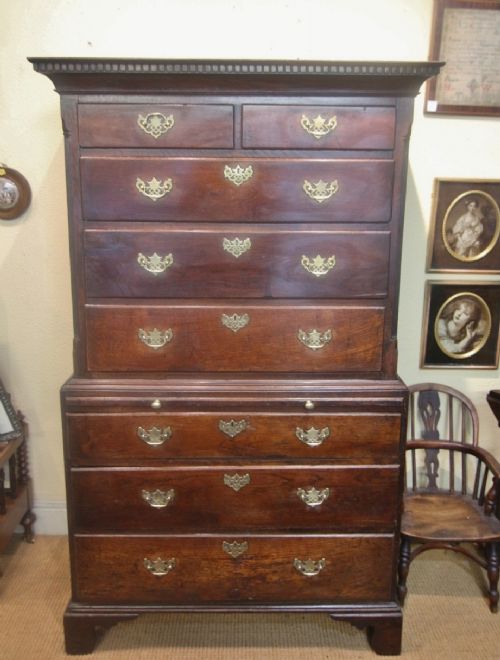
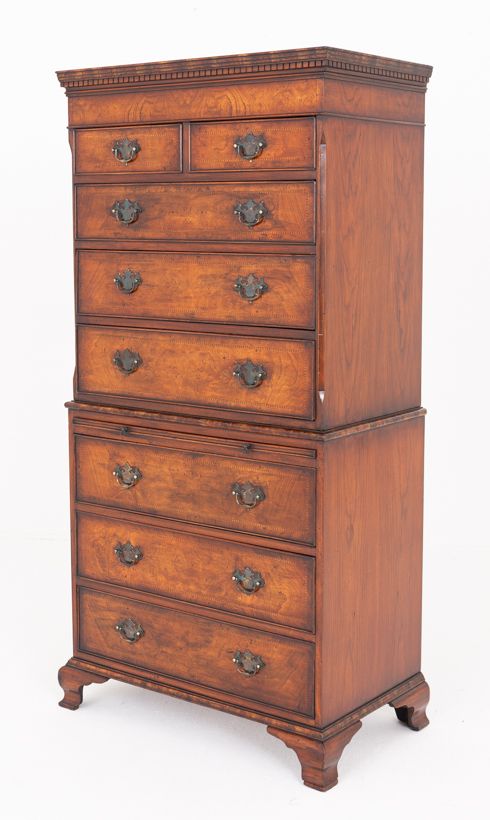


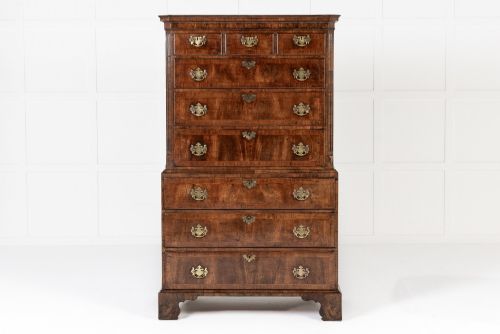


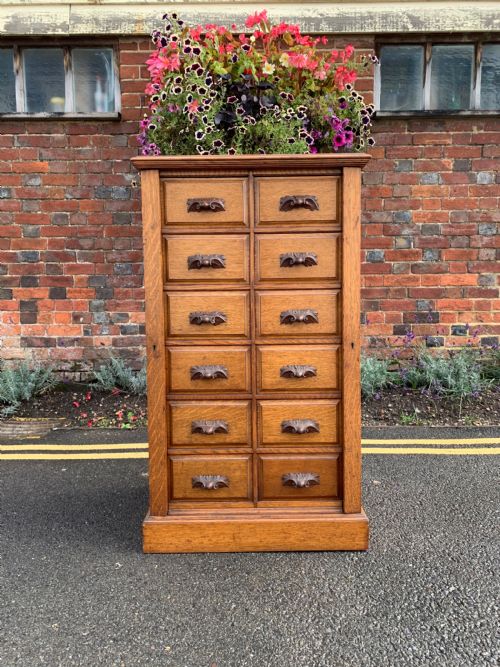

Oak Double Chest of Drawers
An oak double chest of drawers brings monumental presence and practical division of space to a room, offering grand proportions built to endure.
Oak Double Chest of Drawers
An oak double chest of drawers combines significant vertical capacity with sturdy timber construction, often appearing as a two-stage chest on chest or tallboy. These substantial case pieces divide storage between a smaller upper section and a deeper lower base, satisfying the demand for organised linen and apparel.
The versions most frequently met on this page span the eighteenth and nineteenth centuries, displaying regional character from English and Welsh workshops. Craftsmen utilised regional hardwoods to build these imposing forms, combining functional depth with balanced proportions.
Makers designed these imposing chests to dominate a chamber wall, utilising the natural figure of the wood to create striking facades. Surviving examples demonstrate the enduring appeal of oak and elm in domestic storage furniture.
Materials and construction methods
Carpenters built these pieces using solid oak, figured elm, and walnut, often pairing secondary timbers within the internal drawer construction. Timber selection prioritized straight grain for structural uprights and decorative figuring for drawer fronts.
Makers incorporated brass handles, escutcheons, and occasionally bone inlay to accent the primary wood surfaces. These metal mounts secure the drawers while adding contrasting bright detail to the dark grain of the timber.
Oak Double Chest of Drawers Retail Price Guide 2026
Typical asking prices for oak double chest of drawers among the pieces listed under this phrase on Sellingantiques today, from the lower quarter to the upper quarter. They describe what is for sale here now, not the wider market.
Early makers occasionally incorporated secret compartments behind concealed frieze drawers, rewarding the curious owner with hidden storage spaces.
Assessing quality in double chests
Quality rests upon the preservation of surface patination, the crispness of edge mouldings, and the integrity of the timber figure. Pieces retaining their original brass hardware and untouched timber surfaces command greater appreciation.
Proportional harmony between the upper and lower sections distinguishes finer cabinet work from utilitarian regional output. Master joiners ensured the grain matched across drawer tiers, creating a cohesive visual rhythm down the facade.
The Oak Double Chest of Drawers Glossary
- Tallboy
- A tall chest of drawers made in two sections, placing a smaller chest on top of a larger base. This form maximises vertical storage capacity while maintaining manageable proportions for transport.
- Chest on chest
- A case furniture form comprising two distinct cabinet stages stacked vertically, providing numerous drawers. The upper section is typically narrower than the lower portion.
- Press cupboard
- A large storage piece featuring upper cabinet doors above a lower chest configuration. These items served traditionally for storing linens and textiles.
- Wellington chest
- A tall, narrow chest of drawers secured by a hinged vertical locking bar on one side. This specialised design ensured secure containment for private papers or valuables.
- Patina
- The surface sheen and colour developed by wood through age, handling, and light exposure over centuries. This characteristic distinguishes authentic aged timber from recent finishes.
Oak Double Chest of Drawers: Frequently Asked Questions
What is a double chest of drawers?
A double chest of drawers is a tall, two-part storage piece where a smaller upper chest sits atop a larger lower base, also known as a chest on chest or tallboy.
These pieces provide extensive vertical storage while occupying a relatively compact floor footprint in a bedroom or dressing room.
How do I date an oak chest?
Dating relies on observing construction techniques, timber choice, handle design, and overall proportion relative to known stylistic periods like the Georgian era.
Changes in drawer dovetailing and the evolution of brass hardware styles offer reliable chronological markers for eighteenth and nineteenth-century pieces.
Where were these chests made?
These pieces originated in English and Welsh workshops, reflecting both urban cabinet-making standards and robust regional vernacular traditions.
Regional makers frequently utilised locally available timbers such as oak and elm to construct durable domestic furniture.
How do I maintain oak furniture?
Maintenance involves keeping the timber away from direct heat sources and sudden humidity changes to prevent wood movement and splitting.
Applying a traditional wax polish periodically nourishes the surface and preserves the natural lustre of the aged wood.