


Oak Coat and Hat Stand
When you search for an oak coat and hat stand, you find hall furniture designed to receive visitors.
Oak Coat and Hat Stand
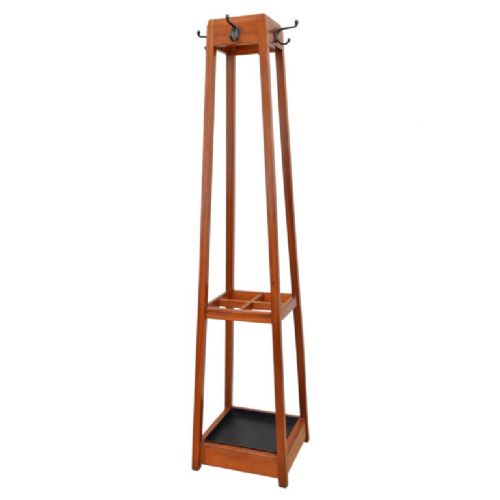
An oak coat and hat stand serves as the primary greeting piece in a hallway, combining upright timber framing with iron or brass hooks for outdoor garments. Most pieces seen here date from the Victorian and Edwardian periods, stretching from the nineteenth century into the early twentieth century.
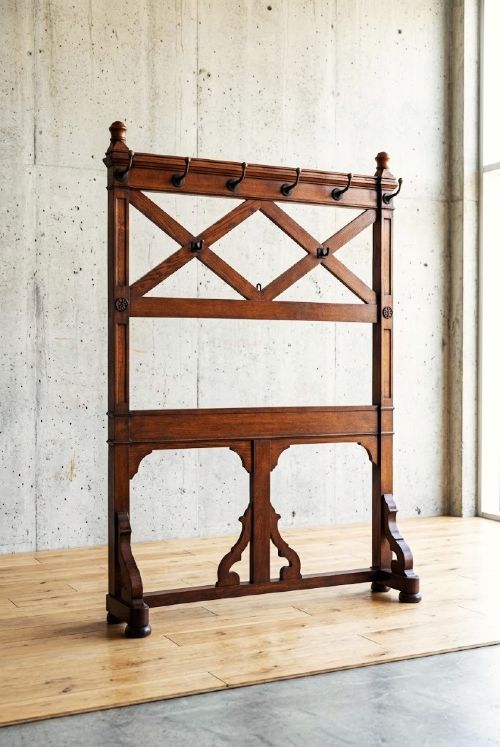
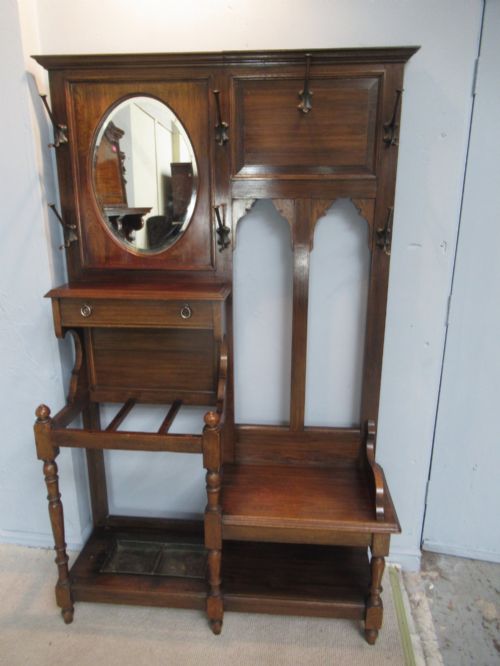
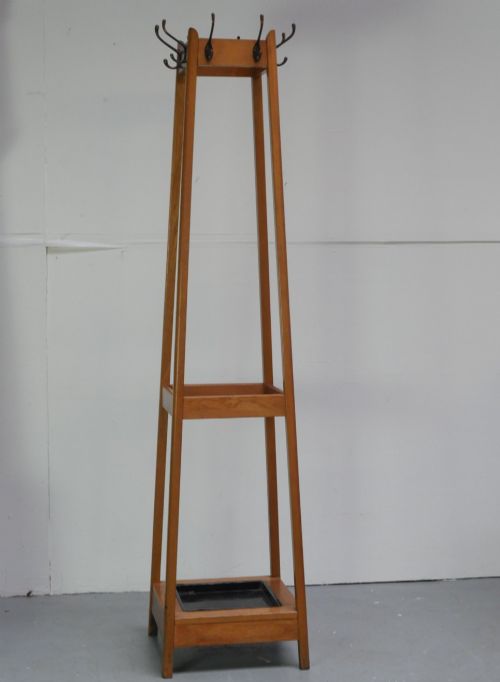
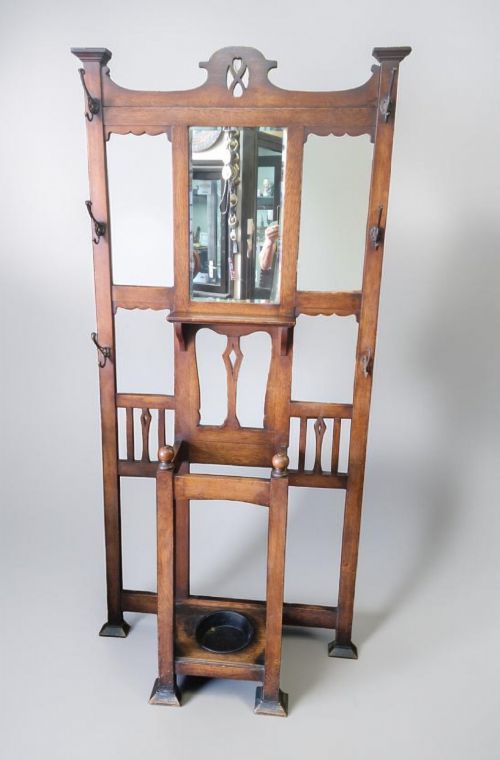
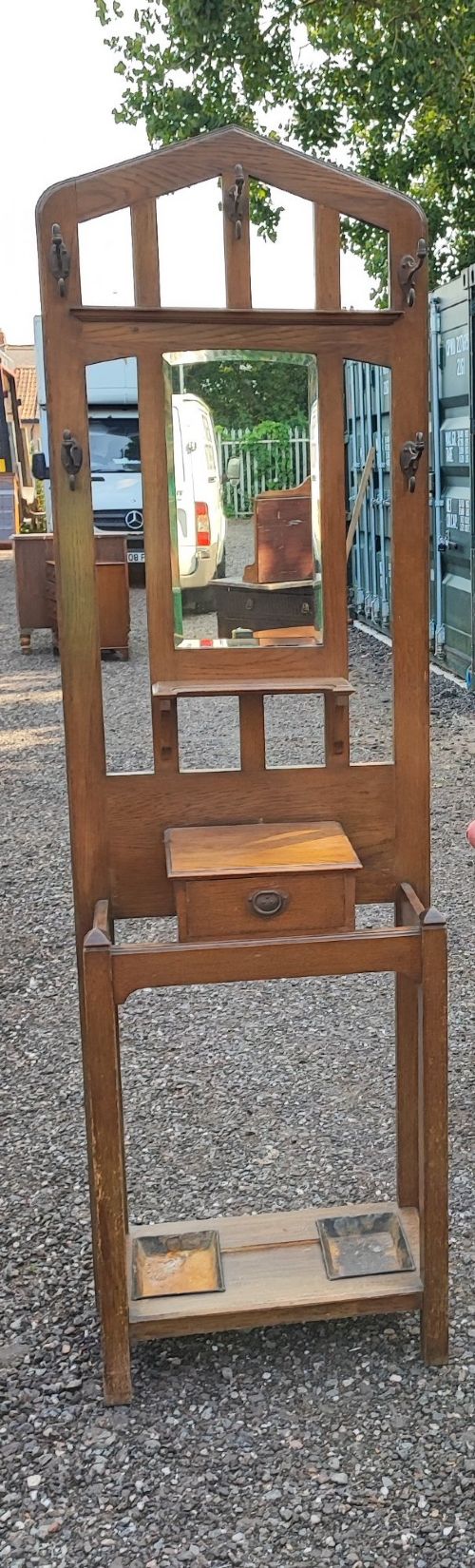
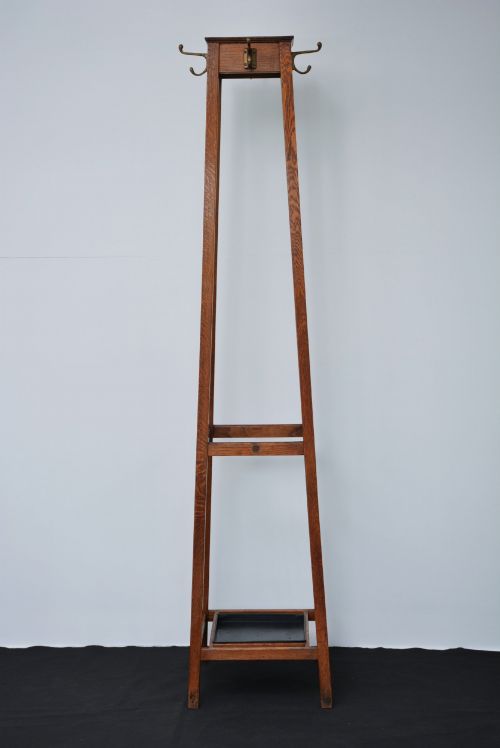
The most common formats range from narrow wall-mounted racks to large freestanding hallstands incorporating mirrors, umbrella wells, and drip trays. Examples appear in distinct regional styles such as Arts and Crafts, Art Nouveau, and Gothic Revival.
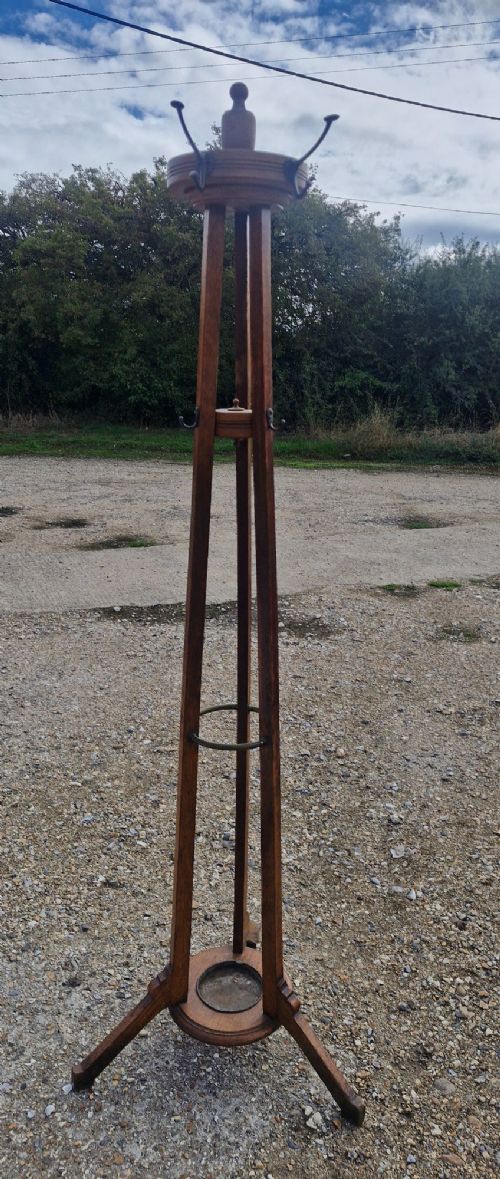
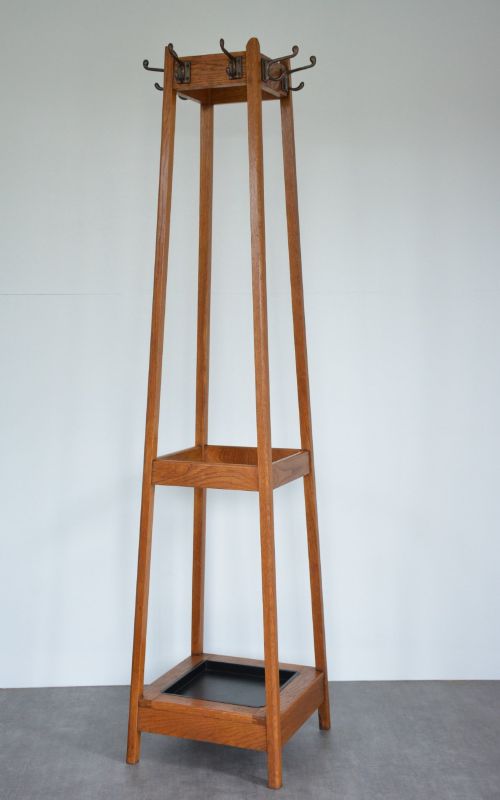
Makers often integrated practical elements for daily entrance hall use, including revolving tops and compartments for sticks and canes. Pieces survive in both solid oak and golden oak, reflecting the domestic architecture of their original country houses.
Materials and Construction
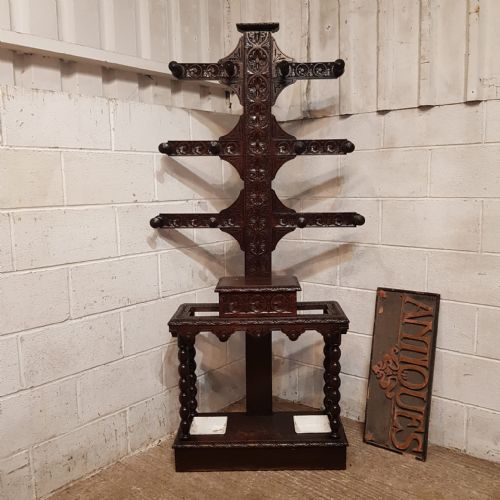
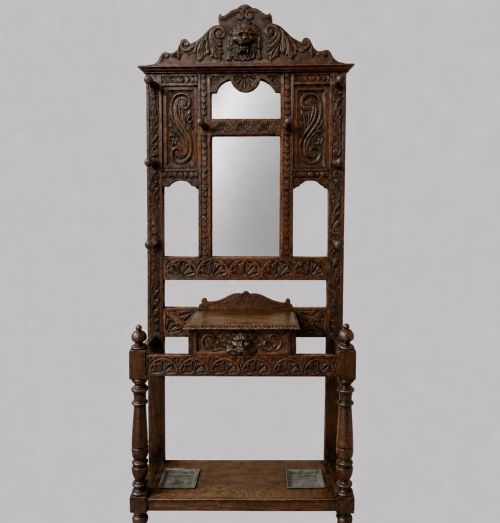
Makers relied primarily on solid oak, frequently featuring carved decoration such as Greenman motifs or geometric panels. Structural stability depended on heavy timber frames joined to withstand the daily weight of wet coats and heavy hats.
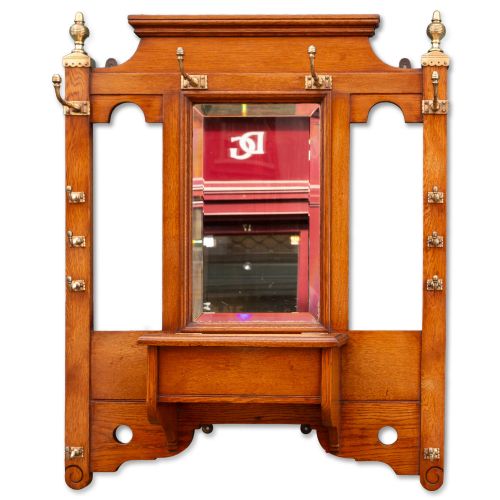
Metal components played a structural and decorative role, with brass hooks, cast iron frames, and metal drip trays added to handle damp umbrellas. Glass mirrors were frequently let into the backboards, held by timber mouldings.
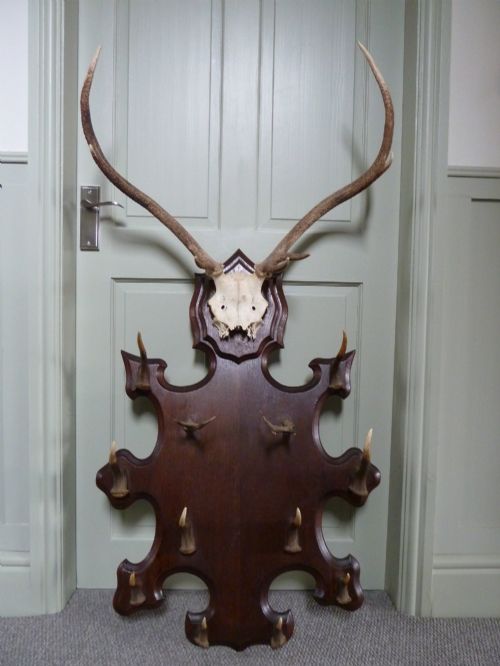
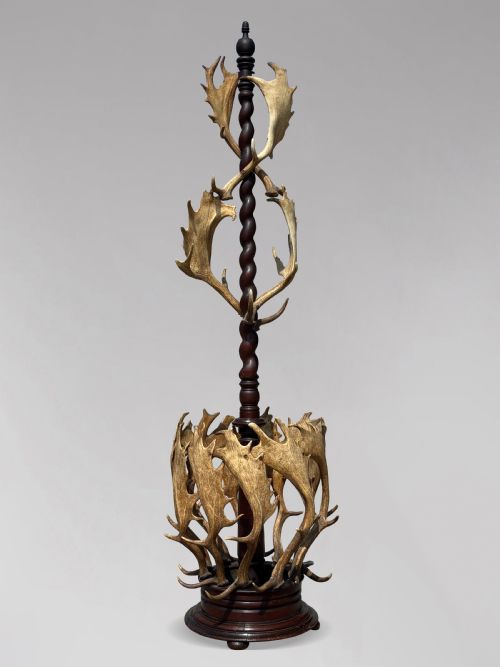
Specialist variations incorporated natural materials like stag horn, cow horn, or bentwood, shaped using steam-bending techniques typical of the era.
Stags and foxes gaze permanently from the timber.
Distinctions in Execution
Quality rests upon the depth and crispness of the timber carving and the architectural ambition of the frame. Heavily carved pieces with integrated bevelled mirrors and substantial brass fittings represent the finer end of the production.
The choice of timber grain, particularly golden oak or quarter-sawn oak displaying strong medullary rays, elevates the visual presence of the hallstand.
Joinery execution defines durability, where pegged mortise and tenon joints outlast simpler modern fixings used in mass-produced commercial variants.
J. Parker of Woodstock·Fischel·GW Evans·Astrola·William Whiteley
The Oak Coat and Hat Stand Glossary
- Hallstand
- A freestanding piece of furniture designed for an entrance hall, combining hooks for coats and hats with umbrella holders and frequently a mirror.
- Drip tray
- A metal or ceramic shallow basin placed at the base of a stand to catch water from wet umbrellas and walking sticks.
- Greenman
- A sculptural architectural ornament depicting a human face surrounded by or sprouting from foliage, common in Victorian carved oak.
- Arts and Crafts
- A design movement prioritising traditional craftsmanship, visible grain, and simple construction over mass-produced ornamentation.
- Revolving hat and coat stand
- A timber design featuring a rotating upper section that allows access to multiple garments without moving the entire heavy base.
Oak Coat and Hat Stand: Frequently Asked Questions
What is an oak coat and hat stand?
An oak coat and hat stand is a piece of entrance hall furniture designed to hold outerwear, headwear, and walking accessories.
These items range from simple wall-mounted timber racks to substantial freestanding hallstands featuring integrated mirrors and umbrella trays.
How were these stands used historically?
Historically placed in the hallway or boot room of a home, they provided guests and family members a dedicated place to deposit wet coats, hats, and sticks upon entering.
The inclusion of drip trays ensured that dripping umbrellas did not damage wooden floors.
How do I identify a Victorian hallstand?
Victorian hallstands typically feature dark carved oak, heavy proportions, and ornate details such as Gothic Revival motifs or Greenman carvings.
They frequently incorporate large central mirrors and cast iron or brass hooks designed to bear heavy winter garments.
What is the difference between Arts and Crafts and Victorian styles?
Arts and Crafts stands emphasise simple construction, exposed joinery, and natural oak grain without heavy surface carving.
Victorian pieces tend to be more decorative, favouring dark finishes, intricate relief carving, and elaborate architectural elements.