
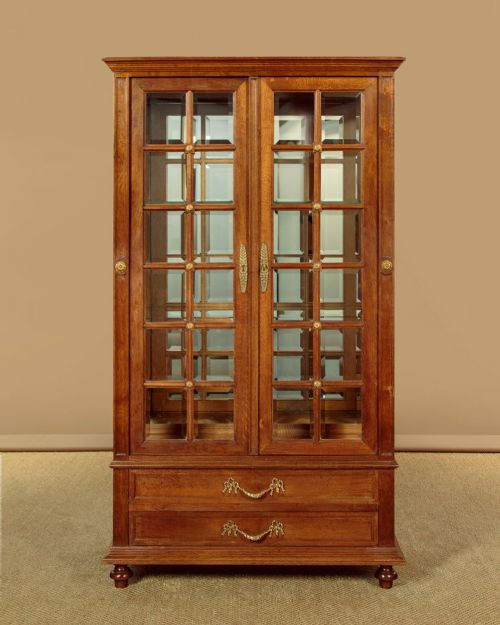


Oak China Display Case
An oak china display case brings warmth and solid timber framing to your room while keeping your best porcelain safe behind glass.
Oak China Display Case
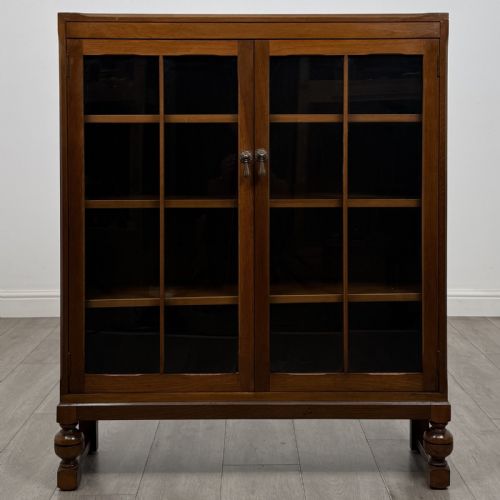
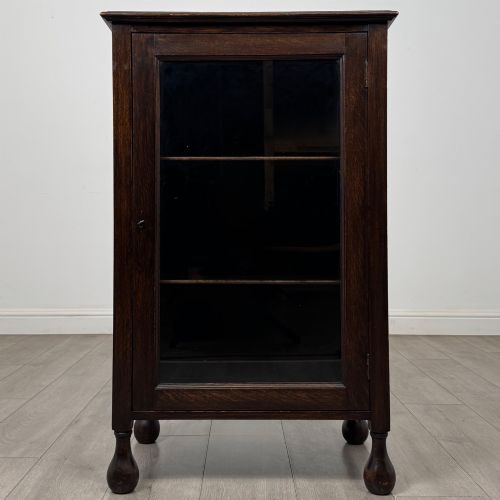
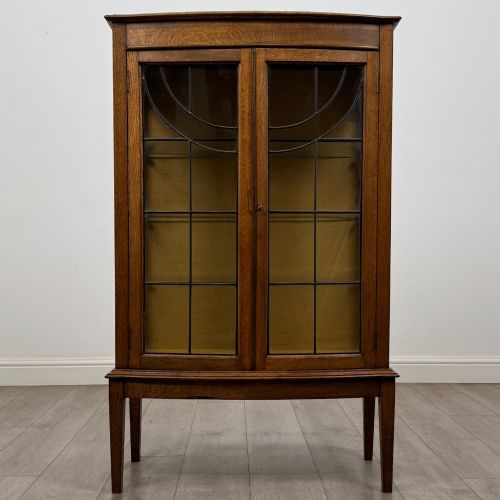
An oak china display case combines sturdy timber framing with glazed doors designed to show off ceramics and glassware. You will encounter Edwardian examples alongside pieces dating from the nineteenth century and the early twentieth century.
The form shifts between dedicated display cabinets, tall bookcases with glass doors, and vitrines. These items serve the dual purpose of storage and exhibition in a dining room or living space.
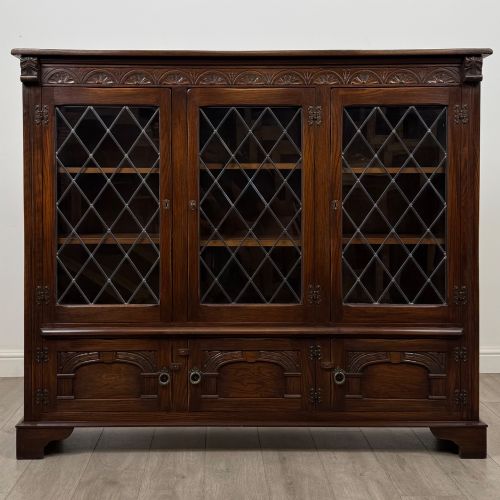
Jacobean Revival and French Provincial influences appear across the selection alongside simpler Edwardian lines. This variety allows the furniture to suit both traditional interiors and more rustic settings.
How they were made
Makers built the primary carcasses using solid oak, sometimes applying limed finishes or rich carved details to the exterior surfaces. Turned legs, tapered legs, and carved mouldings provide structural support and visual definition.
Doors feature glass panels held by timber frames, occasionally incorporating lead or iron details to secure the panes. Brass and gilt brass hardware such as hinges and handles complete the construction.
Listings feature oak china display cases spanning the Edwardian era, the nineteenth century, and the early twentieth century.
What varies in quality
The refinement of the carving and the proportion of the turned or tapered legs distinguish finer cabinets from simpler utility pieces. Attention to detail in the timber joints and the clarity of the glass also set better examples apart.
Metal mounts and decorative hardware add distinct character where present. Superior pieces display harmonious proportions between the solid wooden base and the glazed upper section.
The Oak China Display Case Glossary
- Vitrine
- A glass-fronted cabinet designed specifically for displaying fine objects and porcelain. These pieces often feature glass on the sides as well as the doors to maximise light.
- Leaded glass
- Small panes of glass held together by strips of lead, commonly seen in cabinet doors. This technique creates geometric patterns and adds structural rigidity.
- Jacobean Revival
- A nineteenth and early twentieth century style that imitates seventeenth century English furniture. It is characterised by dark oak, deep carving, and turned supports.
- Limed oak
- Timber treated with a specialised finish that leaves a white pigment in the grain. This technique lightens the wood and highlights its natural texture.
Oak China Display Case: Frequently Asked Questions
How do I clean the glass doors safely?
Use a mild glass cleaner and a soft cloth to avoid scratching the surface. Take care near the lead or wooden framing to prevent moisture from seeping into the joints.
Regular dusting keeps the timber and glass looking clear without needing harsh chemical treatments.
Can these cabinets hold heavy items?
Solid oak construction provides a sturdy platform for most china and glassware collections. Internal wooden shelves support standard dinner services quite comfortably.
Distributing weight evenly across the shelves prevents sagging and ensures the stability of the cabinet over time.
Where should I place my display cabinet?
Position the cabinet away from direct sunlight to protect your displayed items and prevent the oak timber from drying out. A stable indoor environment helps preserve both the glass and the wood.
Allow enough clearance around doors to open them fully without striking nearby furniture.
How do I identify Edwardian oak furniture?
Edwardian pieces often feature lighter oak tones and simpler, cleaner lines compared to heavy Victorian designs. Tapered legs and subtle inlay work are common characteristics of this period.
Checking construction methods inside the cabinet can also help confirm the approximate date of manufacture.