

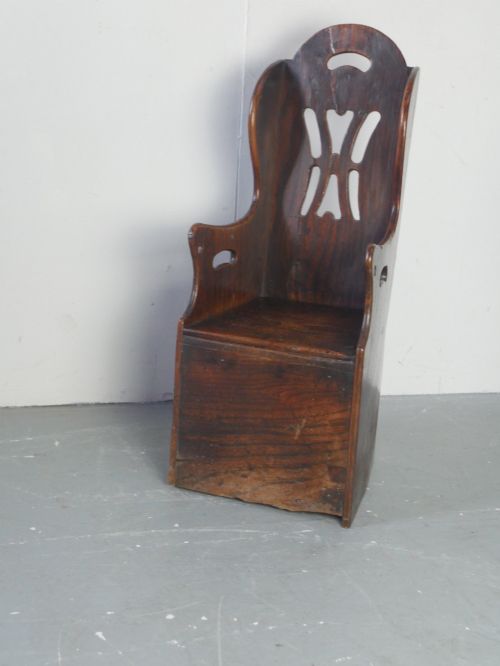


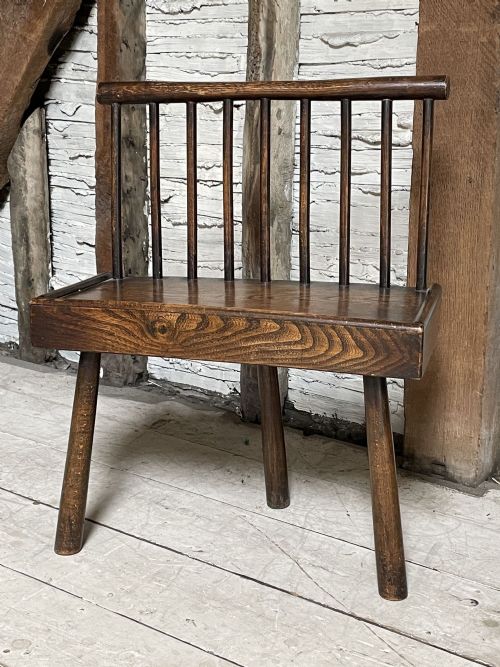
Oak Childrens Seating
Oak childrens seating brings centuries of scaled-down craftsmanship into the home, offering sturdy small-scale chairs and settles that collectors prize for their honest proportions and domestic utility.
Oak Childrens Seating
Oak childrens seating encompasses small-scale chairs, rocking chairs, high chairs, armchairs, and settles scaled for younger occupants. These domestic items survive from the seventeenth century through to the early twentieth century, reflecting the changing needs of households across generations.
Buyers browsing this selection will encounter vernacular country pieces alongside formal revival styles. Sturdy stickback windsons, ladderbacks with rush seats, and solid oak armchairs appear alongside folding frames and early rocking chairs.
Origins span vernacular English workshops and country traditions, utilising durable timbers built to withstand daily use by children. The material focus remains firmly on oak, frequently paired with secondary woods and seating materials like rush.
How they were made
Cabinetmakers and country joiners constructed these miniature seats using solid oak for frames, legs, and spindles, often turning parts on a lathe. Secondary timbers such as fruitwood, elm, and ash frequently supplemented the primary oak structure.
Traditional joinery techniques including mortise and tenon joints, pegging, and steam-bending formed sturdy frames capable of supporting active use. Seats were finished with solid wood boards or woven rush, whilst specialised forms utilised leather and metal hinges for reclining or folding mechanisms.
Oak Childrens Seating Retail Price Guide 2026
Typical asking prices for oak childrens seating among the pieces listed under this phrase on Sellingantiques today, from the lower quarter to the upper quarter. They describe what is for sale here now, not the wider market.
Miniature rocking chairs and folding seats show that historical children loved motion and portability just as much as modern toddlers do.
What varies in quality
Quality in these small pieces rests upon the integrity of the original construction and the survival of untouched surfaces. Finer examples retain their original timber patination and honest joinery without excessive replacement parts.
Proportion and scale distinguish superior items, where makers maintained the balance of full-sized seating within miniature dimensions. The skill shown in turned spindles, rush weaving, and shaped stickbacks marks the distinction between standard vernacular work and finer country craftsmanship.
The Oak Childrens Seating Glossary
- Ladderback
- A chair style featuring horizontal slats between upright posts. This traditional form commonly supports woven rush seating.
- Stickback
- A seating type constructed with turned spindles inserted directly into a solid wooden seat. These Windsor-related designs offer robust lightweight support.
- Settle
- A wooden bench featuring a high back and solid arms to block drafts. Miniature versions provide enclosed seating for children.
- Rush
- Marsh grass twisted into cords and woven to create flexible seating pads. This natural material appears frequently on traditional country chairs.
- Vernacular
- Everyday objects built by local craftspeople using regional traditions and materials. These pieces prioritize practical utility over high-style academic design.
Oak Childrens Seating: Frequently Asked Questions
What periods do these pieces span?
The selection covers items from the seventeenth century through the Victorian era and into the early twentieth century. Listings include vernacular seventeenth-century styles alongside Georgian forms and Arts and Crafts examples.
Dates range from seventeenth-century fruitwood designs to 1930s high chairs, showing how domestic child seating evolved across hundreds of years.
How were children's chairs used?
These scaled-down seats served everyday domestic purposes in family homes, from dining at table high chairs to nursery seating and rocking chairs for soothing infants. Settles provided enclosed seating near hearths to keep children warm.
Robust construction in solid oak and fruitwood ensured these items could handle daily use by young children without breaking.
How can I tell the age of a chair?
Age is determined by construction methods, tool marks, timber shrinkage, and traditional styling characteristic of specific centuries. Seventeenth-century pieces display hand-turned framing and pegged joints, whilst later nineteenth-century items show different machining techniques.
Comparing the materials, such as rush seating and oak frames, helps align pieces with documented periods like the Victorian era or earlier vernacular styles.
Can I use these chairs in a modern home?
These small seats integrate easily into contemporary interiors as decorative display items, plant stands, or occasional seating. Their compact proportions make them suitable for hallways, living rooms, and nurseries.
Collectors often place them alongside full-sized antique furniture to highlight domestic history and traditional woodworking skills.