
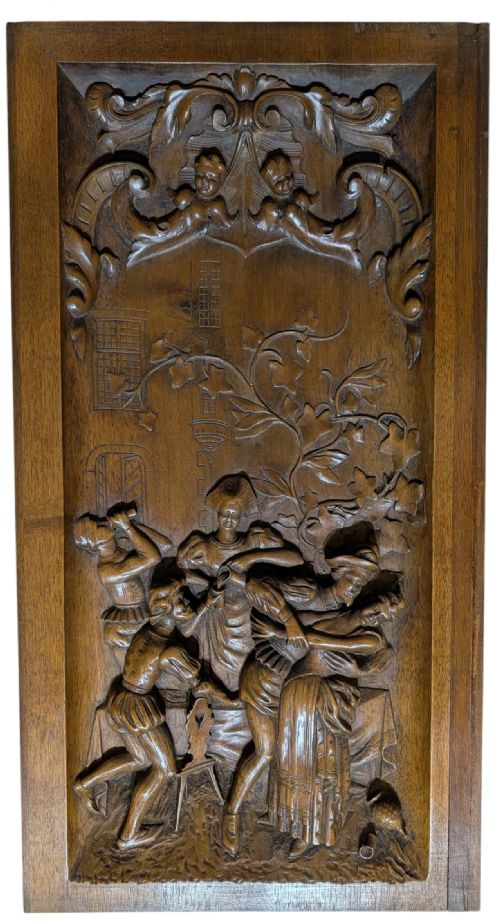


Oak Cherub Carving
An oak cherub carving brings seventeenth-century architectural presence and vigorous hand-carved expression directly into a modern interior.
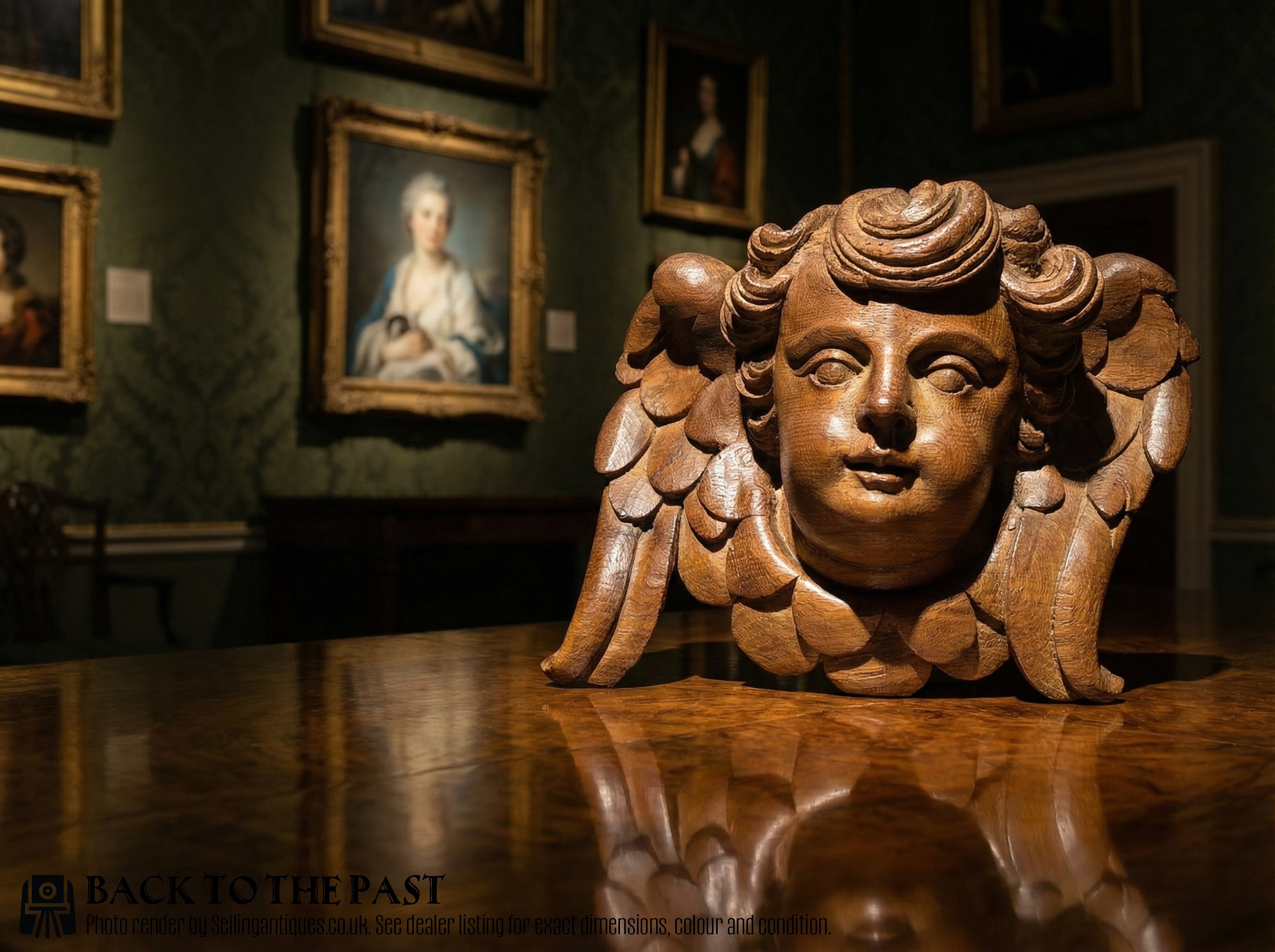
Oak Cherub Carving
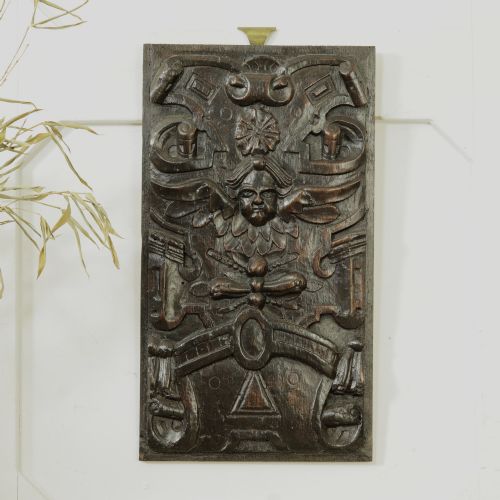
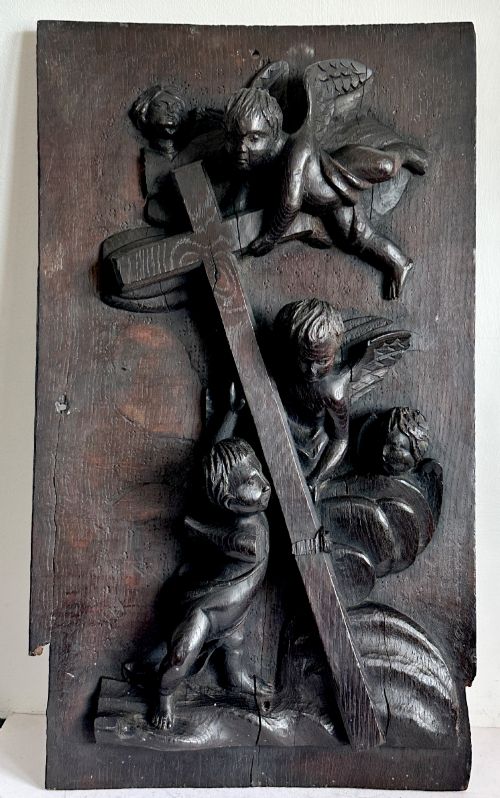
When you search for an oak cherub carving, you encounter solid timber sculptures, architectural appliques, and wall reliefs that date primarily from the seventeenth and eighteenth centuries, alongside later nineteenth-century revival pieces. These works range from singular winged cherub heads and kneeling angels to complex panels featuring putti alongside acanthus leaves or armorial details.
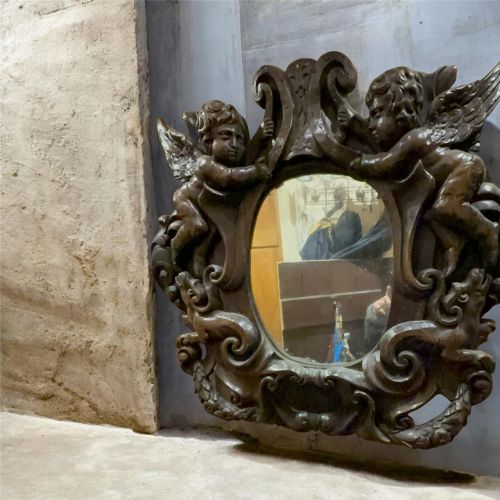
The pieces on this page appear in various forms, including standalone wall carvings, mirror frames, and overdoor panels that originally anchored grand architectural schemes. Seventeenth-century examples display deep, high-relief Baroque and Carolean modelling, while eighteenth-century items often present simpler sculptural interpretations.
Buyers also meet nineteenth-century revival items, such as Carolean and Renaissance-style wall mirrors or cabinets incorporating carved angelic figures. The origin spans English workshops as well as continental Flemish production, all executed in dense native hardwood.
Materials and construction methods
Carpenters and carvers worked almost exclusively in solid oak, selecting timber for its dense grain and capacity to hold sharp, deep chisel marks over centuries. This material allowed artisans to execute high-relief wall sculptures and architectural appliques that project dramatically from backing panels.
Construction relied on traditional hand-carving techniques utilising gouges and chisels to shape the winged faces, rounded cheeks, and flowing hair of the putti. Many examples began as structural elements of furniture or interior wall panelling before later being mounted as independent decorative works.
Several cherubs share their wooden panels with carved hippocampus creatures, proving that mythical seahorses made reliable companions for seventeenth-century angels.
Distinctions in quality
Condition and integrity define the upper tier, where original surfaces and patination remain undisturbed by aggressive cleaning or modern refinishing. Pieces retaining their original mounting pins or structural context demonstrate superior historical preservation compared to heavily altered fragments.
Edward Pearce
The Oak Cherub Carving Glossary
- Applique
- A decorative carved element applied directly to the surface of a larger panel, furniture piece, or architectural framing.
- Baroque
- An artistic style prevalent in the seventeenth century characterised by dramatic movement, high relief, and exuberant organic ornamentation.
- Putto
- A plump, often winged male child figure frequently depicted in classical and religious art from the Renaissance onward.
- High-Relief
- A sculptural technique where figures project significantly from the flat background, sometimes nearly detaching into the round.
Oak Cherub Carving: Frequently Asked Questions
How were oak cherubs originally used?
These carvings originally functioned as architectural elements within domestic and ecclesiastical interiors, embellishing overdoors, staircase panels, and chimney pieces.
They also appeared integrated into grand cabinetry, pier tables, and mirror frames to project status and theological or classical themes.
How do I date an oak carving?
Dating relies on tool marks, the depth of the relief work, and the style of the surrounding ornamentation, such as acanthus leaves or strapwork.
Seventeenth-century examples typically show deeper, more vigorous undercutting and darker patination compared to later nineteenth-century revival interpretations.
Are these pieces English or continental?
The evidence includes both English workmanship and continental production, particularly Flemish panels from the mid to late seventeenth century.
Flemish carvings often feature distinctive winged cherub appliques paired with sea creatures or scrollwork, while English pieces frequently align with Carolean or Baroque interior architecture.
How do I hang a heavy oak carving?
Due to the weight of dense seventeenth-century hardwood, carvings require secure wall fixings anchored directly into masonry or wall studs.
Many pieces retain original iron brackets or mounting holes that dictate the correct hanging points without straining the timber.