



Oak Barrel Umbrella Holder
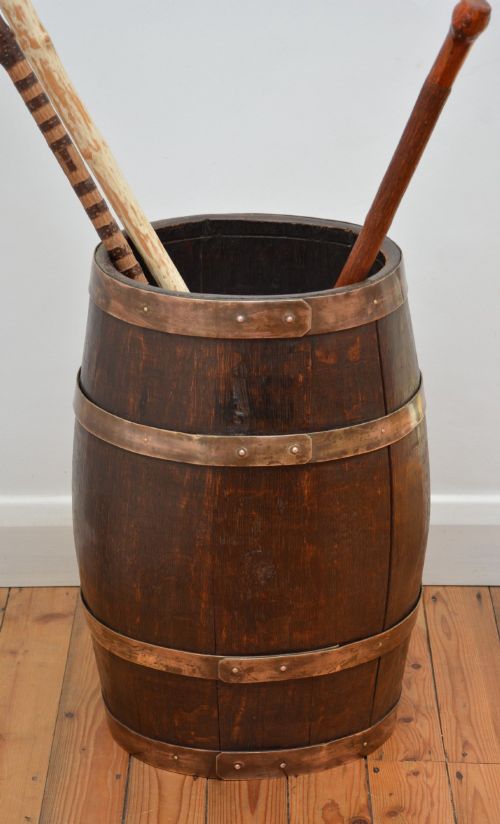
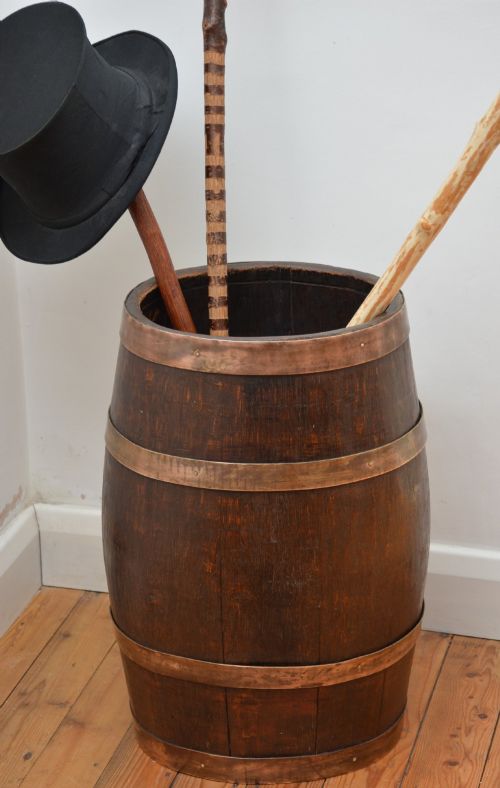
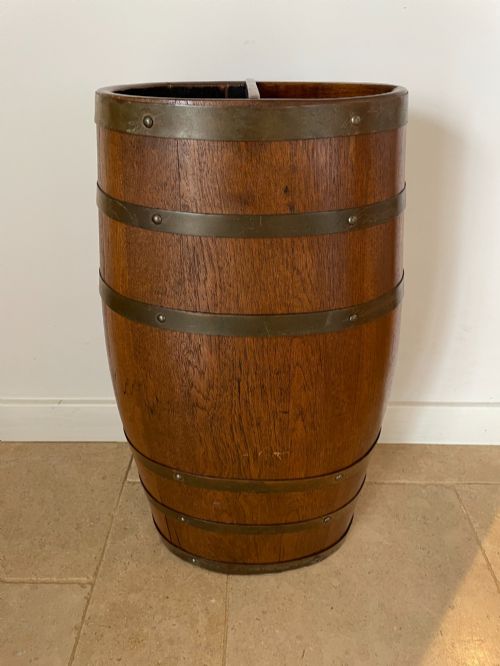
An oak barrel umbrella holder brings sturdy country house character to a hallway, formed from coopered timber and bound in gleaming metal.
Oak Barrel Umbrella Holder
An oak barrel umbrella holder takes the traditional form of a coopered vessel designed to contain wet walking sticks and umbrellas in a hallway or boot room. These pieces appear frequently in Victorian and Edwardian iterations, reflecting the domestic requirements of large English country houses.
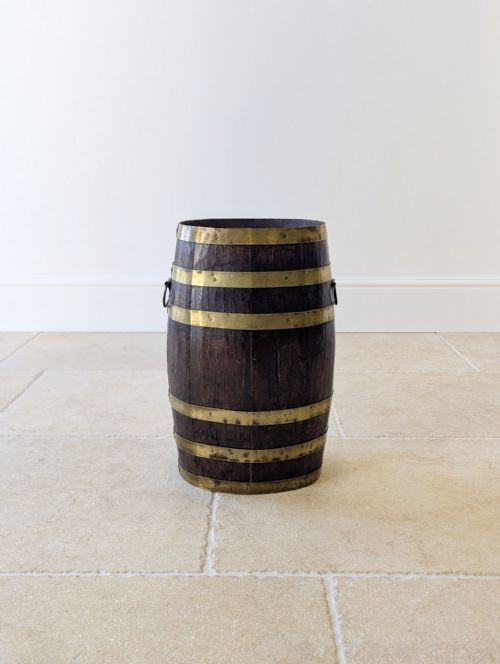
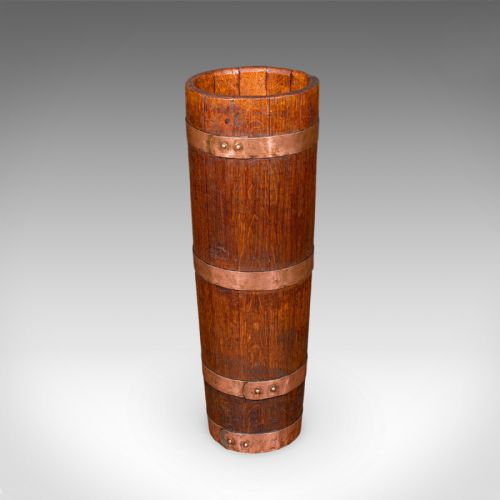
The objects span round and oval profiles, often utilising individual wooden staves held tightly together by metal hoops. Buyers encounter both circular barrel shapes and elongated oval forms fitted with interior loops or dividers to keep sticks upright.
Originating predominantly from the nineteenth and early twentieth centuries, these stands combine utility with robust carpentry traditions. They serve as practical furniture that bears the distinctive marks of cooperage craftsmanship.
Materials and construction methods
The construction relies heavily on traditional cooperage, where curved wooden staves of oak are fitted side by side to create a self-supporting cylinder or oval. These staves are secured under tension by exterior bands made of brass, copper, or iron.
Makers selected oak for its natural durability and resistance to moisture, frequently pairing the rich grain of the timber with polished brass braces or painted highlights. Metal loops and handles added structural rigidity and assisted with positioning the stand.
Oak Barrel Umbrella Holder Retail Price Guide 2026
Typical asking prices for oak barrel umbrella holder among the pieces listed under this phrase on Sellingantiques today, from the lower quarter to the upper quarter. They describe what is for sale here now, not the wider market.
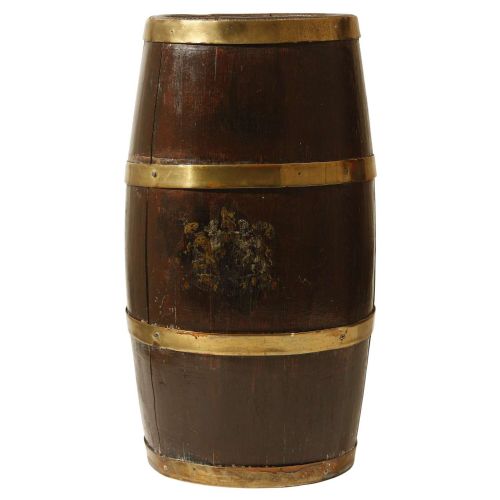
Some stands proudly bear a cast metal coat of arms, ensuring your hallway umbrellas feel as though they belong to royalty.
Factors that distinguish the work
Quality rests in the precision of the cooperage and the harmony between the timber staves and the metal mounts. Finer examples display tight, seamless joints along the staves and substantial brass or copper banding that holds its tension securely.
The inclusion of original interior fittings, such as umbrella loops and matching drip trays, elevates the integrity of a piece. Superior proportion and patination on the oak surface separate standard utilitarian vessels from refined country house furnishings.
R.A. Lister
The Oak Barrel Umbrella Holder Glossary
- Coopered
- Assembled from curved wooden staves bound together with hoops, mirroring the method used to make casks and barrels.
- Stave
- One of the narrow strips of oak shaped to form the sides of a barrel or stick stand.
- Brass bound
- Fitted with exterior bands of brass that hold the wooden staves under structural tension.
- Stick stand
- A piece of furniture designed specifically to hold walking sticks, canes, and umbrellas in an upright position.
- Patina
- The surface sheen and colour developed on oak timber through age, handling, and use over many decades.
Oak Barrel Umbrella Holder: Frequently Asked Questions
What is an oak barrel umbrella holder?
It is a coopered wooden vessel designed to hold walking sticks and umbrellas in an entrance hall. The form adapts traditional barrel-making techniques for domestic hallway use.
Most examples feature oak staves bound with metal hoops and date from the Victorian or Edwardian periods.
How were these stands used originally?
Country houses and large urban residences placed them in hallways to catch rainwater dripping from wet umbrellas. They kept walking sticks organised and prevented dampness from reaching wooden floors.
The interior loops kept individual sticks separate and upright rather than slumping against the sides.
How do I clean an oak barrel?
Dust the timber regularly with a dry cloth and occasionally feed the oak with a traditional beeswax polish. Avoid harsh chemical cleaners that strip the historic surface finish.
Keep the interior dry where possible to protect the lower staves from sustained moisture exposure.
How can I tell the period?
Dating relies on examining the construction marks, the type of metal used for the bands, and the overall wear on the timber. Nineteenth-century pieces often show hand-planed staves and heavy brass braces.
Later Edwardian versions may exhibit standardised machine finishing alongside maker stamps or specific hardware designs.