


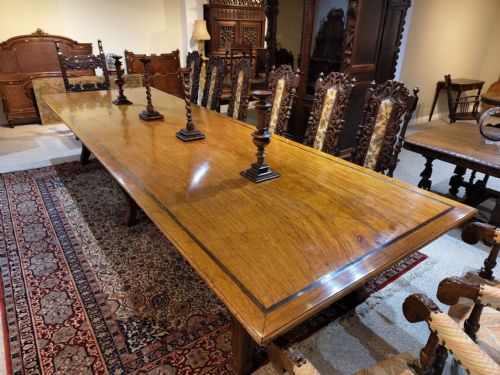
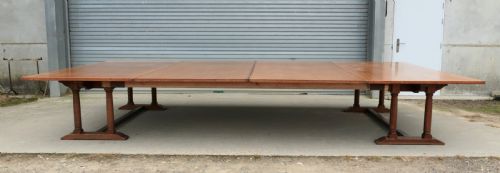

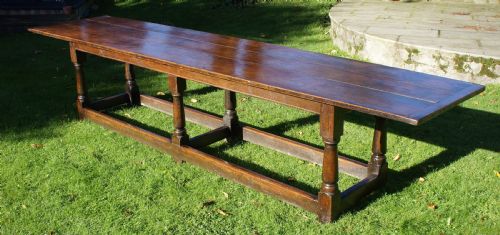


Oak Banqueting Table
An oak banqueting table provides generous surface and sturdy timber for large gatherings, prized for period character and solid construction.
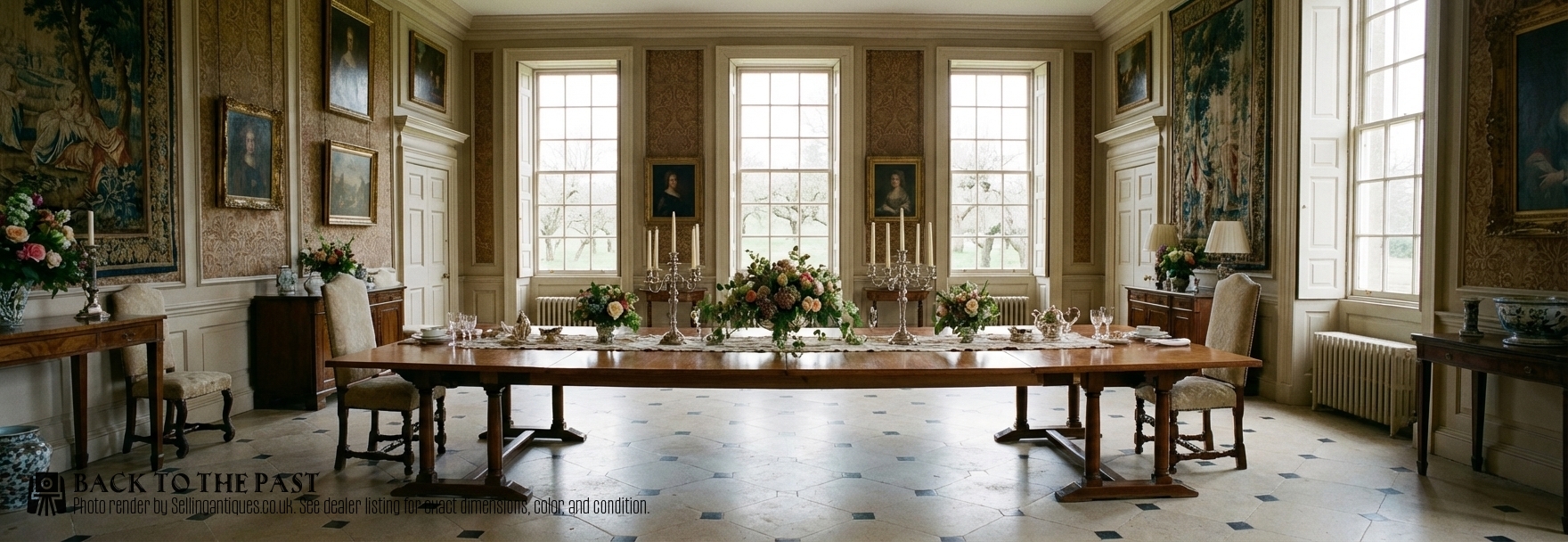
Oak Banqueting Table
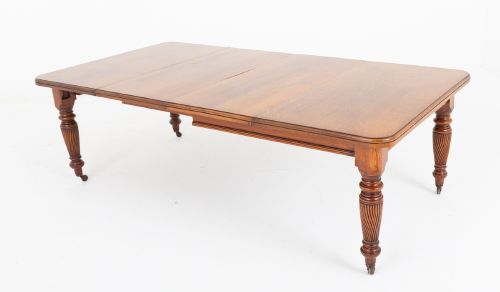
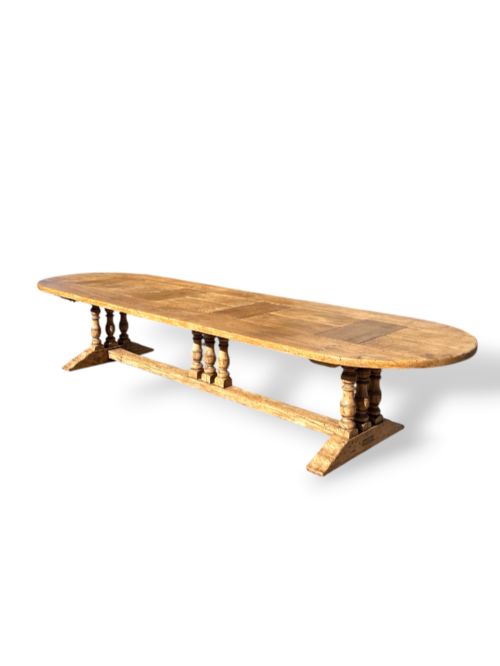
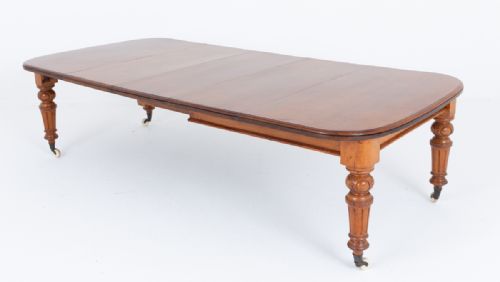
An oak banqueting table is a substantial dining piece designed to seat large numbers, appearing here in formats such as extending designs, refectory boards and circular tops. The selection spans 17th Century originals alongside later revivals from the Victorian, Edwardian and Arts & Crafts periods.
Buyers seeking an oak banqueting table will encounter massive proportions, including lengths reaching eighteen feet and thirty-seater boardroom tables. These boards serve demanding dining rooms and large spaces where presence and historical style matter.
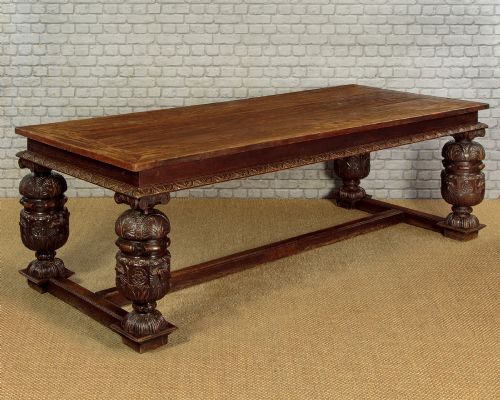
Revival styles heavily populate the offerings, drawing on Elizabethan, Jacobean and Gothic designs executed in solid timber. Alongside these stand French country models and military-influenced Arts & Crafts examples.
Materials and construction
Makers relied principally on solid oak, supplemented by pollard oak for figured grain effects, alongside supporting elements in pine, walnut, brass and ceramic. Construction methods prioritised sturdy timber frames capable of supporting heavy leaves and extended lengths without failing.
Carpenters utilised traditional draw-leaf mechanisms, trestle bases and cruciform supports to build stability into large tables. Surface treatments range from carved decoration in Gothic and Elizabethan revivals to simpler finishes on refectory boards.
One extraordinary piece carries an official crown estate stamp alongside bronze feet, built for naval service on a ship.
Factors influencing quality
Quality rests upon the selection of timber, where dense grain and figuring in pollard oak elevate the appearance above standard quarter-sawn boards. The integrity of extending mechanisms and the crispness of hand-carved details define the upper tier.
Proportional harmony across tables measuring twelve to eighteen feet dictates the visual success of large pieces. Construction depth and the robustness of the underframe separate standard dining tables from monumental boardroom and banqueting examples.
Maple and Co
The Oak Banqueting Table Glossary
- Refectory table
- A long, narrow dining table originally used in monasteries and great halls. These pieces feature substantial timber legs connected by low stretchers.
- Draw-leaf table
- An extending table equipped with two sliding leaves stored beneath the main top. Pulling these ends outwards raises them flush with the centre surface.
- Pollard oak
- Timber taken from trees that were pollarded, producing tightly clustered knots and highly decorative grain patterns. Cabinet makers utilised this wood for prominent table tops.
- Cruciform base
- A cross-shaped support structure positioned beneath the centre of a round table. This arrangement distributes weight evenly and allows legroom around the perimeter.
Oak Banqueting Table: Frequently Asked Questions
How many people can sit at these tables?
Capacities scale from ten-seat Edwardian versions up to massive thirty-seater boardroom pieces and eighteen-foot refectory formats. Length determines the seating capability, often augmented by multiple leaves.
Buyers should measure dining spaces carefully to accommodate both the closed length and extended leaf positions alongside chair clearance.
What is the difference between refectory and extending tables?
Refectory tables maintain a fixed, substantial length supported by stretcher frames, rooted in monastic and hall traditions. Extending tables incorporate draw-leaves or drop-in sections to alter the surface area.
Both formats appear across Victorian and Edwardian periods, utilising solid oak and pollard oak timber.
How do I care for a large oak surface?
Solid timber requires protection from direct heat sources and rapid humidity shifts to prevent movement in the wood. Routine maintenance involves dusting with a dry cloth and occasionally feeding the grain with traditional wax.
Avoid commercial silicone sprays which build up residue on period finishes and carved details.
How do I identify revival styles?
Elizabethan, Jacobean and Gothic revival pieces incorporate characteristic architectural motifs, heavy cup-and-cover turnings or carved strapwork executed during the 19th and early 20th centuries. These items emulate earlier 17th Century originals while employing later construction techniques.
Examining the underside and fixing methods reveals the true period of manufacture rather than the historical style referenced.