



Oak Armchair with Leather
These oak armchair with leather pieces span desk chairs to rocking forms, offering robust construction and traditional seating utility.
Oak Armchair with Leather
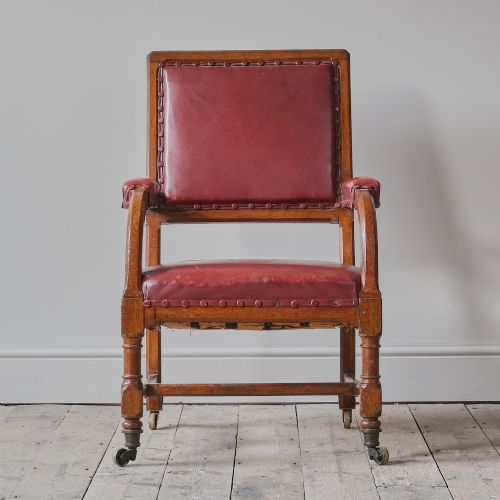
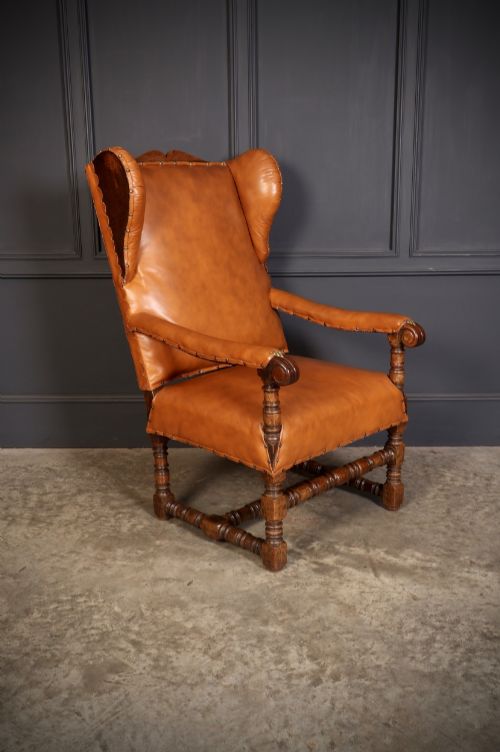
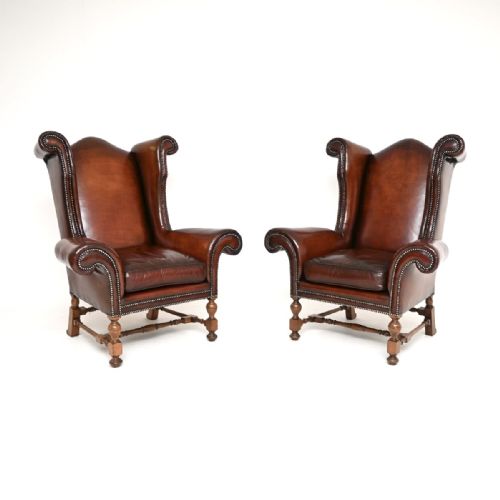
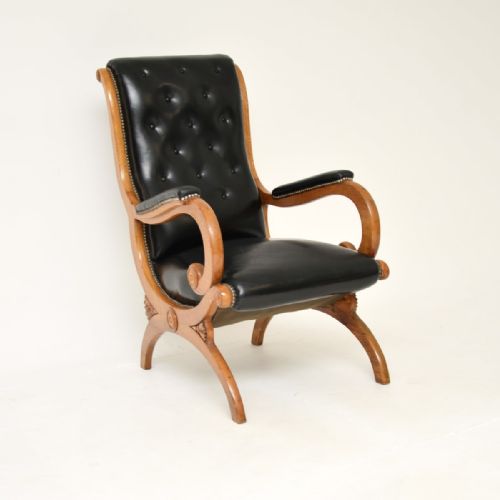
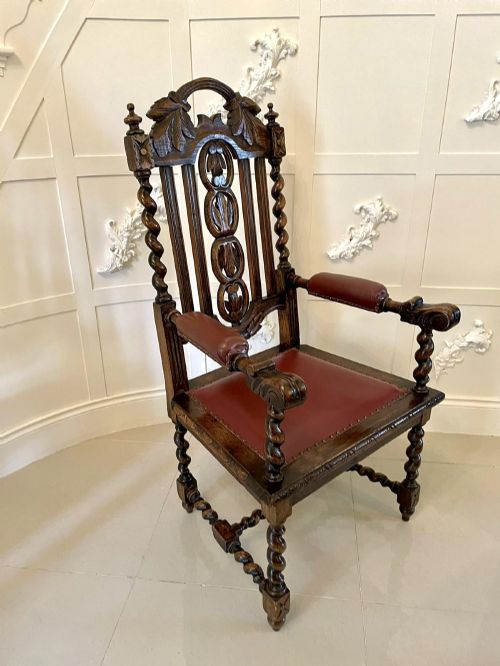
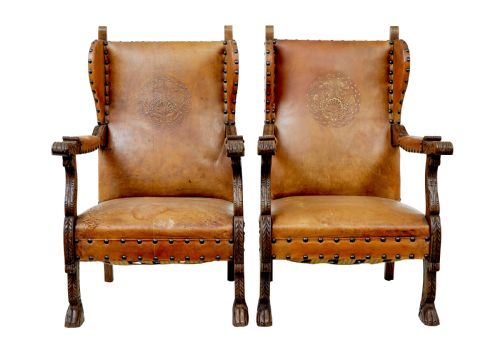
An oak armchair with leather combines a solid wooden frame with a padded seat or back, spanning desk chairs, library armchairs, rocking chairs, and hall chairs. These utilitarian and domestic seats originate from periods including the nineteenth century, the Edwardian era, and the nineteen-twenties.
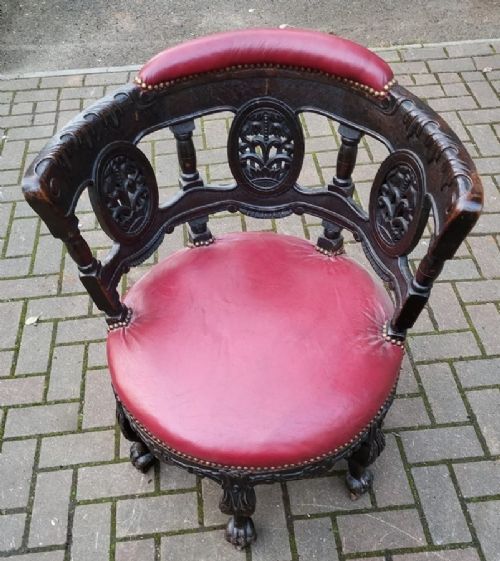
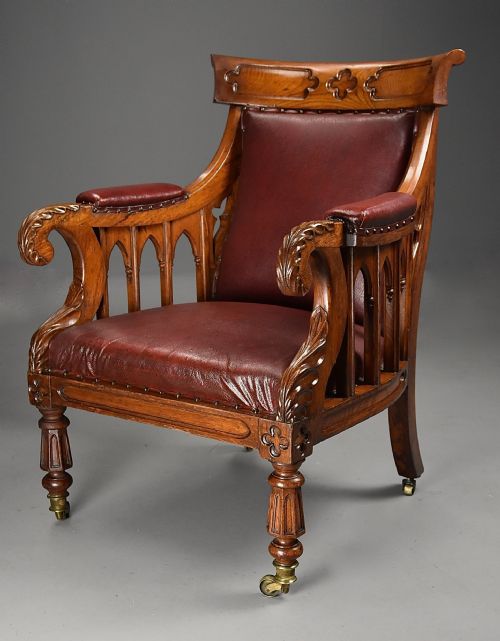
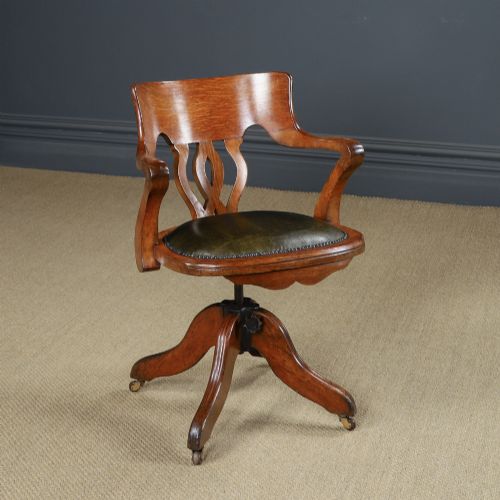
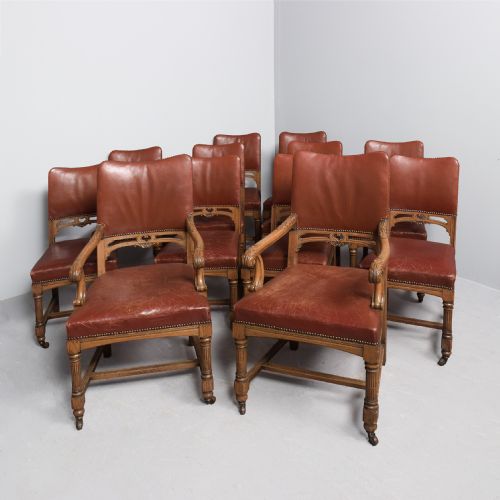
The most common versions met on this page include library armchairs, revolving desk chairs, and office seats. They showcase styles ranging from Gothic Revival and Arts and Crafts to Victorian and George V designs.
Makers such as Kendrick and Jefferson appear among these listings alongside vernacular ship's chairs and cockfighting chairs. Each piece offers distinct regional or workshop characteristics tied to its designated period.
How they were made
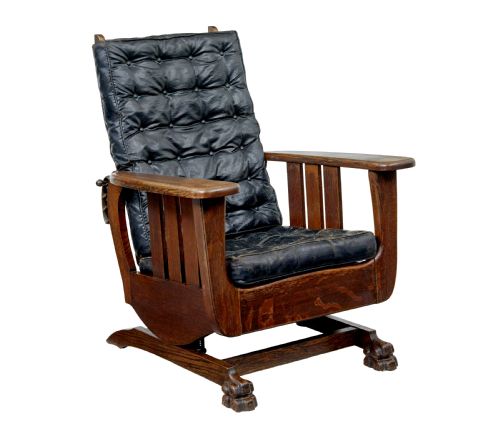
Construction relies upon solid oak timber, frequently shaped into heavy frames, carved details, or steam-bent components for items like smoker's bows and rocking chairs. Metal elements such as brass and iron appear in structural fixings, revolving mechanisms, and decorative upholstery studs.
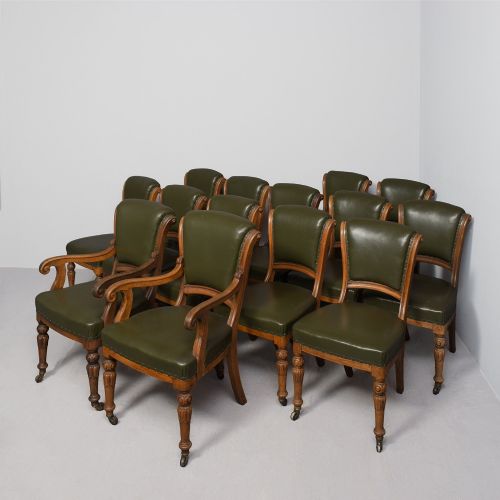
Upholstery incorporates leather in colours such as green and dark red, secured directly to the wooden seat bases or inset into carved recesses. Frames receive polishing or retain carved ornamentation typical of Gothic Revival and Arts and Crafts aesthetics.
Oak Armchair with Leather Retail Price Guide 2026
Typical asking prices for oak armchair with leather among the pieces listed under this phrase on Sellingantiques today, from the lower quarter to the upper quarter. They describe what is for sale here now, not the wider market.
One heavily carved specimen is recorded as a ship's chair, bringing maritime joinery directly into the domestic parlour.
What varies in quality
Quality separates through the depth of carving, the heft of the timber frame, and the integrity of the joinery across the chair legs and arms. Generous proportions and heavy construction elevate certain library and office chairs above standard domestic output.
The finish of the leather upholstery and the inclusion of original brass or iron hardware influence the overall character. Workshop attribution, such as pieces produced by Kendrick and Jefferson, distinguishes specific examples from uncredited vernacular production.
Kendrick and Jefferson
The Oak Armchair with Leather Glossary
- Gothic Revival
- A nineteenth-century style drawing on medieval architectural motifs, often featuring pointed arches, tracery, and heavy carved oak. This aesthetic is frequently seen on library and hall chairs.
- Arts and Crafts
- A design movement prioritising traditional handcraftsmanship and honest materials over mass production. Pieces from this period often display simplified structural forms and visible construction details.
- Cockfighting chair
- A low-backed armchair historically designed for spectators of field sports, featuring a padded rest for the arms or chest. Surviving examples are typically rendered in polished oak with leather seating.
- Smoker's bow
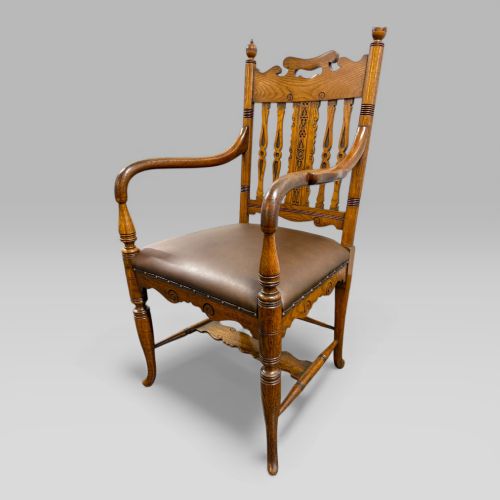
- A low-backed wooden armchair with a turned spindle gallery and a solid contoured seat, popular in domestic and institutional settings. These frames are frequently paired with leather seat pads.
- Revolving desk chair
- A swivelling office seat mounted on an adjustable mechanism, designed for administrative utility. These forms often incorporate green or red leather upholstery within oak frameworks.
Oak Armchair with Leather: Frequently Asked Questions
What periods do these chairs date from?
The listings span the nineteenth century, including specific decades such as eighteen-sixty and eighteen-seventy, alongside Edwardian and nineteen-twenty examples.
Styles within these dates cover Victorian, Gothic Revival, George V, and Arts and Crafts movements.
How were these chairs used originally?
These seats served varied domestic and professional functions, acting as library armchairs, office desk seats, hall furniture, and rocking chairs.
Specific forms like ship's chairs and cockfighting chairs fulfilled specialised seating requirements in period interiors.
What materials are used in the construction?
Primary construction relies on oak timber, paired with leather upholstery in red, dark red, or green shades.
Metal components include brass and iron, which appear in structural fixtures, swivel mechanisms, and upholstery studding.
How do I identify a Gothic Revival chair?
Gothic Revival pieces display architectural motifs such as heavy carving, armorial details, and structural elements inspired by medieval design.
These chairs are frequently executed in solid oak with generous proportions and leather seat inserts.