


Oak and Walnut Dresser
These oak and walnut dresser pieces bring together robust timber foundations and rich burl or grain patterns for practical storage and formal presence.
Oak and Walnut Dresser
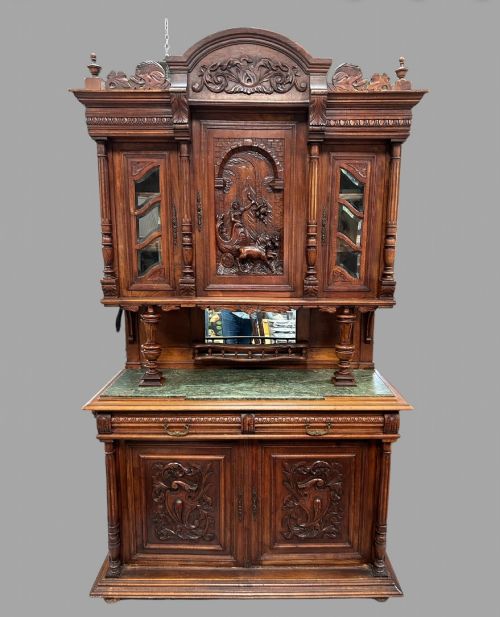
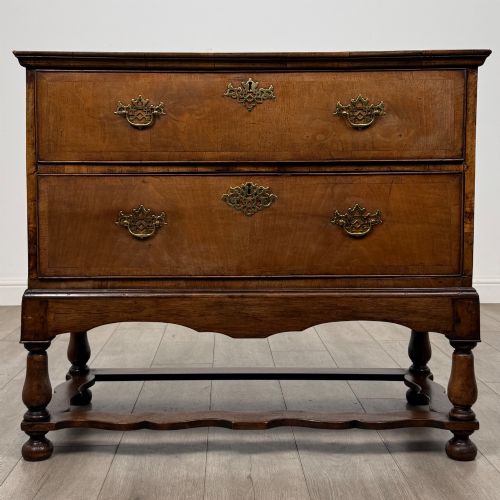
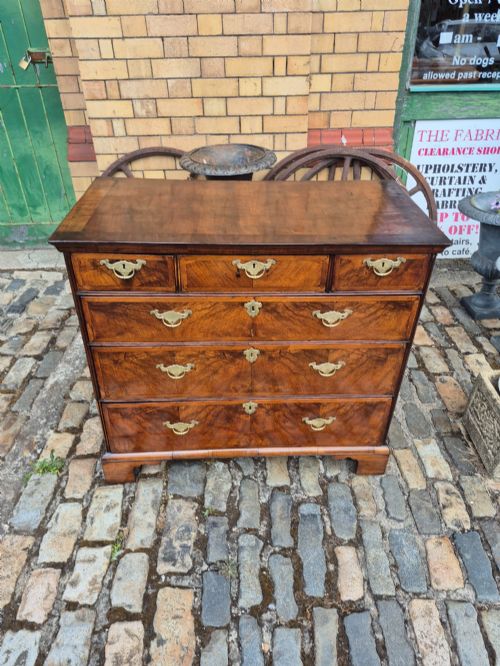
When you search for an oak and walnut dresser, you encounter pieces spanning from the seventeenth century through to the twentieth century, taking the form of dressers, chests of drawers, and commodes. The seventeenth and eighteenth centuries dominate the selection, bringing early vernacular and formal craftsmanship to the forefront.
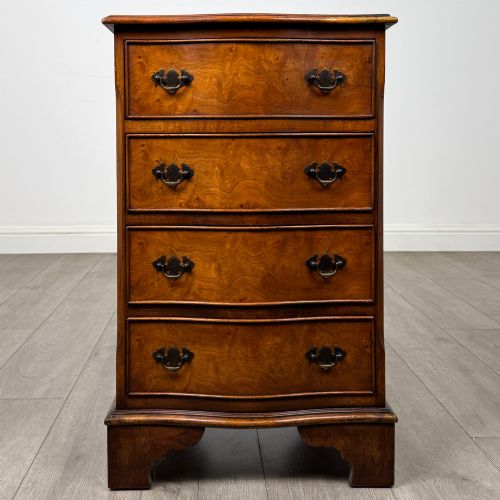
The nineteenth century also contributes French Provincial styles and later revival pieces, alongside smaller selections from the nineteen-twenties and nineteen-thirties. Formats vary between traditional dresser bases with deep drawers, tall cabinets, and serpentine commodes.
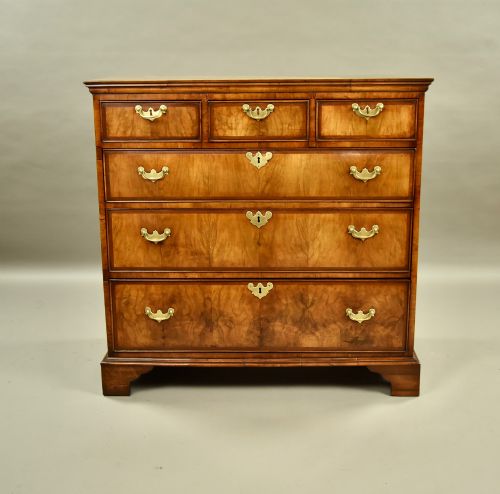
You are most likely to meet seventeenth-century styles such as Charles II and William and Mary iterations, as well as Georgian and Victorian interpretations. These combine sturdy oak carcases with decorative walnut facades and banding.
Materials and construction
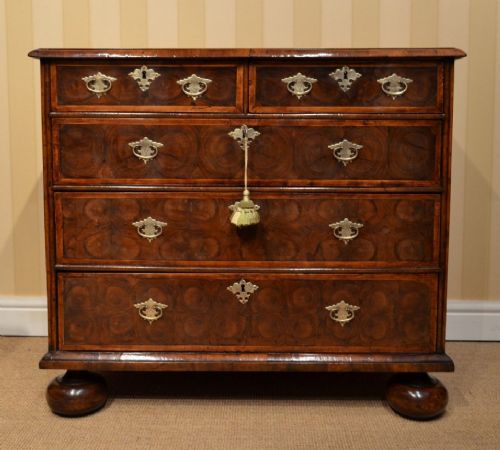
Makers utilised solid oak for structural integrity and drawer linings, pairing it with walnut for visible exterior surfaces. Oyster veneering and marquetry techniques created intricate geometric patterns across the drawer fronts and top panels.
Fruitwood, elm, and brass fittings appear alongside marble tops in later continental examples. Cross-banding and inlay work further defined the transition between the primary timber carcase and the decorative secondary woods.
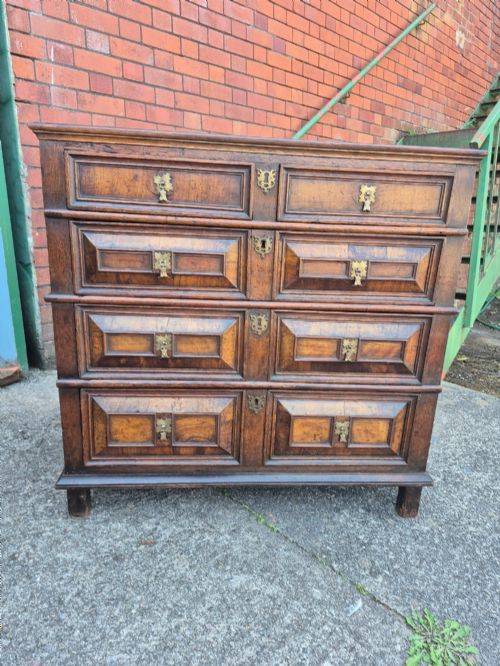
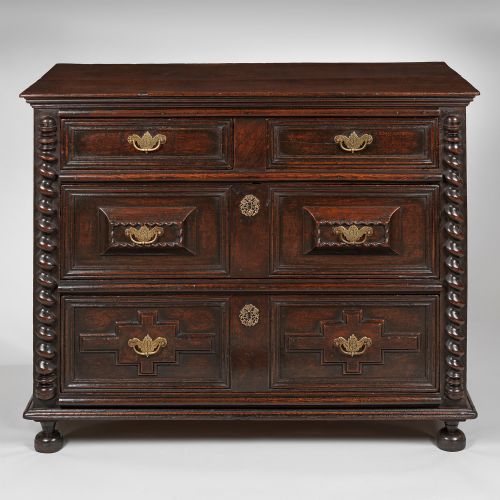
Some seventeenth-century chests feature geometric drawer fronts that double as visual puzzles.
Factors of quality
The standard of a piece rests on the precision of its veneering and the integrity of its timber joinery. Early geometric oyster veneer work requires immense skill to lay without gaps, separating standard workshop output from finer craftsmanship.
Surface preservation and the retention of original brass hardware heavily influence the standing of any given example. Pieces retaining their initial patination and uncompromised structural timber command greater appreciation among collectors.
The Oak and Walnut Dresser Glossary
- Oyster veneer
- Slices cut transversely from small branches to produce circular or oval patterns resembling oyster shells. This technique flourished in the seventeenth century.
- Cross-banding
- A narrow strip of veneer laid around the border of a panel so the grain runs at right angles to the central wood. It frames the main decorative surface.
- Commode
- A low chest of drawers or cabinet developed in France during the seventeenth century. The term covers various ornate storage furniture pieces.
- Geometric chest
- A storage piece featuring applied mouldings on the drawer fronts arranged in repeated geometric patterns. These are typical of the Charles II and William and Mary periods.
- Dresser base
- The lower section of a kitchen or dining dresser containing cupboards and deep drawers. It served as a functional surface for food preparation and serving.
Oak and Walnut Dresser: Frequently Asked Questions
What is an oak and walnut dresser?
An oak and walnut dresser is a storage piece combining an oak structural frame with walnut exterior surfaces, drawer fronts, and decorative veneers.
These pieces range from early seventeenth-century vernacular bases to later Georgian and Victorian interpretations designed for domestic storage and display.
How do I date an antique dresser?
Dating relies on examining construction techniques, timber combinations, and decorative styles such as oyster veneering or geometric mouldings. Seventeenth-century examples display different joinery methods compared to eighteenth-century Georgian or nineteenth-century revival pieces.
Hardware styles, drawer lining timbers, and specific regional characteristics also provide clear indicators of the period of manufacture.
Where were these dressers made?
These pieces originate from British and continental European workshops, including distinct French Provincial and Dutch regional centres. Regional vernacular traditions dictated the specific choice of local secondary woods alongside primary oak and walnut.
Continental pieces frequently incorporate local variations such as marble tops, serpentine fronts, and specific marquetry patterns.
How do I care for antique veneer?
Protect antique veneer by maintaining stable room humidity and avoiding direct placement near heat sources or strong sunlight. Regular dusting with a soft, dry cloth preserves the finish without requiring heavy polishes.
Careful handling prevents moisture damage and keeps the delicate seventeenth-century oyster or burr walnut sections secure.