



Oak and Brass Rack
An oak and brass rack brings together timber and metal to organise correspondence, garments, and papers in hallways and studies.
Oak and Brass Rack
An oak and brass rack serves primarily as a domestic holder for letters, newspapers, coats, or magazines, spanning utility items for the entrance hall and desktop accessories.
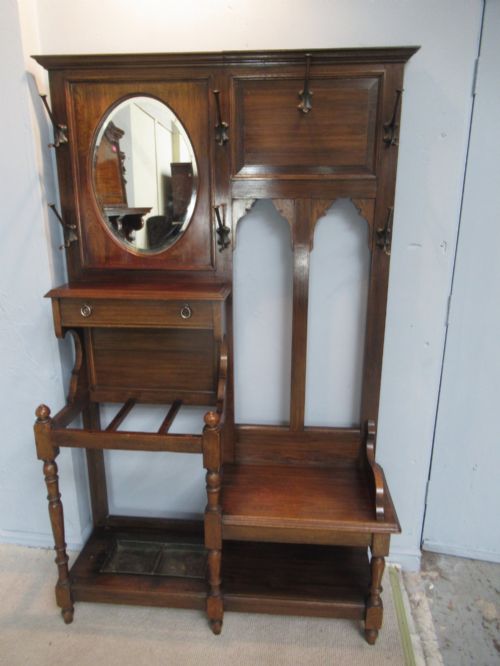
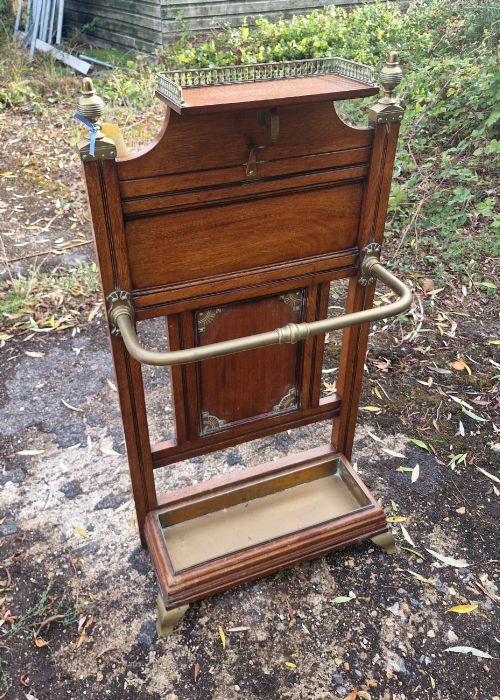
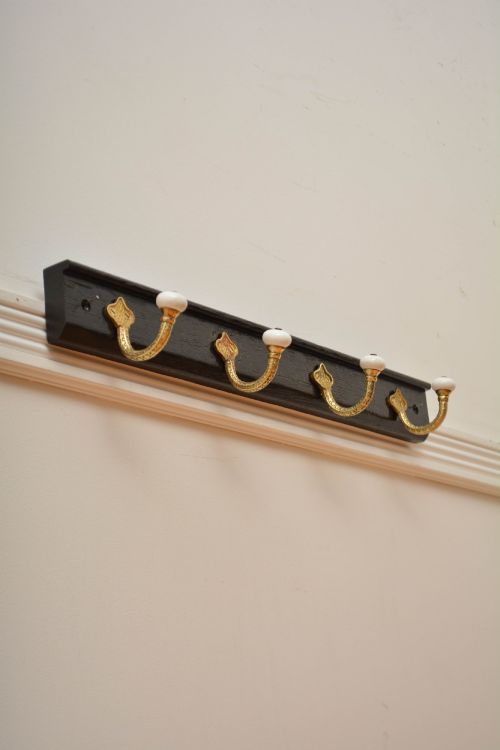
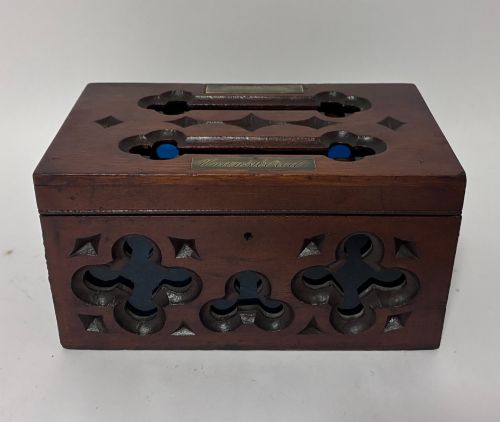
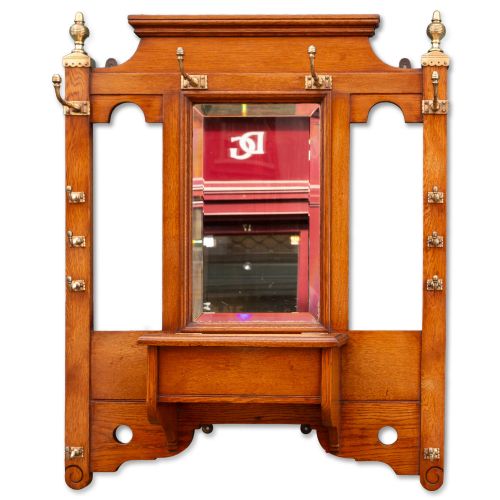
The pieces appearing most frequently range from Victorian and Edwardian letter racks and stationery cabinets to floor-standing umbrella stands and wall-mounted coat hooks.
Makers and workshops from the nineteenth and early twentieth centuries utilised these robust materials to construct functional furniture suited to traditional British interiors.
Materials and construction
Makers constructed the framework using solid or golden oak, occasionally employing ebonised variants or integrated glass, ceramic, and fabric details for contrast.
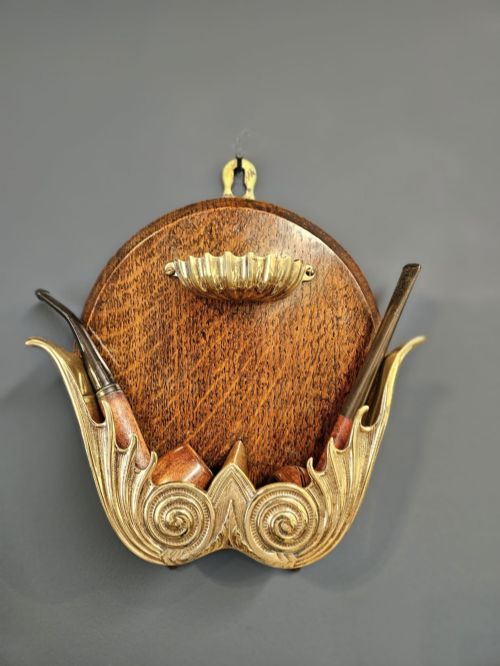
Metal components such as cast or fretted brass were affixed to hold papers or form structural hooks, often combined with patent mechanisms or wall-mounting brackets.
Listings feature oak and brass racks spanning the Victorian, Edwardian, and Regency periods, utilising materials such as glass, ceramic, and ebonised oak.
Distinctions in quality
Superior examples display heavier timber construction, precise joinery, and intricate brass fretwork rather than mass-produced stamped mountings.
The presence of maker attribution, registration numbers, or specialised hardware distinguishes finer country house pieces from standard utility items.
Benetfink and Co·James Shoolbred·R A Lister·William Tonks and Sons
The Oak and Brass Rack Glossary
- Letter rack
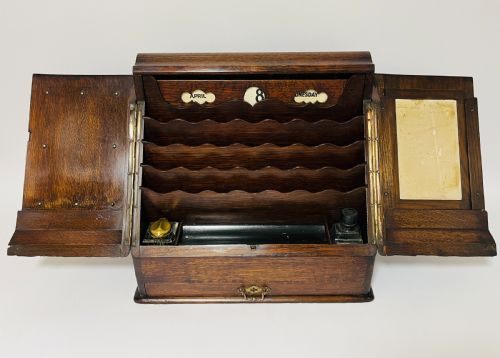
- A desk or wall-mounted accessory featuring vertical wooden partitions and brass dividers designed to sort correspondence. These range from simple fretted designs to double-sided country house models.
- Stationery cabinet
- A larger desk tidy featuring a fall-front or hinged door enclosing internal compartments for paper and envelopes. They frequently incorporate oak housings with brass hinges and locks.
- Luggage stand
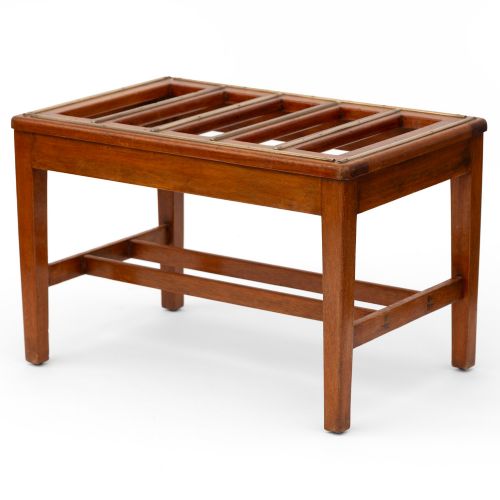
- A folding or rigid frame utilising wooden slats and metal supports originally intended for hotel or domestic guest bedrooms. They appear in polished oak with reinforced corners.
- Ebonised
- Wood treated with a dark stain or finish to imitate ebony. This technique provided sharp contrast against bright brass fittings on Victorian decorative pieces.
- Fretted brass
- Sheet metal pierced with decorative patterns, commonly seen on nineteenth-century stationery holders. The openwork design lightens the visual weight of the metal.
Oak and Brass Rack: Frequently Asked Questions
What is an oak and brass rack used for?
These pieces were designed to organise daily correspondence, newspapers, coats, and accessories in domestic spaces like hallways, studies, and reception rooms.
Depending on the specific configuration, they functioned as desktop stationery holders, wall-mounted letter racks, or freestanding umbrella stands.
How do I distinguish Victorian from Edwardian pieces?
Victorian examples tend to feature heavier proportions, darker finishes, and more ornate fretwork or Gothic Revival influences.
Edwardian pieces often display a lighter golden oak coloration and cleaner lines aligned with Arts and Crafts or standard domestic utility.
Were these racks wall mounted or freestanding?
Both formats exist within the tradition, determined by whether the object was intended for holding letters or supporting garments and umbrellas.
Wall-hanging variations utilise brass brackets or pierced wooden backs, while floor-standing variants incorporate heavier bases and drip pans.
What styles are common in these pieces?
The primary design influences span the Victorian era, Aesthetic Movement, Arts and Crafts, and Gothic Revival periods of the nineteenth and early twentieth centuries.
These styles dictate the complexity of the brass fretwork, the treatment of the oak surface, and the inclusion of decorative hardware.