




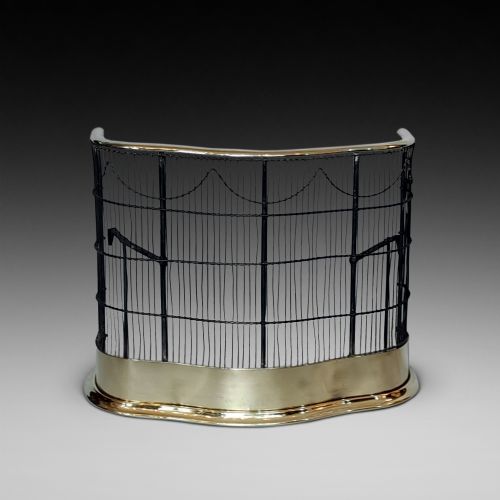
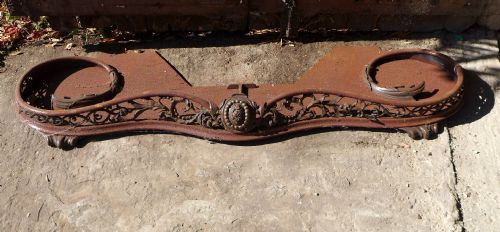
Nursery Fireplace Guard
A nursery fireplace guard is an essential safety barrier designed to protect children from open flames, built from durable metals and mesh across Victorian and Edwardian periods.
Nursery Fireplace Guard
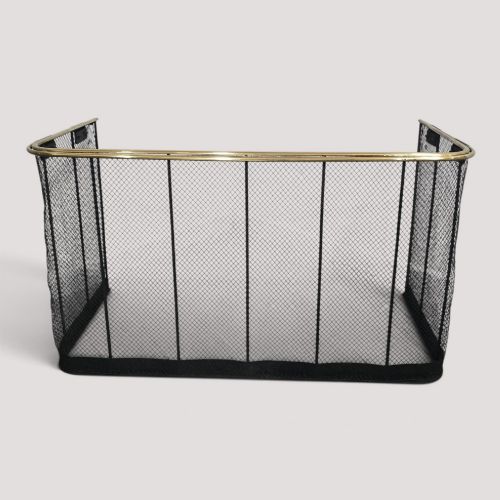
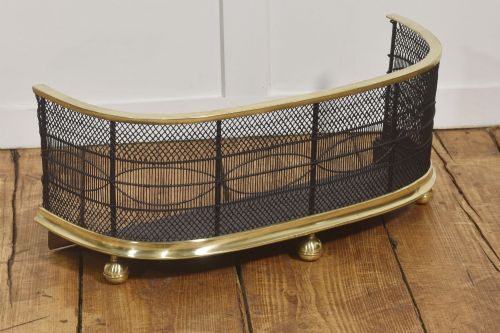
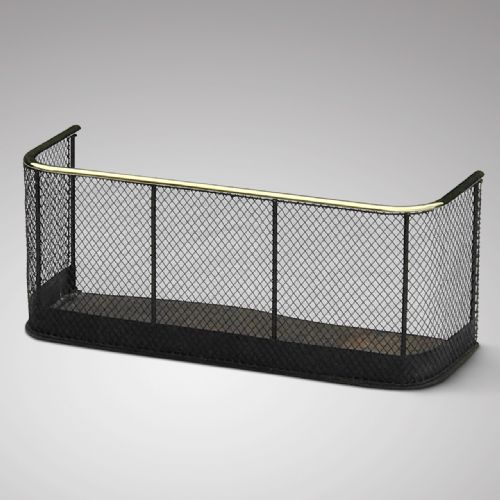
When you search for a nursery fireplace guard, you encounter practical safety barriers originating from the nineteenth century, Victorian, Regency, and Edwardian eras. These objects combine metal frames with protective mesh or wirework to enclose domestic hearths securely.
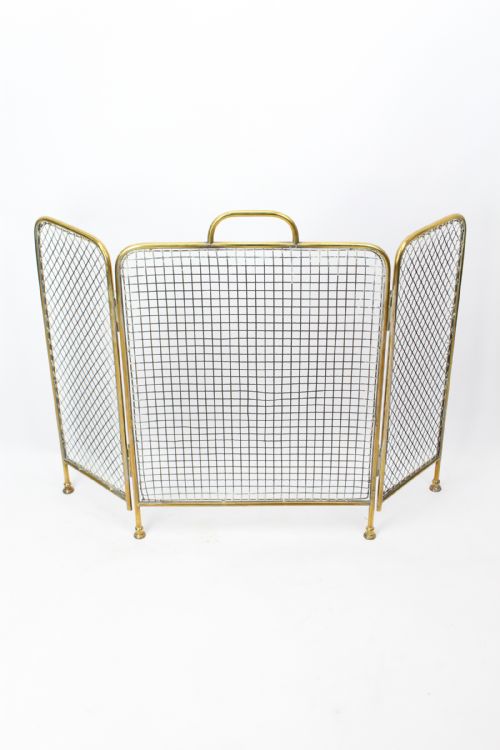
The versions most commonly met on this page include folding brass frames, bowed designs, and variants incorporating integrated clothes rails or brass top rails. Their primary forms range from fender-style guards to serpentine screens designed to fit specific hearth layouts.
How they were made
Construction relies heavily on structural metals including brass, iron, steel, and wrought iron to form rigid outer frames and supportive rails. These sturdy skeletons provide the necessary stability for daily domestic use around the hearth.
Infill panels utilise wire mesh, iron wire, and woven iron wire to maintain visibility of the fire while blocking stray sparks. Metal components are joined to create durable barriers capable of enduring intense heat and regular handling.
Nursery Fireplace Guard Retail Price Guide 2026
Typical asking prices for nursery fireplace guard among the pieces listed under this phrase on Sellingantiques today, from the lower quarter to the upper quarter. They describe what is for sale here now, not the wider market.
Listings span the 19th century, Regency, Victorian, and Edwardian periods, utilising brass, iron, wire mesh, and steel.
What varies in quality
The calibre of a nursery fireplace guard rests on the precision of its metalwork and the rigidity of its frame construction. Pieces featuring solid brass rims, substantial steel frames, and evenly tensioned woven wire mesh demonstrate superior material selection.
Design complexity also distinguishes finer examples, such as those incorporating curved serpentine shapes, folding mechanisms, or integrated clothes rails. Simpler iron variants offer robust utility, whereas Regency and Victorian specimens often display more refined decorative framing.
The Nursery Fireplace Guard Glossary
- Fire guard
- A protective barrier placed in front of an open fireplace to prevent sparks from escaping and to keep children at a safe distance. These frames combine metal structures with mesh panels for domestic safety.
- Fender
- A low metal barrier that sits on the hearth around the base of a fireplace. Some nursery variants incorporate extended rails or mesh guards to serve a dual protective purpose.
- Serpentine
- A curved shape featuring an alternating convex and concave outline. This contour appears on specific fire guard frames to follow the projection of the hearth.
- Wire mesh
- A barrier material formed by interwoven metal strands. It provides a clear view of the fire while containing embers and protecting the surrounding room.
Nursery Fireplace Guard: Frequently Asked Questions
What is a nursery fireplace guard?
A nursery fireplace guard is a protective metal barrier designed to enclose an open hearth and prevent children from coming into contact with fire or hot grates.
These pieces typically combine a rigid frame of brass or iron with woven wire mesh to ensure safety without entirely blocking the warmth of the fire.
How were these guards used?
They were positioned directly in front of domestic fireplaces throughout the nineteenth and early twentieth centuries to safeguard nurseries and living spaces.
Some designs included integrated top rails or clothes rails, allowing them to serve a secondary domestic purpose while maintaining hearth safety.
What materials are common?
The listings show frames constructed primarily from brass, iron, steel, and wrought iron. These provide structural strength and durability against daily wear.
Infill sections are predominantly made from wire mesh, steel wire, or woven iron wire to catch embers effectively.
How do I identify Victorian pieces?
Victorian examples often feature characteristic details such as bowed brass frames, rimmed wire mesh, and folding mechanisms. They date from the nineteenth century and reflect the period's preference for functional domestic metalwork.
Comparing the framing style and the type of wirework helps distinguish these from later Edwardian or Regency designs.