


![Pen and Ink Sketch - Female Nudes by William Edward Frost [1810-1877]](https://www.sellingantiques.co.uk/photosnew/dealer_kendallhouse/dealer_kendallhouse_full_1758970795762-8493507346.jpg)


Nude Female Sketch
A nude female sketch captures the direct observation of the human form, offering collectors an intimate record of draughtsmanship across the nineteenth and twentieth centuries.
Nude Female Sketch
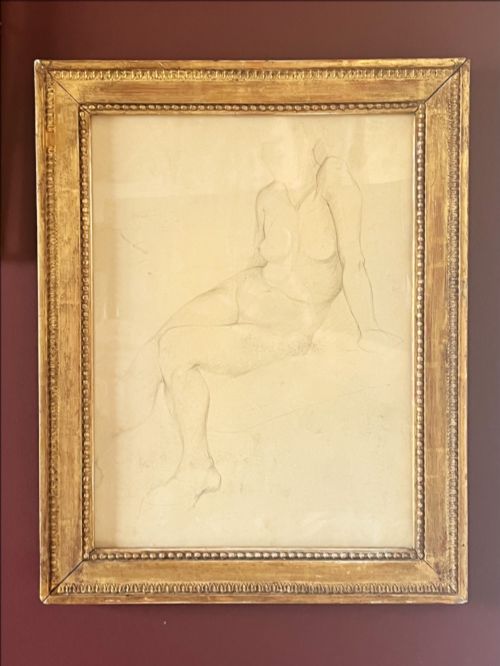
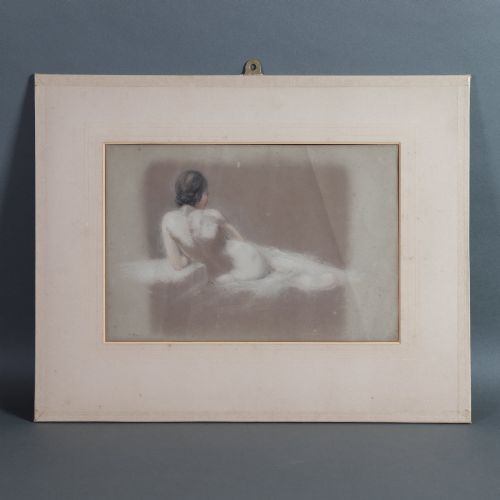
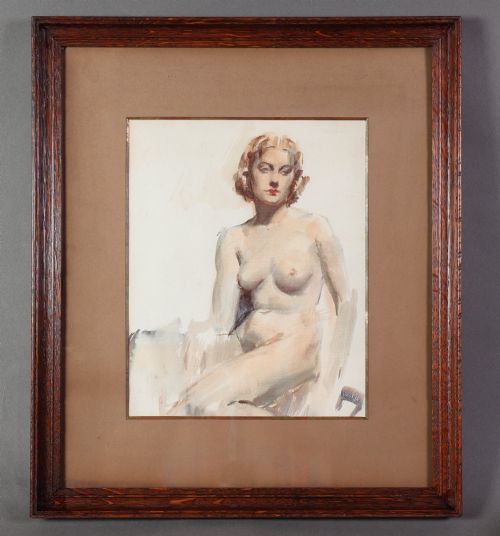
A nude female sketch encompasses original works on paper spanning periods from the mid-nineteenth century through to the mid-twentieth century, capturing human form through direct observation. Buyers searching for a nude female sketch will encounter life studies and finished drawings executed in academic, modernist, and art deco styles.
The pieces listed here range from nineteenth-century French school works and Romantic examples to British School studies and mid-century modern interpretations. Most works appear mounted in frames, utilising traditional media such as charcoal, chalk, graphite, and pastel on paper.
Formats vary from single seated or recumbent poses to paired life studies and mixed media compositions. Origins stretch across British and French traditions, reflecting the changing academic and avant-garde approaches to figure drawing.
Materials and technique
Draughtsmen and artists relied primarily on paper supports, applying media such as charcoal, chalk, graphite, pen and ink, and pastel to record the human subject. These materials allowed for immediate gestural marks as well as careful tonal blending during life drawing sessions.
Framing materials range from simple wooden surrounds to ornate gilt wood frames that complement the period of the drawing. Selected works incorporate mixed media or pair the original drawing with related elements like copper plates.
Materials utilised across the drawings include paper, glass, charcoal, chalk, graphite, wood, gilt wood, and pastel.
Assessing quality and execution
Quality rests upon the sureness of the line and the artist's command of anatomy, light, and shadow. Stronger works demonstrate confident structural understanding rather than hesitant corrections, capturing volume and weight on a two-dimensional surface.
The relationship between the subject and the medium dictates the visual impact, where expressive charcoal marks or delicate graphite hatching reveal the draughtsman's direct engagement with the live model. Framing and overall preservation of the paper support further distinguish the pieces.
William Etty·Augustus John·Lucien Gibert·Pierre-Paul Prud'hon·William Edward Frost·Winifred Eugene Ballard·Mariette Lydis·Frank Dobson·Henry Bird
The Nude Female Sketch Glossary
- Life study
- A drawing or painting executed directly from a live model, serving as practice or preparation for a larger composition. These works record immediate observation rather than idealized convention.
- Charcoal
- A dry drawing medium made from organic matter, valued by artists for its rich dark tones and ability to be easily smudged or blended. It creates expressive, high-contrast lines ideal for rapid figure studies.
- Academic realism
- An artistic style and method born from the influence of European academies, emphasising precise anatomical accuracy, careful proportion, and traditional finish. It forms the backbone of rigorous nineteenth-century figure training.
- Mixed media
- An artwork utilising more than one medium or material on the same support. Such combinations allow artists to experiment with texture and tone within a single composition.
- Recumbent
- Lying down or reclining in a horizontal posture. It remains a classic pose for figurative art and life drawing.
Nude Female Sketch: Frequently Asked Questions
What is a life study?
A life study is an artwork created from a live, usually nude, model. Artists used these sessions to practice anatomy and tone.
Such drawings capture the immediate physical presence of the model without the constraints of a formal finished painting.
How should antique drawings be framed?
Antique works on paper require conservation-grade mounting to prevent acid transfer from backing boards. UV-filtering glass protects fugitive media like pastel and charcoal from fading.
Many pieces survive in their period gilt wood or wooden frames, which should be stabilized rather than replaced.
How do I distinguish nineteenth-century drawings?
Nineteenth-century works often reflect academic realism or romanticism, utilising graphite, chalk, or sepia ink. Paper stocks from this era tend to show natural ageing and watermarks characteristic of traditional manufacturing.
Signatures or attribution notes on the reverse often point to specific French or British school training.
What is mixed media in art?
Mixed media refers to artworks that combine two or more different materials, such as ink and wash, or chalk and charcoal together. This approach allows artists to exploit the unique properties of each substance.
In figure drawing, combining mediums creates varied textures and depths across the paper surface.