




Novelty Silver Pin Holder
A novelty silver pin holder is a whimsical tabletop accessory that combines practical needlework utility with imaginative sculptural form.
Novelty Silver Pin Holder
When you search for a novelty silver pin holder, you enter a collectible realm of miniature figural sculptures designed to store pins and needles on a dressing table or desk. These charming objects take animal, botanical, and domestic shapes, turning mundane sewing tools into decorative display pieces.
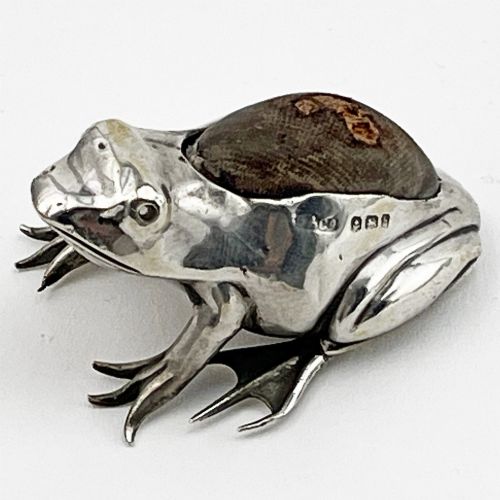
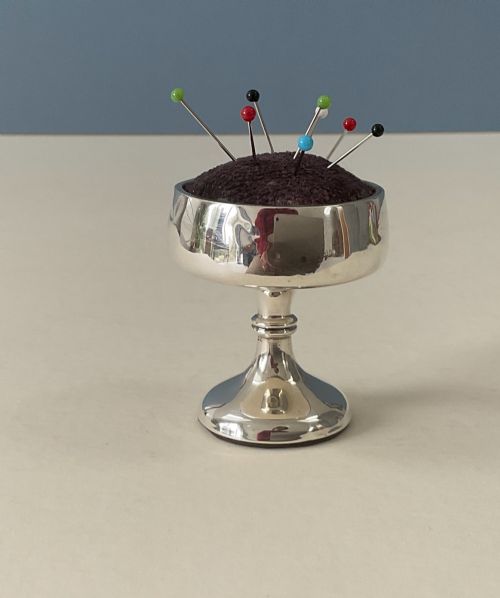
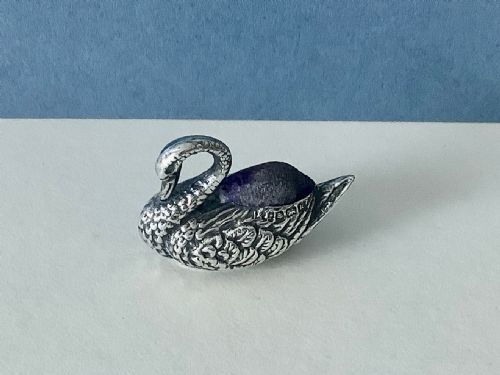
On this page, you are most likely to meet pieces originating from the Victorian and Edwardian eras alongside later mid-century examples. The selection spans distinct forms like teapots, goblets, baskets, and animals including frogs, lions, bears, swans, and pheasants.
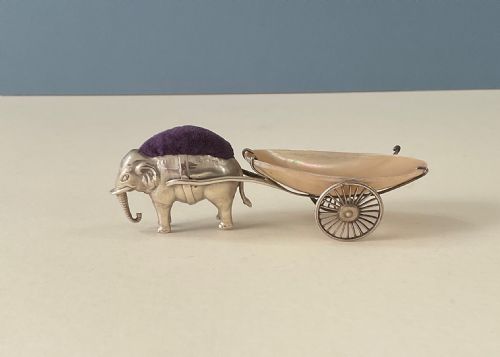
The materials combine precious metal with functional textile inserts necessary for holding pins securely. Sterling silver, solid silver, and continental silver form the sculptural bodies, while velvet, fabric, and occasionally shell provide the contrasting cushion surfaces.
How they were made
Silversmiths utilised traditional metalworking techniques such as casting, hammering, and chasing to shape solid silver into detailed miniature figures and everyday objects. Artisans worked the metal to capture realistic textures like feathers, fur, and woven basketry.
Textile elements were carefully fitted into the silver cavities to create the functional pin cushion component. Velvet and fabric inserts were tucked snugly into shapes like teapots, goblets, and umbrella canopies to receive sewing pins without damaging their points.
Materials documented across the inventory include sterling silver, velvet, fabric, and shell.
What varies in quality
Proportion and material integrity also separate the range. Well-balanced pieces maintain accurate miniature scale while utilising robust gauges of sterling silver and intact, high-grade velvet or fabric upholstery.
Harrison and Hipwood
The Novelty Silver Pin Holder Glossary
- Sterling Silver
- A standard alloy of silver consisting of 92.5 percent pure silver and 7.5 percent other metals, usually copper. This composition provides the durability required for detailed miniature objects while maintaining a bright metallic lustre.
- Pin Cushion
- A small stuffed pad used for holding pins and needles safely at hand during sewing. In novelty silver pieces, this textile element is housed inside a figural or decorative silver vessel.
- Chasing
- A metalworking technique where the silversmith punches and pushes metal from the front to create raised surface decoration and fine textural details. This method brings animals and miniature objects to life without removing material.
- Hallmark
- An official stamp or marks struck on items of precious metals, indicating the standard of purity, the assay office, and the date of manufacture. These small stamped symbols help verify the age and origin of antique silver.
Novelty Silver Pin Holder: Frequently Asked Questions
How were these holders used?
Victorian and Edwardian seamstresses used these items to keep pins close at hand during needlework. The fabric or velvet cushion secured pins safely while the silver base provided a stable stand.
Over time, these functional objects became collectible display pieces. People placed them on dressing tables, writing desks, and mantelpieces as decorative ornaments.
How can I tell the period?
You can determine the period by examining the style, hallmarks, and manufacturing techniques. Victorian and Edwardian examples often feature naturalistic animal forms and traditional chased ornamentation.
Checking for official silver hallmarks provides a reliable guide to the date and origin. Birmingham assay marks and specific year letters help narrow down the exact decade of manufacture.
What materials are used?
The primary material is silver, ranging from standard sterling silver to continental silver and solid silver components. Silversmiths shaped these metals into detailed miniature sculptures.
The cushioning element typically consists of velvet or fabric fitted tightly into the silver cavity. Shell was also occasionally utilised to form part of the structure.