
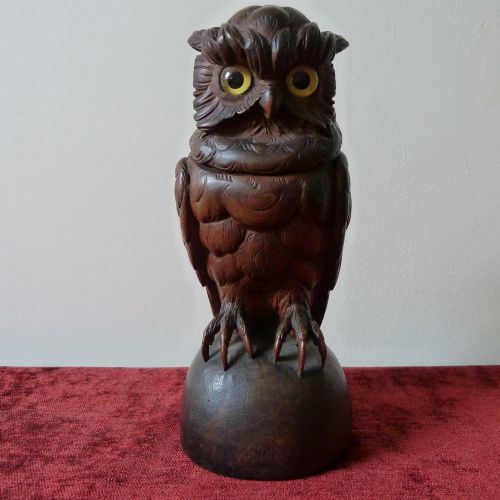


Novelty Desk Inkwell
A novelty desk inkwell turns a mundane writing desk into a menagerie of bronze owls, carved hooves and silver bells.
Novelty Desk Inkwell
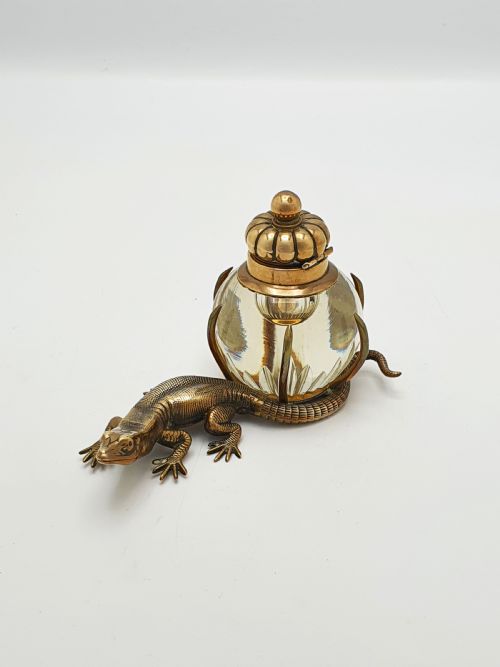
A novelty desk inkwell is a functional desk accessory disguised as an animal, figure or object, designed to amuse the writer as much as hold liquid ink. The pieces gathered here range from Victorian brass and glass lizards to Edwardian silver tortoises and carved Black Forest cats.
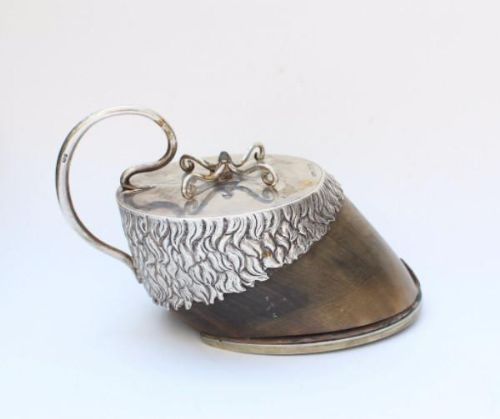
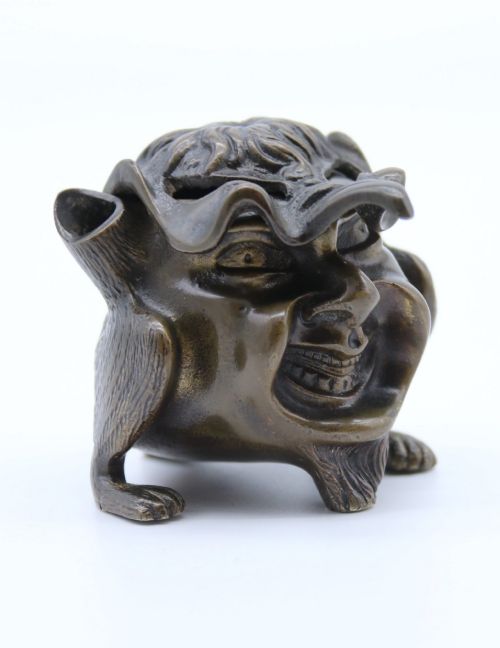
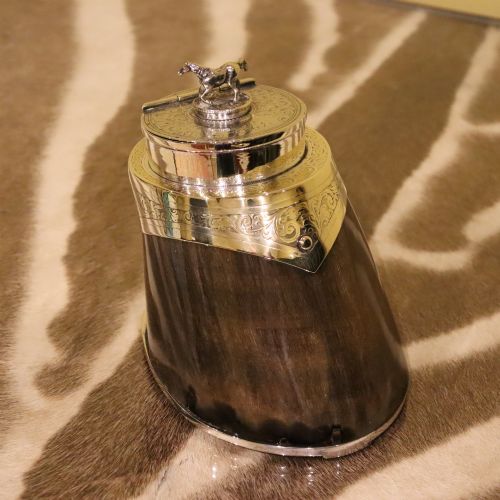
Most examples date from the late nineteenth century through to the early twentieth century, spanning the Victorian, Edwardian and Art Deco periods. Buyers meet cast bronze creatures with glass eyes, carved wooden owls and silver-mounted horse hooves.
Makers utilised diverse materials to create these whimsical forms, pairing cut crystal glass inserts with heavy cast metals, carved oak and polished horn. They served as conversation pieces in country houses and studies long before the ballpoint pen took over.
How they were made
Metal novelty desk inkwells rely on bronze casting, brass work and silver plating, often enhanced with cold-painted pigments or gilt finishes. Artisans set glass eyes into cast bronze heads to bring animals such as owls, dogs and monkeys to life.
Carved wooden pieces from the Black Forest region showcase detailed hand-carving in oak and other timbers, forming cats, dogs and birds with hinged lids. Glass and stoneware components provide the practical ink reservoir inside the decorative exterior, paired with sterling silver mounts or brass collars.
What varies in quality
The distinction between ordinary and exceptional work lies in the sharpness of the casting and the expressiveness of the animal or figural form. Finer bronze and silver pieces capture subtle textures in feathers, fur and fabric, whereas lesser examples lose detail in the mould.
Completeness dictates value significantly in this field, particularly the presence of original glass or ceramic liners and matching inkwell lids. Original glass eyes and intact cold-painted finishes separate well-preserved specimens from heavily worn items.
The Novelty Desk Inkwell Glossary
- Inkstand
- A complete desk set that incorporates one or more inkwells alongside pen trays, stamp boxes or bell components. These larger desk accessories anchor the writing surface.
- Black Forest
- A style of wood carving originating in the mountainous region of central Europe, famous for lifelike bears, dogs and cats holding ink reservoirs. These carved wooden pieces display deep texturing.
- Cold-painted bronze
- A manufacturing technique where bronze figures receive paint layers that are left to dry naturally rather than fired in a kiln. This method yields vibrant hues on animal subjects.
- Capstan inkwell
- An inkwell shaped like a ship's capstan, featuring a wide base that tapers upward toward the hinged lid. This heavy form prevents accidental tipping on the desk.
- Pen wipe
- A small desk accessory made from felt, cloth or silver designed for cleaning excess ink from nibs before writing. They often match the accompanying inkstand.
Novelty Desk Inkwell: Frequently Asked Questions
How were they used on the desk?
Writers dipped their metal or quill pens into the concealed glass reservoir housed within the decorative exterior. Hinged heads, wings or caps lifted open to grant access to the ink.
Many designs included attached trays for resting pens or incorporated bells and stamp compartments. They sat as central fixtures on nineteenth-century writing desks and study tables.
How do I care for antique metal inkwells?
Protect the metal surface by keeping it dry and dusting gently with a soft, dry cloth rather than applying chemical polishes. Aggressive cleaning can strip delicate cold-painted finishes or silver plating.
Remove glass inserts carefully when cleaning out dried ink residue to avoid cracking the antique glass. Handle hinged lids with care to prevent strain on historical pins and mounts.
How can I tell the period of these pieces?
Stylistic cues point toward specific eras, such as the naturalistic animals of the Victorian period and the geometric lines of later Art Deco designs. Silver mounts often carry hallmarks that provide exact assay office dates.
Materials and manufacturing methods also offer clues, as cold-painted bronze and Black Forest carvings dominated late nineteenth-century workshops. Comparing the weight, construction technique and eye details helps confirm the era.