



Novelty Carved Cane
A novelty carved cane brings wit and craftsmanship to your hand, pairing practical support with whimsical animal heads, hidden mechanisms, or clever gadgets.
Novelty Carved Cane
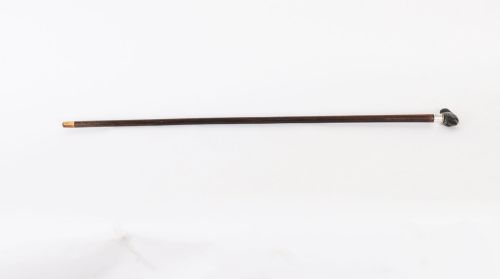
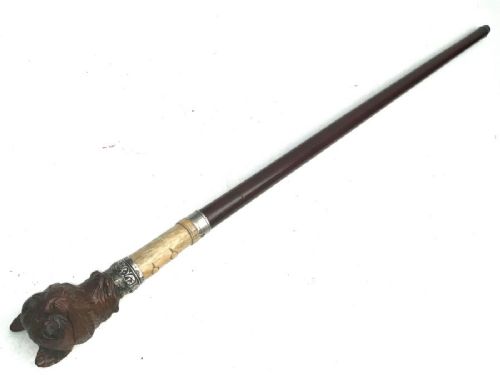
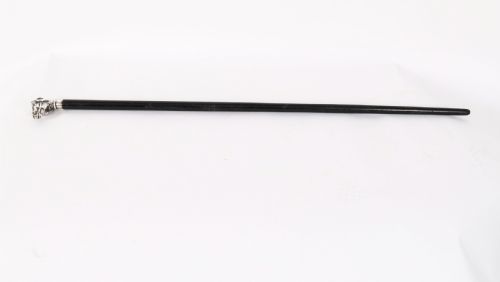
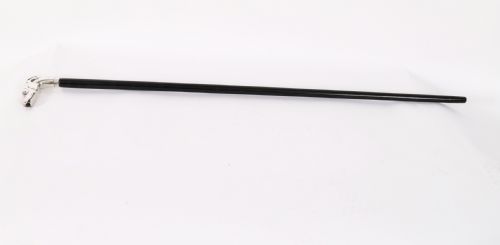
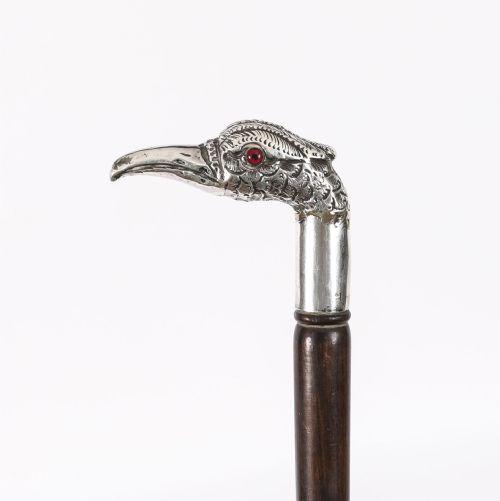
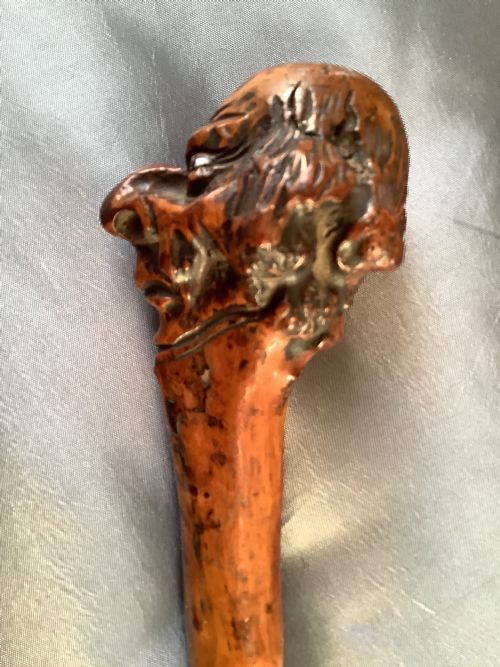
The pieces on this page span the Victorian, Edwardian, and Art Deco periods, drawing on French, German Black Forest, and English traditions. Animal heads form the most common handles, rendered as parrots, horses, greyhounds, pheasants, boars, dogs, rabbits, and hares.
Beyond simple figures, you encounter sophisticated gadget sticks equipped with hidden corkscrews, snuff boxes, nutcrackers, and swords. Folk art pointers and golf club shapes also appear alongside fruitwood fists, showing the wide range of imaginative designs commissioned by historical buyers.
How they were made
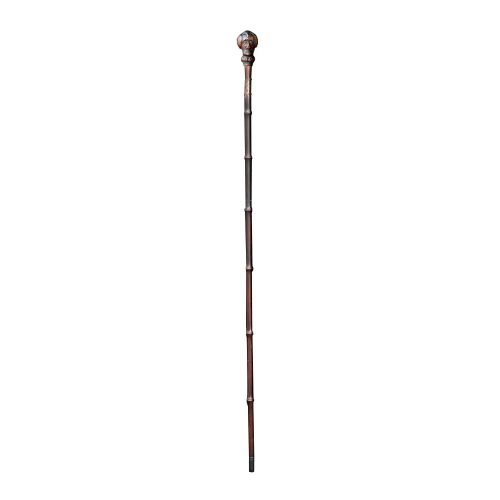
Carvers shaped handles from dense hardwoods, fruitwood, bone, horn, and ivory, often mounting them onto shafts of malacca or ebonised wood. Artisans in regions like the Black Forest specialised in detailed biological representations, capturing the textures of fur and feathers with precise hand-chiselling.
Metal components such as silver mounts, collars, and concealed blades required the work of silversmiths and cutlers. These metal elements were cast, chased, and fitted securely to wooden shafts, integrating functional compartments like snuff boxes or folding tools directly into the handle architecture.
Some nineteenth-century gentlemen walked the streets carrying sticks that doubled as nutcrackers or golf clubs, hiding domestic duties inside a fashionable accessory.
What varies in quality
Quality rests in the anatomical accuracy and sculptural depth of the carving, distinguishing a lively animal head from a stiff or crude imitation. Superior pieces display expressive detailing in the eyes, ears, and plumage, while lesser examples rely on generic shaping.
The integration of the mechanism defines the upper tier of gadget canes. A well-made sword stick or hidden corkscrew operates smoothly within the shaft, maintaining structural rigidity and balance without loose joints or misaligned collars.
The Novelty Carved Cane Glossary
- Gadget cane
- A walking stick containing a concealed utilitarian device, such as a corkscrew, sword, nutcracker, or snuff box. These pieces combined personal defence or domestic utility with gentlemanly fashion.
- Malacca
- A slender, durable rattan cane imported from Southeast Asia, prized for its mottled brown surface and strength. It served as the preferred shaft material for many nineteenth-century walking sticks.
- Black Forest
- A designation for carved wooden items originating from the forested mountainous region of southwestern Germany. Carvers from this area became famous for realistic animal sculptures and articulated figures.
- Swagger stick
- A short, light cane carried by military officers or gentlemen as a badge of office or fashion accessory. They are typically slimmer and shorter than standard walking sticks.
- Ebonised wood
- Timber treated with a dark stain or finish to simulate the appearance of ebony. This technique provided a uniform, glossy black background for silver mounts and carved ivory handles.
Novelty Carved Cane: Frequently Asked Questions
What is a novelty carved cane?
A novelty carved cane is a historical walking stick featuring a sculpted animal or human handle, or a hidden functional gadget.
These pieces served as fashion accessories and conversation starters for Victorian and Edwardian gentlemen and ladies.
How were sword sticks used?
Sword sticks combined the daily support of a walking cane with a concealed blade for personal protection.
They were carried by travellers and city dwellers navigating poorly lit nineteenth-century streets.
What animals appear on handles?
Carvers frequently depicted dogs, horses, birds, and forest animals with realistic expressions and textures.
Common examples include greyhounds, boars, pheasants, parrots, and hares carved from wood, bone, or ivory.
How do I date a cane?
Dating relies on the style of the carving, the metal hallmarks on silver mounts, and the materials used.
Victorian pieces often feature heavy silver and detailed animal carvings, while Art Deco examples show geometric influences from 1929.
Are gadget canes functional?
Many gadget canes retain their original hidden functions, such as operating corkscrews or containing snuff boxes.
Collectors appreciate these mechanisms for their ingenious engineering and historical survival.