

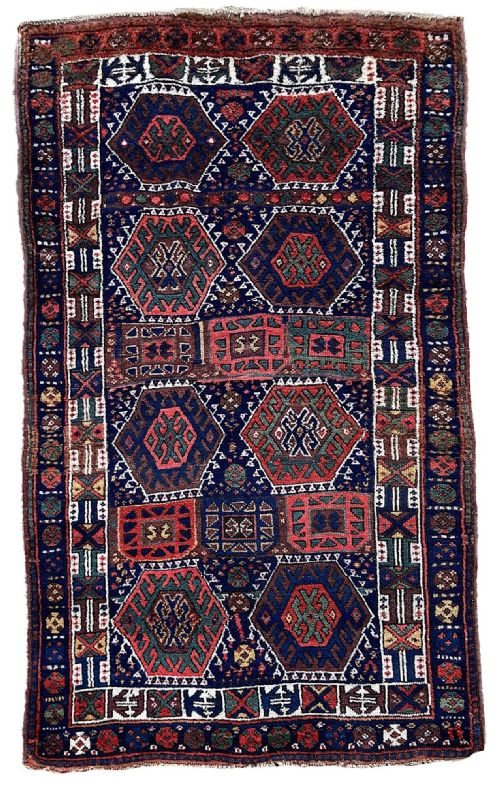


Nomadic Village Rug
A nomadic village rug brings rich tribal character and authentic hand-knotted heritage directly to your floor.
Nomadic Village Rug
When you search for a nomadic village rug, you are looking at wool floor coverings woven by tribal and village makers across Persia, Afghanistan, the Caucasus, and Anatolia. These pieces range in date from the nineteenth century into the early twentieth century, reflecting traditional ways of life.
You are most likely to meet Afghan, Kurdish, and Turkish examples on this page, often in smaller area rug or prayer rug formats. These textiles display distinct tribal patterns, including hooked medallions and geometric motifs rooted in regional heritage.
How they were made
These rugs are built with hand-spun wool foundations and piles, sometimes incorporating cotton for structural strength. Weavers utilised natural dyes to achieve deep, enduring colours that mellow gracefully over decades of use.
Construction methods rely on traditional vertical looms set up in village or tribal encampments. Artisans tied dense knots by hand, finishing the ends with flatwoven kilim segments where appropriate.
Nomadic Village Rug Retail Price Guide 2026
Typical asking prices for nomadic village rug among the pieces listed under this phrase on Sellingantiques today, from the lower quarter to the upper quarter. They describe what is for sale here now, not the wider market.
Many village weavers worked entirely from memory, translating ancient tribal symbols onto the loom without a single written sketch.
What varies in quality
Quality rests primarily in the fineness of the knotting and the complexity of the design execution. Tighter weaves allow intricate geometric and medallion patterns to appear with sharper definition.
The purity and depth of the natural dyes also set finer examples apart from simpler work. Well-balanced proportions and intact kilim ends elevate the overall integrity of the piece.
The Nomadic Village Rug Glossary
- Prayer rug
- A textile featuring a distinct mihrab or niche design historically used for daily prayers. These rugs usually orient the user in a specific direction during devotional use.
- Kilim end
- A flatwoven section of warp and weft threads extending beyond the knotted pile at the ends of a rug. This technique protects the main body from fraying.
- Natural dye
- Colourants derived from plants, insects, and minerals rather than synthetic compounds. These dyes yield rich, complex hues that develop a desirable patina over time.
- Medallion
- A central ornamental design motif placed in the middle of the rug field. It often takes a hooked, geometric, or floral form depending on the weaving tribe.
Nomadic Village Rug: Frequently Asked Questions
How do I place a nomadic village rug?
These rugs suit high-traffic areas like hallways, studies, or living rooms where their durability can be appreciated. Pair them with a suitable underlay to prevent slipping on hard flooring.
Allow sufficient clearance around furniture so the central design remains visible. Their rustic warmth complements both traditional interiors and modern minimalist spaces.
How do I clean these wool rugs?
Regular gentle vacuuming without a rotating brush roll keeps dust from settling into the wool pile. Address spills immediately by blotting with a clean, dry cloth rather than rubbing.
Professional specialist cleaning is recommended for deep maintenance to protect natural dyes and fragile wool fibres. Avoid harsh chemical detergents and excessive moisture.
How do I identify a prayer rug?
Look for a prominent pointed arch or dome shape known as a mihrab woven into one end of the field. This architectural motif directs the visual focus toward a specific orientation.
Prayer formats are generally smaller in scale, designed for individual use rather than covering an entire room floor.
What distinguishes tribal designs?
Tribal designs rely on geometric abstraction, repeating hooked motifs, and bold memory-driven patterns rather than strict cartographic precision. Each pattern reflects the visual vocabulary of specific regional weavers.
Imperfect symmetry often highlights the human hand behind the loom, distinguishing tribal work from formal urban workshop carpets.