


Nineteenth Century Wall Sconces
Nineteenth century wall sconces bring layered candle or gas light to a room through cast metal and mirrored glass.
Nineteenth Century Wall Sconces
Nineteenth century wall sconces combine functional wall illumination with decorative metalwork and mirrored surfaces. Buyers exploring nineteenth century wall sconces encounter pairs of multi-branch lights designed to reflect candlelight across a parlour or drawing room.
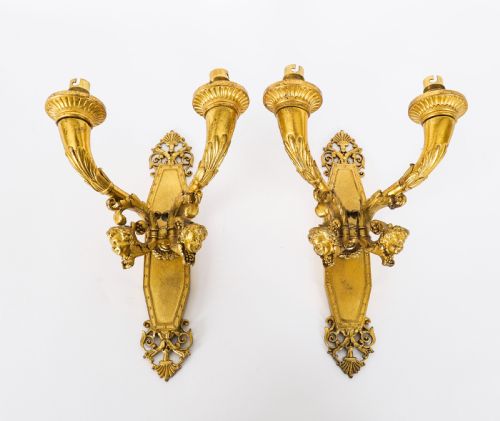
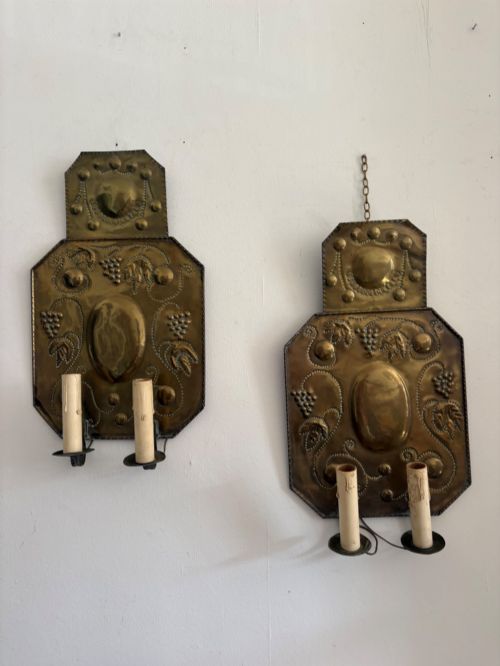
The pieces on this page span the Regency period through to eighteen hundred and ninety, taking the form of wall lights, girandoles, and sconces with integral mirror plates. French designs dominate the selection, alongside Dutch repousse brass and English Regency giltwood.
Most examples offer two or three branches for candles, fashioned from gilt bronze, ormolu, and brass. Surviving items frequently retain their original fittings and bevelled glass plates, showing how interiors changed over the course of the century.
Construction and Materials
Foundries shaped the bronze and brass components through casting and chasing, applying mercury gilding known as ormolu to achieve a rich golden surface. Skilled artisans then hand-chased the metal to sharpen the acanthus leaves, scrollwork, and classical motifs.
Woodcarvers shaped giltwood frames for mirror-backed sconces, applying layers of gesso and gold leaf over a timber base. Metalworkers also utilised repousse techniques for Dutch brass pieces, hammering patterns from the reverse side to create relief decoration.
Glassmakers produced heavy bevelled mirror plates designed to multiply the flickering light of candles within a room. Makers secured these plates into frames alongside iron or brass wall fixings and candle nozzles.
Quality Variations
The crispness of the metal chasing separates standard production from finer workshops, as sharp, deep relief work requires skilled labour. Heavy casting in solid bronze or ormolu provides greater durability and weight compared to lighter brass alternatives.
The depth and preservation of the original gilding dictate the visual impact of metal sconces, with intact mercury gilding showing warm, deep tones. Giltwood mirrors depend on the preservation of the original gesso and gold leaf beneath later cleaning or touch-ups.
Completeness of the original branches, drip pans, and wall fixings determines whether a pair retains its intended balance. Period replacement parts alter the integrity of an antique fixture compared to matching original components.
E.G Paris
The Nineteenth Century Wall Sconces Glossary
- Ormolu
- Gilded bronze produced by applying a mercury and gold amalgam to a bronze base and firing it in a kiln. This technique creates a durable, bright golden finish found on fine French lighting.
- Repousse
- A metalworking technique where the artisan hammers or pushes the design from the reverse side of a sheet of brass or copper. This creates a raised relief pattern on the front.
- Girandole
- A branched wall sconce featuring a mirror plate designed to reflect and amplify the light. The reflective glass increases illumination in rooms lit by candles.
- Giltwood
- Timber, usually pine or gesso-coated wood, covered with thin sheets of gold leaf. It provides a bright decorative frame for mirrors and wall sconces.
- Bevelled glass
- Mirror glass with edges ground and polished at an acute angle. This process adds a decorative border that catches and refracts light.
Nineteenth Century Wall Sconces: Frequently Asked Questions
How do I hang antique wall sconces safely?
Wall sconces require sturdy fixings screwed directly into masonry or wall studs to support the weight of cast bronze or glass. Professional installation ensures the bracket bears the load securely without damaging historic plaster.
Positioning the sconces at eye level allows the candle branches and mirror plates to distribute light evenly across the room. Ensure adequate clearance from curtains and furnishings for fire safety.
Can these sconces be wired for electricity?
Many nineteenth century wall sconces accommodate internal wiring for small electrical candle tubes without altering the exterior metalwork. A qualified electrician can thread wire through the existing central channels and arms.
Retaining the original drip pans and candle nozzles preserves the authentic appearance of the fixture. Conversions should remain completely reversible to protect the historical fabric of the piece.
How do I clean ormolu and brass?
Dusting with a soft, dry brush removes surface particles without wearing away delicate mercury gilding or patinated brass. Avoid chemical dips and abrasive metal polishes that strip historical finishes.
Stubborn grime requires gentle cleaning with a mild soap solution and a soft cloth, followed by thorough drying. Preservation of the accumulated surface patina maintains the visual depth of the metal.
What is the difference between a sconce and a girandole?
A standard wall sconce consists of a wall-mounted bracket with arms designed solely to hold candles or lights. The focus remains on the structural metalwork and the decorative arms.
A girandole incorporates a mirror plate behind the candle branches to reflect and multiply the light. This reflective backing distinguishes the girandole from simpler wall lights.