


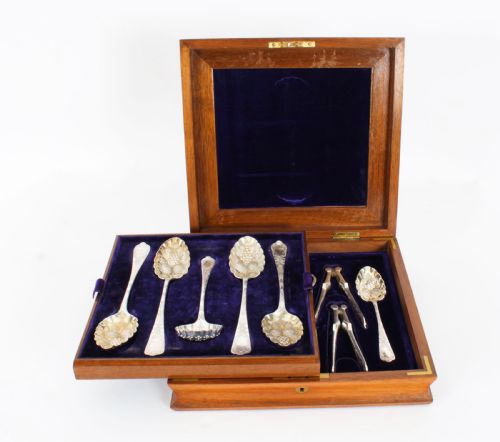


Nineteenth Century Silver Case
These nineteenth century silver case pieces are functional containers and fitted boxes carrying precious metal work, offering portable elegance for the collector.
Nineteenth Century Silver Case
When you search for a nineteenth century silver case, you are looking at small portable containers, fitted boxes, and protective holders made during the 19th Century, Georgian, and Victorian periods. The items listed encompass card cases, needle cases, travelling dressing cases, and boxes.
You are most likely to meet silver-gilt and enamel boxes alongside smaller novelty items from the Victorian and Georgian eras. These pieces often incorporate internal velvet linings and fitted compartments designed for specific domestic or personal implements.
The objects originate from various stylistic backgrounds, including Regency, Imperial Russian, and Late Victorian designs. Each item serves as an example of period craftsmanship geared toward storage and display.
How they were made
The construction relies heavily on precious metals combined with internal structures of wood such as mahogany or rosewood, alongside velvet and glass. Metalworking techniques include gilding and enamel work applied directly to the silver surfaces.
Master craftsmen shaped these containers to house delicate items like needles, cards, and fruit utensils securely. The integration of silver with contrasting materials forms the foundation of their manufacture.
Nineteenth Century Silver Case Retail Price Guide 2026
Typical asking prices for nineteenth century silver case among the pieces listed under this phrase on Sellingantiques today, from the lower quarter to the upper quarter. They describe what is for sale here now, not the wider market.
Listings feature periods spanning the Georgian, Victorian, and Edwardian eras, alongside materials like brass, mahogany, and enamel.
What varies in quality
Quality rests upon the fineness of the metalwork, particularly the execution of shaded enamel or detailed chasing on the silver. The precision with which internal compartments and velvet linings are fitted also marks the difference between standard production and superior work.
The choice of secondary materials, such as high-grade rosewood or mahogany carcases and well-preserved glass components, elevates the standing of an individual piece. The integrity of the maker's finish dictates its overall merit.
Walker·Hukin and Heath·Khlebnikov
The Nineteenth Century Silver Case Glossary
- Silver-gilt
- Silver that has been coated with a thin layer of gold on its surface. This technique provides a rich two-tone appearance.
- Shaded enamel
- Glass powder fused to metal through firing, creating gradual shifts in colour across the design. It appears frequently on Russian pieces.
- Dressing case
- A fitted box containing compartments and bottles for personal grooming items. These often feature velvet interiors.
- Novelty item
- An object shaped into an unusual or whimsical form rather than a standard geometric box. Needle cases frequently adopted these imaginative shapes.
- Sterling silver
- An alloy consisting of silver and other metals, usually copper, to increase durability. It forms the primary metal for many period utensils and cases.
Nineteenth Century Silver Case: Frequently Asked Questions
What was a nineteenth century silver case used for?
These containers held visiting cards, sewing needles, or personal grooming accessories during daily social engagements.
They provided secure, portable storage that protected delicate personal items while travelling or making calls.
How do I identify a Victorian silver case?
Look for specific stylistic markers such as Late Victorian ornamentation, heavier cast mounts, and characteristic velvet linings inside the boxes.
Comparing the exterior motifs against known period designs helps confirm the era of manufacture.
Are these cases fragile to live with?
While durable enough for display, the delicate enamel work and interior velvet require gentle handling and stable humidity.
Keeping them out of direct sunlight preserves the vibrancy of the silver and any applied coloured enamel.
What materials accompany the silver?
Makers frequently paired silver with glass, velvet, mahogany, and rosewood to construct the internal frames and fitted compartments.
Enamel and gilding also appear on the metal surfaces to add decorative contrast.