


Nineteenth Century Pine Cupboard
A nineteenth century pine cupboard brings honest utility to a room, offering sturdy timber storage shaped by vernacular hands.
Nineteenth Century Pine Cupboard
When you search for a nineteenth century pine cupboard, you find utilitarian furniture built from softwood across the English counties. These pieces include corner cabinets, two-door cupboards, housekeepers cupboards, and dresser bases spanning the Victorian era and the broader nineteenth century. They served practical domestic storage needs in kitchens, pantries, and sculleries before finding a place in modern rooms.
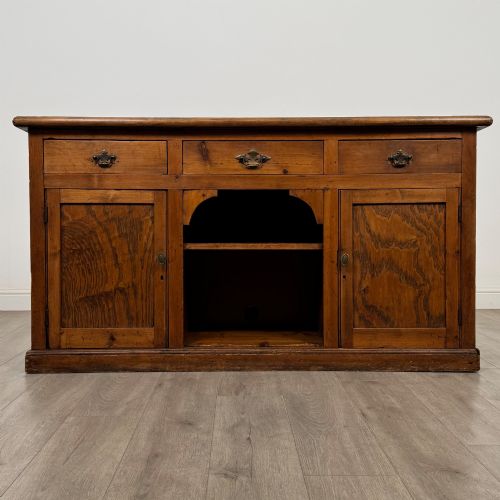
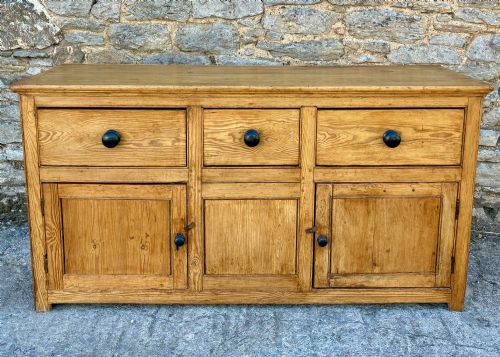
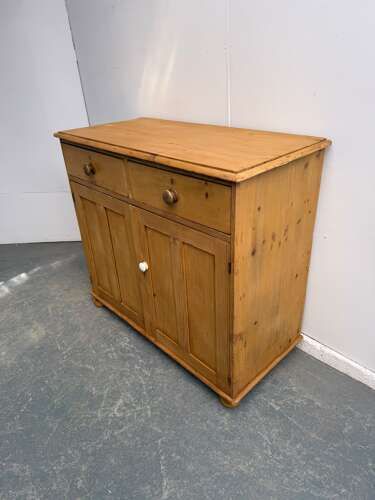
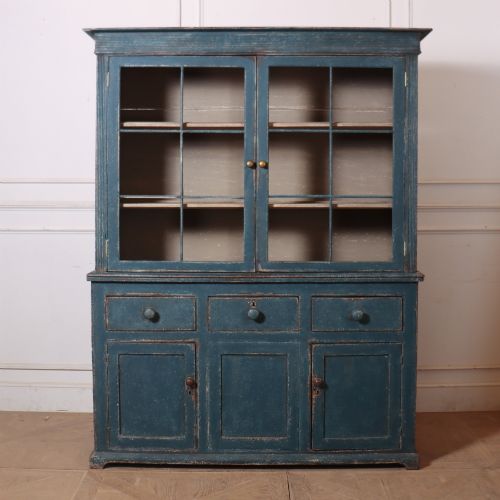
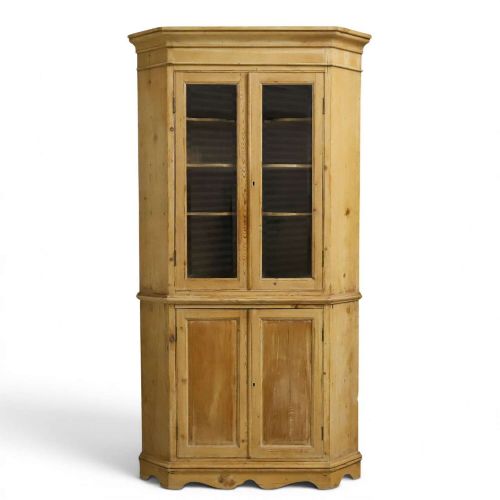
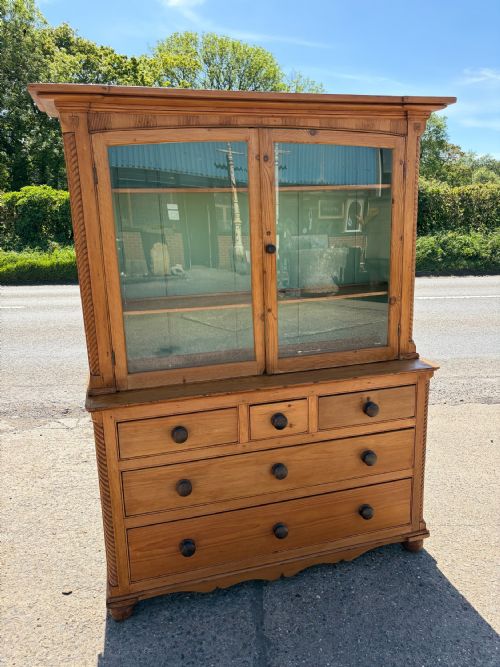
On this page, you are most likely to meet two-door cupboards, dresser bases, and kitchen dressers originating from regions such as the West Country, Wales, and Cornwall. Many retain their original painted finishes or bare waxed timber surfaces. Their forms range from simple single-section cupboards to two-part corner units with glass doors.
The construction reflects regional English vernacular traditions rather than metropolitan cabinet-making. Makers built these items for hard daily use, employing sturdy timbers that took paint or wax readily. The variety in form, from low dresser bases to tall housekeepers cupboards, shows how adaptable pine was for domestic storage.
How they were made
Makers constructed these pieces using pine and pitch pine, often seasoned locally before being shaped into thick boards for doors and carcases. Iron and brass fittings such as hinges and handles secured the heavy timber doors. Wood was left bare to receive wax or coated in layers of paint.
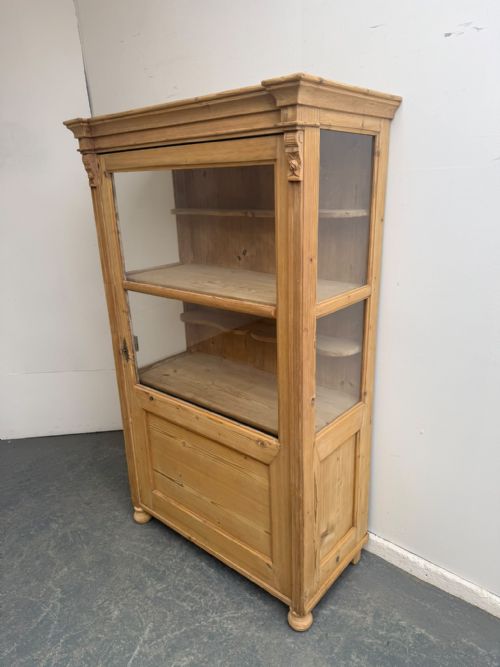
Surfaces frequently show the marks of early preparation, with painted pine variants displaying worn coats in various hues. Waxed timber highlights the natural grain and knots inherent in nineteenth-century softwood. Glass appears in the upper sections of display cabinets and corner units, secured by wooden glazing bars.
Listings feature nineteenth-century pine pieces utilising glass, brass, and iron alongside painted timber and waxed wood.
What varies in quality
The distinction between pieces rests on the integrity of the original construction and the survival of early finishes. Superior examples retain their original painted surfaces or deep wax patination without heavy timber replacement. Proportion and regional character also dictate desirability, particularly in West Country and Welsh vernacular forms.
Simpler utility items contrast with more ambitious two-part corner cabinets and glazed display pieces that required finer joinery. The weight of the timber and the solidity of the brass and iron hardware indicate the grade of the original commission. Pieces that preserve their structural soundness alongside honest wear stand apart from heavily restored items.
The Nineteenth Century Pine Cupboard Glossary
- Pine
- A softwood timber widely used in nineteenth-century vernacular furniture construction. It accepts wax and paint readily, making it the primary material for utility pieces.
- Dresser Base
- The lower section of a kitchen dresser, usually featuring drawers above cupboards. These versatile items functioned as sideboards and work surfaces in country homes.
- Housekeepers Cupboard
- A large, tall storage cabinet traditionally used for linens and provisions in large households. They often feature multiple doors enclosing deep shelving.
- Corner Cupboard
- A cabinet designed to fit neatly into the corner of a room, saving floor space. Examples appear in both single-section and two-part glazed formats.
- Pitch Pine
- A denser, harder variety of pine featuring pronounced grain patterns. It was frequently selected for wall cupboards requiring greater durability.
Nineteenth Century Pine Cupboard: Frequently Asked Questions
What rooms suit a pine cupboard?
These cupboards suit kitchens, dining rooms, and hallways where practical storage is required. Their honest timber surfaces and painted finishes bring warmth to both modern and traditional interiors.
Because they were built for utility, they offer deep shelving and stable proportions that handle everyday use comfortably. Placing one in a living space provides functional storage with distinct historical character.
How do I care for waxed pine?
Waxed pine benefits from occasional application of traditional beeswax to nourish the timber and maintain its sheen. Avoid placing wooden furniture near direct heat sources or damp areas.
Dusting with a dry cloth keeps the surface clean without stripping the historic patina. Gentle care preserves the appearance of the softwood over time.
Are painted finishes original?
Many pieces retain early or original painted finishes that show attractive wear from decades of domestic use. Examining the layers reveals how the furniture was maintained in its working life.
Some items were stripped to bare wood later in their history, while others preserved their paint beneath subsequent coats. Each finish tells a different story about the piece's journey.
How do regional styles differ?
Regional pieces often reflect local timber availability and domestic traditions found in areas like Wales, Cornwall, and the West Country. Welsh and Cornish examples frequently take the form of substantial dresser bases with deep proportions.
Corner cabinets and housekeepers cupboards show variations in moulding and door configuration depending on where the maker worked. These local details help identify the origin of vernacular furniture.