




Nineteenth Century Piano
A nineteenth century piano brings genuine period presence to a room, offering the satisfying craftsmanship of the era alongside authentic musical history.
Nineteenth Century Piano
When you search for a nineteenth century piano, you encounter a selection spanning square pianos and dedicated seating, predominantly comprising piano stools, music stools, and benches in various woods.
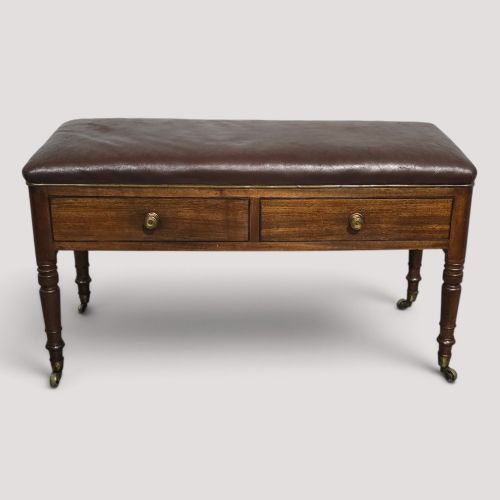
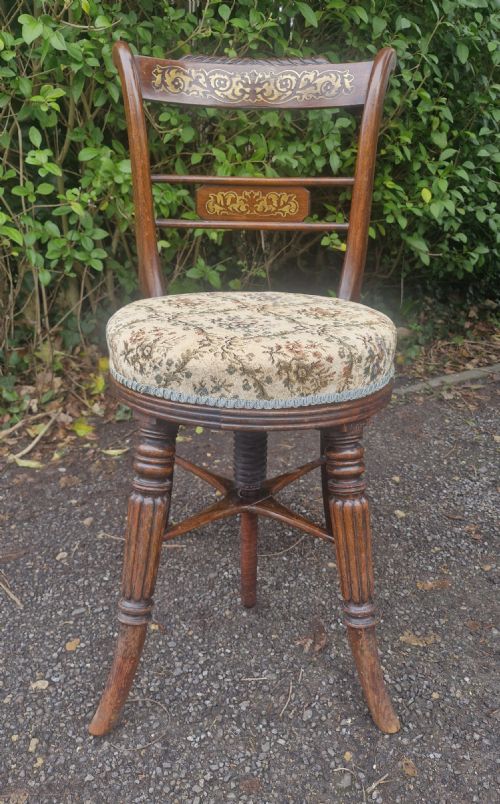
The objects on this page range from compact square pianos by makers such as Wood, Small and Co. to adjustable revolving stools, duet window stools, and davenports associated with the period.
Victorian and Regency examples dominate the selection, utilising rich timbers like mahogany, rosewood, and walnut alongside brass and upholstered elements.
How they were made
Cabinet makers utilised dense hardwoods such as mahogany, rosewood, walnut, and birdseye maple, often applying intricate brass inlay or carving the timber into substantial forms.
Seating and adjustable mechanisms incorporate functional metal hardware, screw threads for height regulation, and traditional upholstery over fabric and leather.
Square pianos and desks combine structural cabinetry with complex internal stringing and keyboard assemblies, whilst revolving and X-frame stools rely on robust joinery.
The listings on this site record prominent use of mahogany, rosewood, and walnut across Victorian and Regency periods.
What varies in quality
Quality rests upon the refinement of the timber selection, such as figured burr walnut or rich rosewood, and the crispness of any hand-carved ornamentation.
The sophistication of the mechanical engineering distinguishes standard items from superior pieces, particularly in the smooth operation of height-adjustable screws and revolving tops.
The integrity of the original brass inlays, fabric upholstery, and structural joinery dictates the overall standing of each piece.
Charles Nosotti·Wood, Small and Co.
The Nineteenth Century Piano Glossary
- Square piano
- A domestic keyboard instrument built in a rectangular case rather than an upright or grand shape. These compact instruments were housed in elegant wooden cabinets.
- Music stool
- A seat designed specifically for keyboard players, frequently featuring a revolving or height-adjustable mechanism. They often include upholstered tops in fabric or leather.
- Regency
- A British design period spanning the early part of the nineteenth century. It is characterised by classical influences, brass inlay, and dark exotic woods.
- Victorian
- The period covering the reign of Queen Victoria, marked by diverse revival styles and substantial furniture construction. Walnut and mahogany were heavily utilised during this era.
- X-frame
- A structural furniture design where the legs cross in the shape of an X. This form appears frequently on nineteenth-century dressing and piano stools.
Nineteenth Century Piano: Frequently Asked Questions
What is a square piano?
A square piano is a compact domestic keyboard instrument housed within a rectangular wooden case rather than an upright or grand shape. These instruments were designed to fit domestic parlours while providing musical capability.
They combine intricate internal stringing with decorative cabinetry in timbers such as mahogany and rosewood.
How do adjustable piano stools work?
Adjustable piano stools use a central threaded screw mechanism operated by turning the upholstered seat top. This allows the player to raise or lower their seating position to suit the instrument.
Many examples from the nineteenth century retain these original brass and wooden turning mechanisms.
How do I identify Regency pieces?
Regency pieces typically date from the early nineteenth century and feature neoclassical influences, dark timbers like rosewood, and distinctive brass inlay work. The style draws inspiration from ancient Greek and Roman designs.
Proportions are generally clean and balanced, often pairing simulated rosewood with genuine hardwoods.
Where should I place a music stool?
Music stools suit living spaces, studies, and bedrooms as versatile occasional seating or small side tables. Their compact footprints allow them to fit easily into corners or beside desks.
Revolving and adjustable variants also function effectively as dressing table seats.