

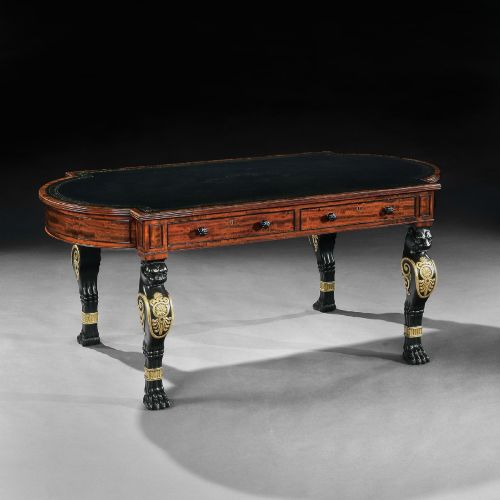
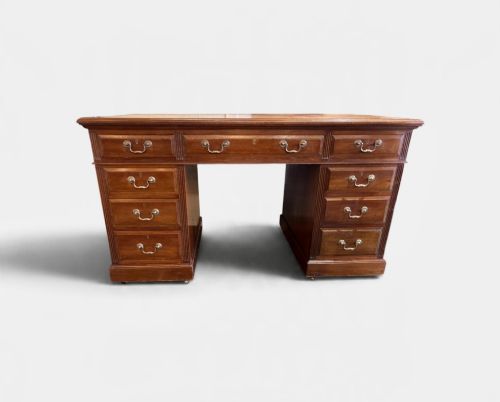
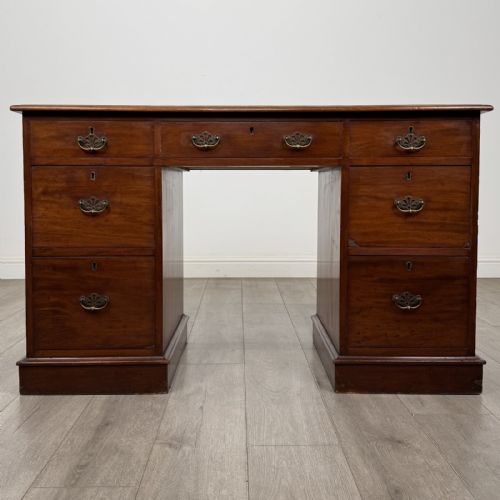
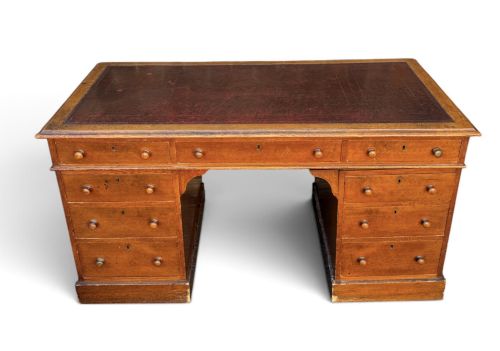
Nineteenth Century Partner Desk
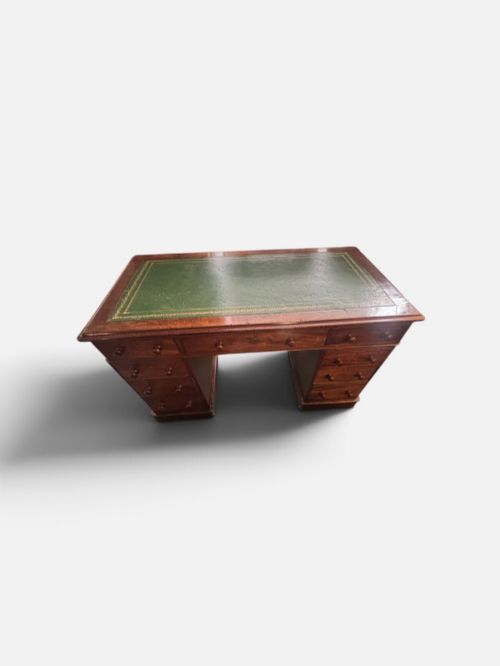
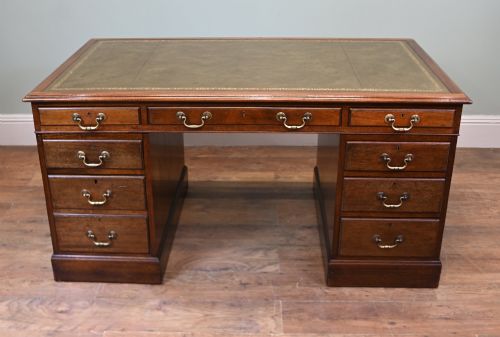
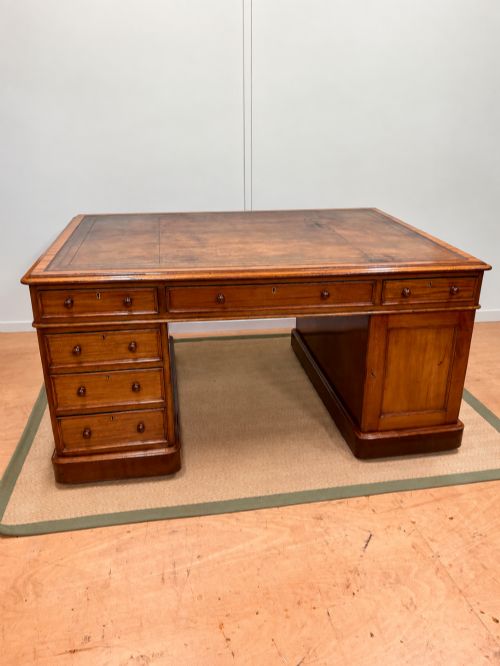
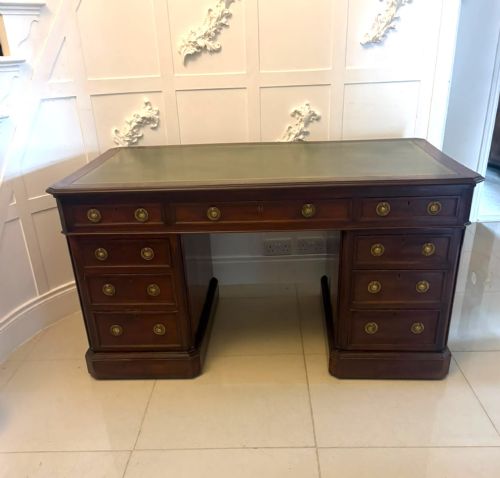
A nineteenth century partner desk is a substantial double-sided working table designed for two people to sit opposite each other.
Nineteenth Century Partner Desk
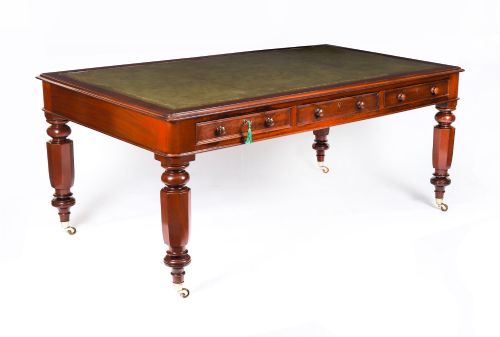
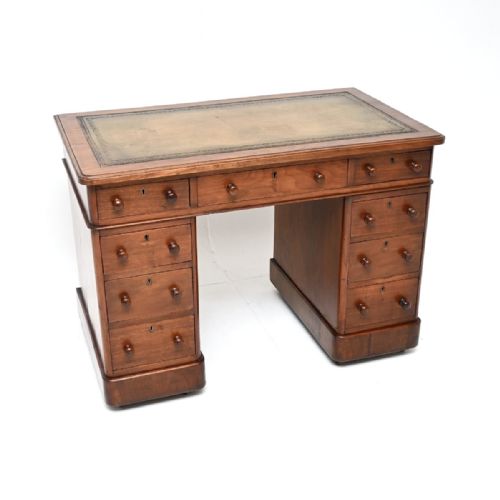
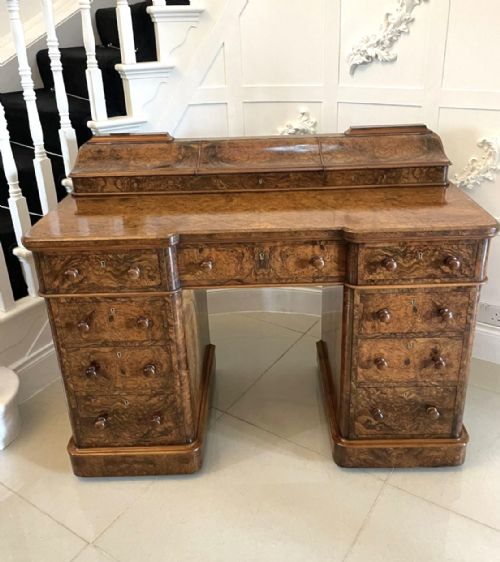
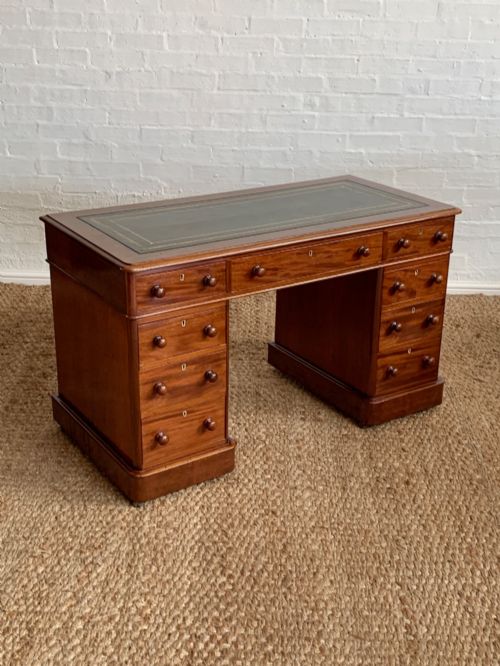
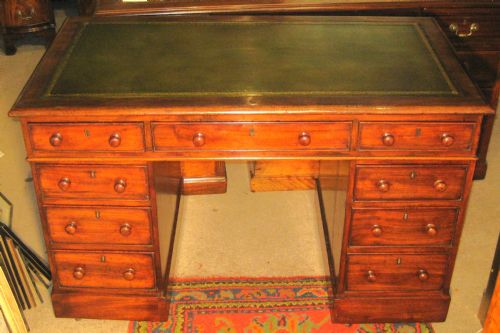
When you search for a nineteenth century partner desk, you encounter large pedestal forms designed to sit freestanding in the middle of a room rather than against a wall. These pieces feature drawers and cupboards on both sides, allowing two individuals to work independently face to face.
The most common versions on this page belong to the Victorian period, though earlier Georgian and Regency influences appear in the proportions and timber choices. Many examples adopt traditional twin pedestal formats with banks of drawers beneath opposing writing surfaces.
Materials and construction
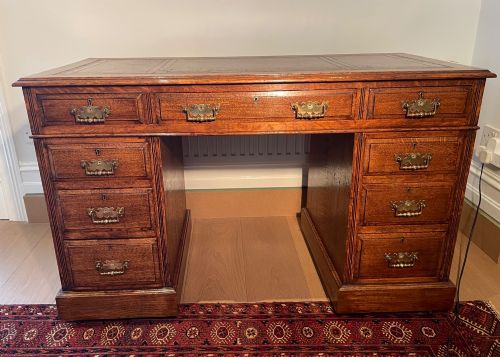
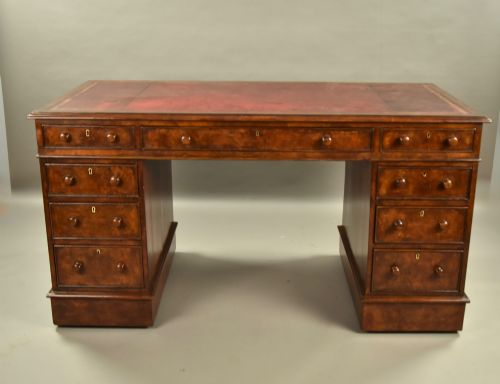
Cabinet makers built these desks primarily using solid and veneered mahogany, oak, and walnut, often selecting highly figured burr walnut, satinwood, or flame mahogany for the principal surfaces. The main bodies utilise sturdy timber carcases with dovetailed drawer construction to withstand heavy daily use.
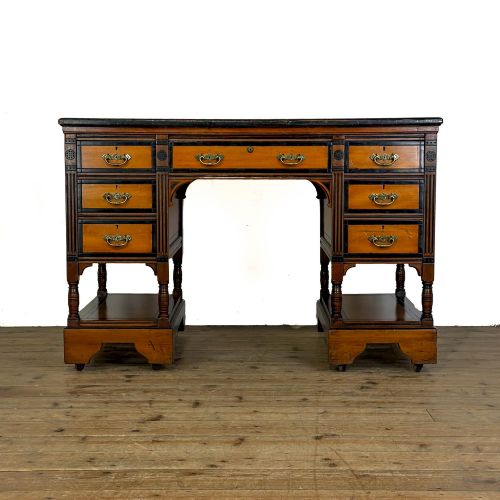
Writing surfaces are typically inset with panels of tooled leather, frequently framed by subtle crossbanding and decorative stringing. Brass handles, key escutcheons, and occasionally brass castors complete the lower terminations of the pedestals.
Nineteenth Century Partner Desk Retail Price Guide 2026
Typical asking prices for nineteenth century partner desk among the pieces listed under this phrase on Sellingantiques today, from the lower quarter to the upper quarter. They describe what is for sale here now, not the wider market.
One exceptional nineteenth-century desk packs an impressive eighteen drawers into its double-sided frame, ensuring neither partner has an excuse for clutter.
Judging quality and proportion
The distinction between ordinary utility pieces and the finest examples lies in the selection of timber veneers and the crispness of the secondary mouldings. Superior desks display matching grain patterns across large surfaces and careful attention to interior drawer linings.
Proportion and scale dictate the visual success of a double-sided writing table, with better workshops achieving a balanced depth that allows adequate knee clearance on both opposing sides without appearing cumbersome.
Maple & Co.·Gillow & Co·Deighton & Dunthorne
The Nineteenth Century Partner Desk Glossary
- Pedestal desk
- A heavy writing table comprising two separate drawer units supporting a central top. This configuration creates two distinct workspaces.
- Partners desk
- A double-sided writing table configured with matching drawers and cupboards facing outwards on both sides. It permits two people to use the desk simultaneously.
- Crossbanding
- A decorative border of veneer laid perpendicular to the surrounding grain. This technique frames the primary writing surface or drawer fronts.
- Kneehole
- The central recessed space beneath a desk top where a chair sits. It often contains a concealed single drawer above.
- Escutcheon
- A protective metal plate surrounding a keyhole. It is usually cast or stamped in brass.
Nineteenth Century Partner Desk: Frequently Asked Questions
What is a partner desk?
A partner desk is a large, freestanding office table with storage drawers and cupboards accessible from both the front and the back. It allows two people to sit facing one another while working.
These pieces were traditionally used in libraries, banks, and large estate offices where clerks or business associates needed to share a workspace.
How do I use one today?
These large desks suit spacious home studies, open-plan living areas, or executive offices where they can stand centrally in the room rather than pushed against a wall. Their dual-sided nature makes them ideal for shared studies.
Care should be taken to measure your room dimensions carefully, as these pieces require clearance on all sides for chairs and movement.
How do I tell periods apart?
Georgian and Regency examples tend to feature cleaner architectural lines, lighter proportions, and simpler cockbeaded drawer edges. Victorian versions often display heavier mouldings, richer figured timbers like burr walnut, and more elaborate carved details.
Later Victorian and Aesthetic Movement pieces may also introduce ebonised finishes or geometric inlays that reflect late nineteenth-century design tastes.
What woods were used?
Cabinet makers relied heavily on mahogany, oak, and walnut as structural timbers for these substantial desks. More decorative surfaces frequently utilised flame mahogany, burr walnut, or satinwood veneers.
Writing surfaces were almost universally inset with leather, which provided a durable and smooth plane for writing by hand.