



Nineteenth Century Leather Chair
A nineteenth century leather chair is a sturdy seat designed for libraries, studies, and dining rooms, offering tactile history and enduring comfort.
Nineteenth Century Leather Chair
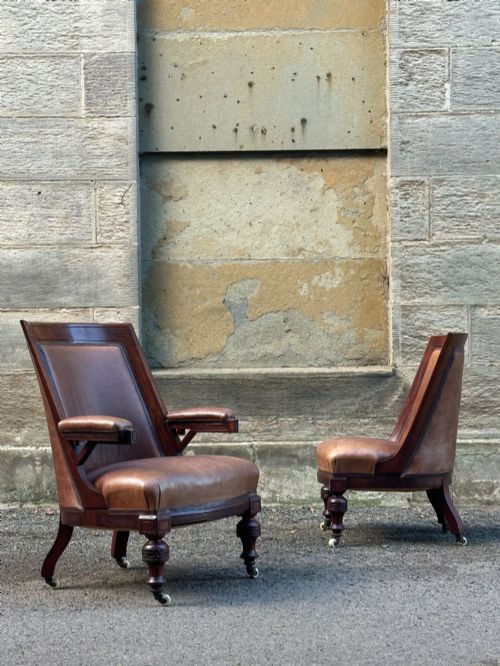
A nineteenth century leather chair encompasses a diverse range of seating forms, including library armchairs, dining chairs, desk chairs, and fireside chairs. These pieces span the Regency, Victorian, and William IV periods, reflecting shifting domestic fashions across the decades.
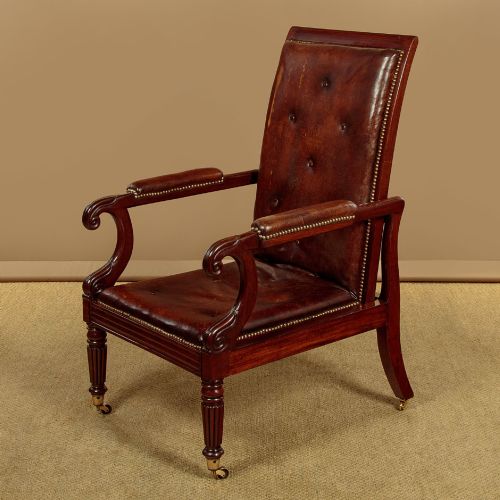
Armchairs and library chairs dominate the selection, often featuring buttoned upholstery, brass nail detailing, and robust timber frames. Dining chairs and side chairs appear in sets, constructed from timbers such as mahogany, oak, and walnut.
Buyers will encounter specific aesthetic revivals and regional variations, from Gothic Revival oak pieces to French bamboo highchairs and Irish dining chairs. Each form served a distinct domestic function, whether for reading, writing, or formal dining.
How they were made
Frames are constructed from solid hardwoods including mahogany, oak, walnut, and rosewood, sometimes utilising inlaid decoration, carved details, or simulated rosewood finishes. Structural integrity relied on traditional joinery methods suited to the demands of heavy daily use.
Upholstery incorporates genuine leather or rexine, secured with brass nails and occasionally paired with cane panels, rush, or horsehair stuffing. Materials like brass feature in castors and hardware, while specialised forms include metamorphic mechanisms for library steps.
Nineteenth Century Leather Chair Retail Price Guide 2026
Typical asking prices for nineteenth century leather chair among the pieces listed under this phrase on Sellingantiques today, from the lower quarter to the upper quarter. They describe what is for sale here now, not the wider market.
Periods represented span from Regency and William IV through to the Victorian era and 1900.
What varies in quality
The distinction between ordinary and exceptional pieces lies in the fidelity of the design and the pedigree of the maker or workshop. Items associated with known designers or retailers command greater attention for their sophisticated execution.
Material selection and timber choice dictate the baseline of refinement, with dense figures in mahogany, walnut, and rosewood indicating higher status. The crispness of carved woodwork, the complexity of inlay, and the integration of specialised elements like Mashrabiya panels separate standard seating from bespoke commissions.
Alexander Greek Thomson·Liberty and Co·Howard and Sons·George Bullock·Holland and Sons·Richard Hicks Bridgens
The Nineteenth Century Leather Chair Glossary
- Bergère
- An enclosed upholstered armchair with wooden framing, often featuring cane sides and a loose seat cushion. This form gained popularity during the Regency and Victorian eras.
- Mashrabiya
- An architectural element featuring turned wooden lattices, sometimes incorporated into furniture panels during the late nineteenth century. It reflects the Anglo-Moorish design influence of the period.
- Rexine
- A branded artificial leather fabric made from cloth coated with nitrocellulose, utilised as an upholstery material in Victorian seating.
- Showwood
- Furniture construction where the polished wooden frame is intentionally exposed rather than entirely covered by upholstery. This technique highlights the grain and carving of the timber.
- Tub chair
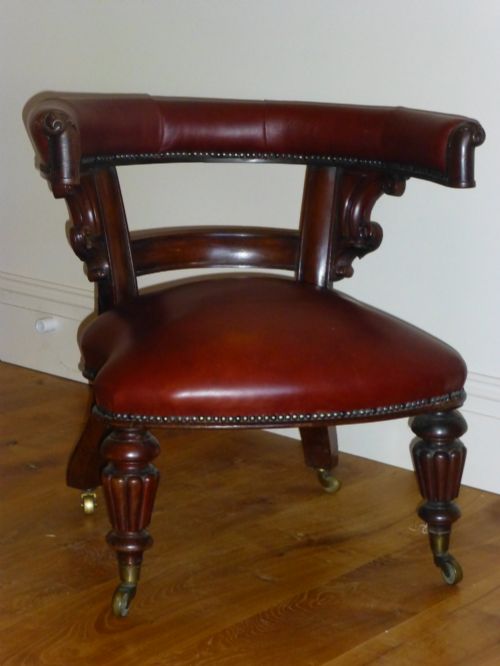
- An upholstered armchair with a rounded back that curves continuously into low arms. The design provides enclosed comfort for studies and libraries.
Nineteenth Century Leather Chair: Frequently Asked Questions
How do I identify a Regency leather chair?
Regency chairs typically date from the early nineteenth century and often feature classical revival motifs, simulated rosewood finishes, or formal mahogany frames. Look for clean classical lines and proportions distinct from later Victorian exuberance.
The use of materials like brass inlay and bergere canework further helps distinguish this period from mid-century productions.
What is a library armchair?
A library armchair is a heavily padded, deep seat designed for reading and extended periods of study. They frequently incorporate leather upholstery and brass nail trim for durability.
Many examples from this era feature low arms to accommodate voluminous nineteenth century garments and allow easy movement.
Are these chairs suitable for daily use?
Most nineteenth century chairs were built using solid hardwoods and traditional joinery designed for rigorous daily environments like libraries and dining rooms. Their robust timber frames ensure structural stability.
Routine care and appropriate weight distribution will allow these pieces to function reliably in modern homes.
How do I care for antique leather?
Antique leather benefits from gentle cleaning and occasional conditioning to maintain its flexibility and prevent drying out. Avoid harsh chemical cleaners and direct sunlight to preserve the surface.
Professional restoration should be considered for structural leather repairs to retain the integrity of the piece.