



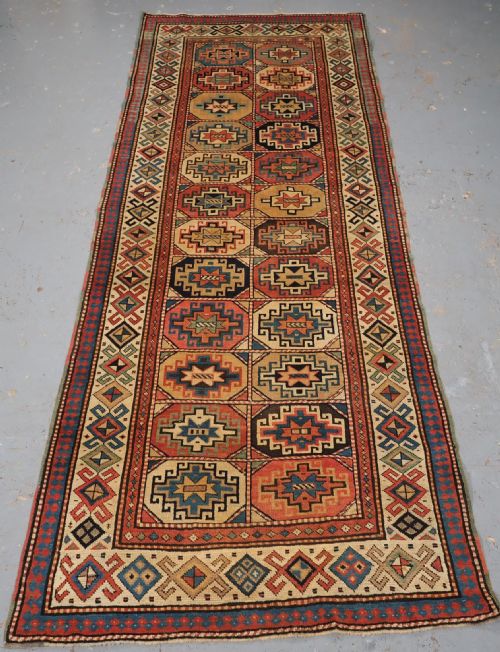
Nineteenth Century Kazak
Nineteenth century kazak rugs are bold tribal wool floor coverings from the Caucasus region that bring striking geometric patterns into a room.
Nineteenth Century Kazak
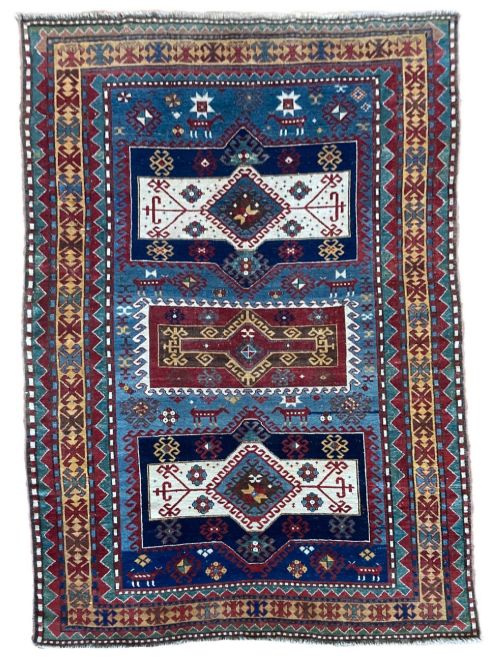
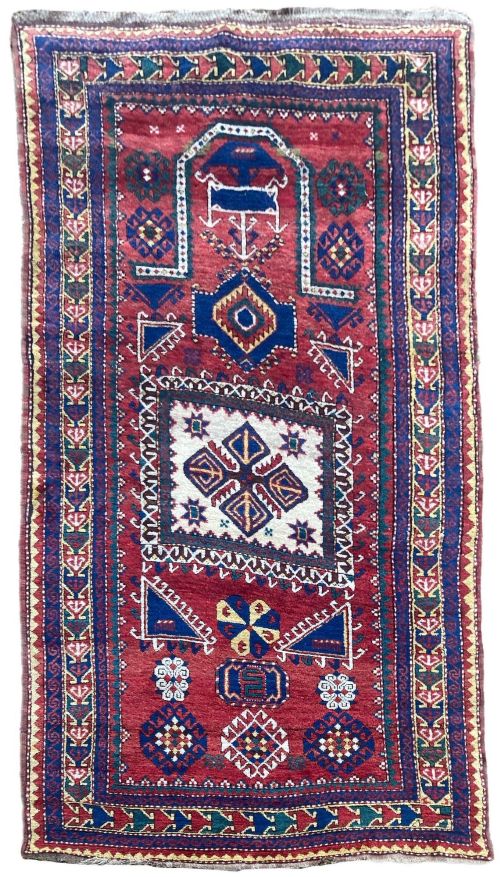
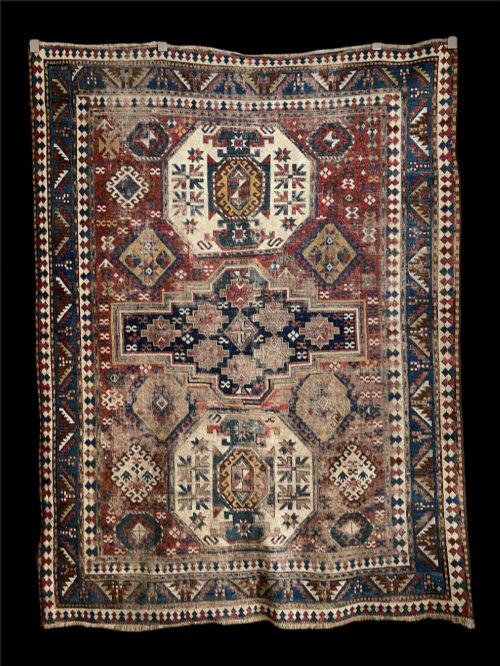
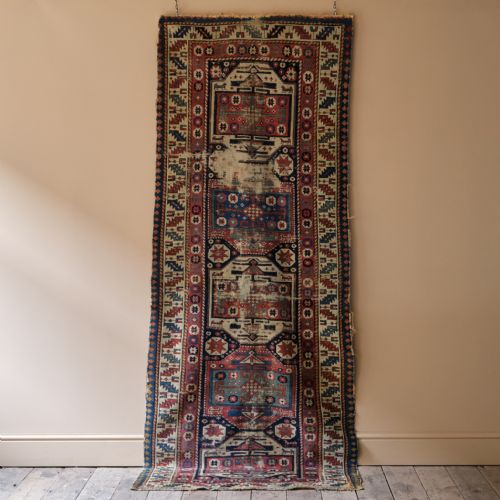
When you search for nineteenth century kazak rugs, you are looking at hand-knotted tribal wool carpets originating from the Caucasus region during the 1800s. These pieces often take the form of area rugs, prayer rugs, and long runners featuring distinct geometric designs.
The most common versions encountered on this page include specific tribal subclassifications such as Moghan, Fachralo, and Bordjalou kazak rugs. They showcase traditional village weaving traditions through robust formats and purposeful proportions.
Moghan and Fachralo examples appear frequently among these listings, often displaying hooked medallions, Memling guls, or prayer formats. Each rug carries the unmistakable folk art character of Caucasian weaving from this period.
How nineteenth century kazak rugs were made
These village rugs are constructed using durable wool for both the pile and the foundation structure, sometimes incorporating cotton elements. Weavers tied thick wool yarns by hand to create a dense, resilient surface designed for daily use.
The construction relies on traditional hand-knotting techniques executed on vertical looms within tribal communities. Natural dye traditions governed the production, yielding the deep tones and soft colour palettes recorded across the listings.
Nineteenth Century Kazak Retail Price Guide 2026
Typical asking prices for nineteenth century kazak among the pieces listed under this phrase on Sellingantiques today, from the lower quarter to the upper quarter. They describe what is for sale here now, not the wider market.
Recorded production dates on this page span from eighteen sixty to eighteen ninety.
What varies in quality
The distinction between ordinary and exceptional examples rests in the clarity of the geometric drawing and the richness of the wool. Finer pieces demonstrate precise execution of hooked medallions and tribal motifs.
Quality also hinges on the depth and condition of the natural dyes, where soft or vibrant hues retain their visual impact across the pile. Superior rugs combine balanced proportions with intact tribal character.
The Nineteenth Century Kazak Glossary
- Kazak
- A type of antique rug woven by various tribal groups in the Caucasus region. These pieces are celebrated for their strong geometric designs and saturated primary colours.
- Prayer Rug
- A small rug featuring a mihrab or niche design at one end, traditionally used for individual prayer. Nineteenth century examples often display this format in specific tribal styles.
- Runner
- A long and narrow carpet format suited for hallways and corridors. The listings include runner variations alongside standard area rugs.
- Medallion
- A central decorative motif placed in the middle of the rug field. Hooked medallions are a frequent feature in these tribal designs.
- Gul
- A repeating octagonal or polygonal medallion pattern used in traditional oriental carpets. The Memling gul variant appears specifically in Moghan rugs.
Nineteenth Century Kazak: Frequently Asked Questions
What is a nineteenth century kazak rug?
A nineteenth century kazak is a hand-knotted wool floor covering made by tribal weavers in the Caucasus during the 1800s. They are known for bold geometric patterns and village folk art character.
These rugs function primarily as decorative area pieces, runners, or prayer formats. Their sturdy construction reflects practical domestic use in village settings.
How do I identify a kazak rug?
Kazak rugs are identified by their heavy wool pile, geometric designs, and distinct tribal motifs like hooked medallions and guls. Colour palettes typically feature strong primary tones alongside softer secondary shades.
Specific regional subgroups such as Fachralo, Moghan, and Bordjalou exhibit particular design traits that help distinguish them. The weave is generally robust and straightforward.
Where were these rugs made?
These rugs were produced in the Caucasus region, an area situated between the Black Sea and the Caspian Sea. Different tribal groups and villages within this mountainous territory maintained distinct weaving traditions.
Local workshops and nomadic weavers passed down specific patterns across generations. This geography accounts for the shared technical and stylistic traits seen in the rugs.
How do I care for a tribal rug?
Caring for a nineteenth century kazak involves regular gentle vacuuming without a rotating brush bar to protect the wool pile. Professional cleaning by specialists in antique textiles is recommended when necessary.
Placing the rug out of direct sunlight helps preserve the natural dyes. Using an appropriate underlay prevents slipping and reduces wear on the cotton and wool foundation.