





Nineteenth Century Child Portrait
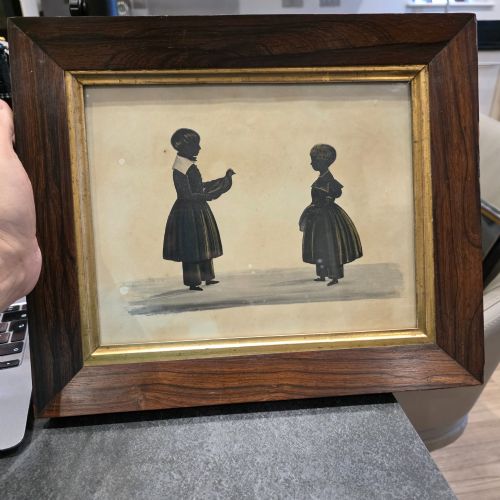
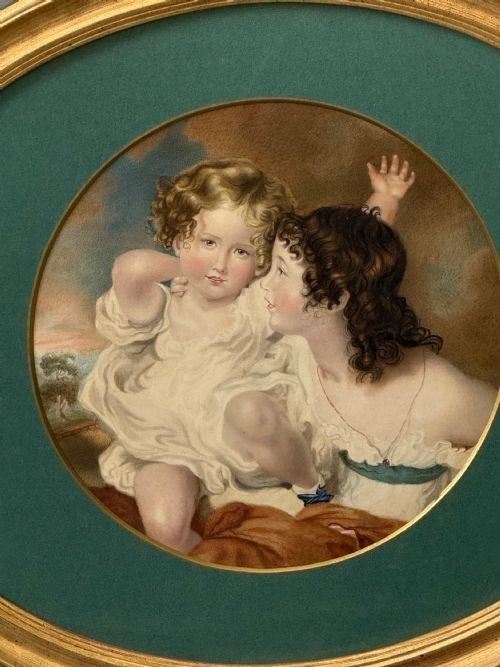
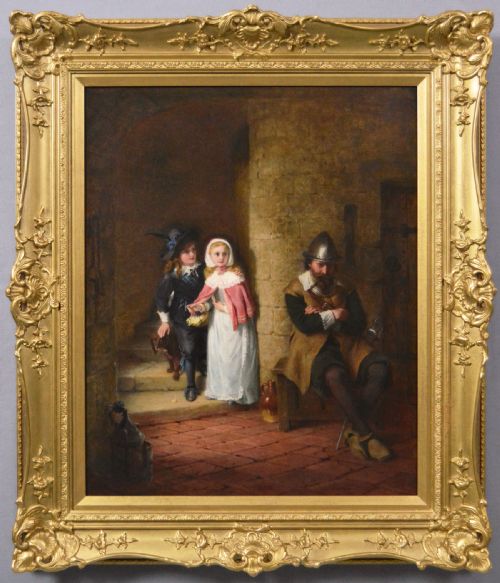
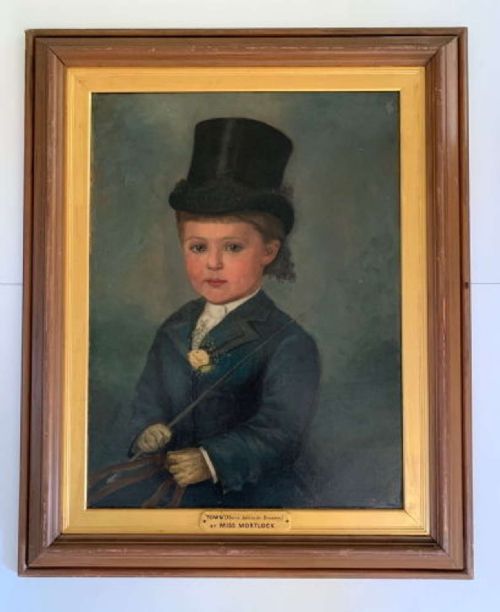
A nineteenth century child portrait captures the likenesses of young subjects through oil, pastel, or silhouette.
Nineteenth Century Child Portrait
A nineteenth century child portrait preserves the likeness of young sitters through various media across the Georgian, Regency, and Victorian eras. These works appear as oil paintings on canvas, delicate watercolours, pastels, and framed silhouettes.
The pieces on this page span provincial English schools, French Romanticism, and naive art depictions. Subjects range from solitary youngsters with pets to sibling pairs with metal clothing embellishments.
How these pieces were made
Artists painted oil on canvas or worked with pastel on paper, securing their finished pieces inside gilded frames, maple surrounds, or gesso mounts. Ink and watercolour on paper also formed the basis for detailed drawings and prints.
Makers occasionally added unusual metal embellishments to the clothing depicted within prints to enhance the visual texture. Glazed glass protected delicate watercolours, silhouettes, and engravings from environmental damage.
Listings feature oil on canvas, paper, glass, giltwood, gesso, and wood across Georgian, Regency, and Victorian periods.
What varies in quality
Framing also separates examples, with period giltwood and maple surrounds offering superior context compared to standard mounts. The preservation of the original paper, canvas, and glass surfaces dictates the overall integrity of the piece.
George Bernard O'Neill·Linnie Watt·Ethel Mortlock·Robert Gemmell Hutchison·John Mc Ghie
The Nineteenth Century Child Portrait Glossary
- Silhouette
- A solid dark profile image cut from paper or painted on a light background. These pieces often feature fine detailing in ink or include multiple subjects.
- Pastel
- A dry pigment medium applied to paper or canvas to create soft textures. This technique yields delicate tonal gradations suited to intimate likenesses.
- Giltwood
- Wood carved and covered with a thin layer of gold leaf to form decorative picture frames. This material defined the display of formal Victorian and Regency art.
- Gesso
- A plaster mixture applied to wood frames to create relief ornamentation before gilding. It provides a stable base for intricate decorative moulding.
Nineteenth Century Child Portrait: Frequently Asked Questions
What periods do these child portraits span?
The works originate from the Georgian, Regency, and Victorian eras, extending into the Edwardian period. Artists captured these young subjects using traditional painting and drawing methods characteristic of those decades.
Dates range from around eighteen hundred through to the early twentieth century. Each era brought distinct stylistic approaches to juvenile portraiture.
What materials were used for these artworks?
Makers utilised oil on canvas, pastel on paper, ink, and watercolour. Protective elements included glass and wood framing with gesso or giltwood finishes.
Certain paper prints also incorporated unusual metal embellishments upon the clothing. These varied components dictated how each piece was displayed and preserved.
How were these portraits displayed originally?
Owners placed these framed artworks on domestic walls within living spaces and drawing rooms. Smaller silhouettes and watercolours sat in intimate interior settings.
Heavier oil paintings required robust wall fixings due to their large canvases and ornate frames. They served as central family memorials in period homes.
How do I identify naive art styles?
Naive works exhibit simplified forms and a direct approach to perspective rather than academic proportions. Artists focused on storytelling and character charm over strict anatomical realism.
These pieces often stem from provincial schools where local makers recorded children and pets without formal academy training.