





Nineteenth Century Chess
Nineteenth century chess pieces and boards bring tactile strategy and fine period craftsmanship straight to the table.
Nineteenth Century Chess
Buyers searching for nineteenth century chess encounter a varied selection of functional boards, complete sets, and tables designed for play. These objects span periods from the Regency era through to the Edwardian period, reflecting shifting domestic tastes in leisure.
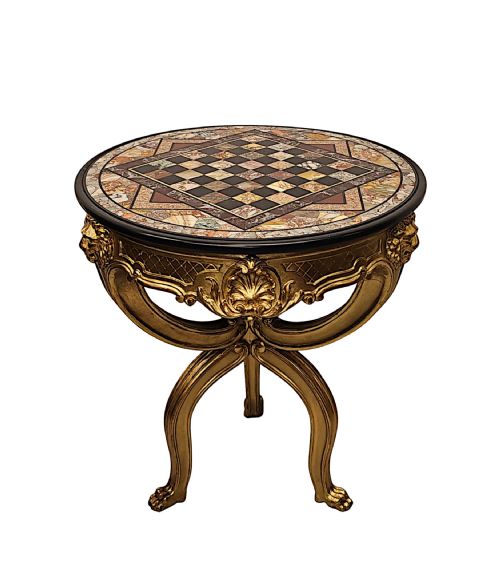
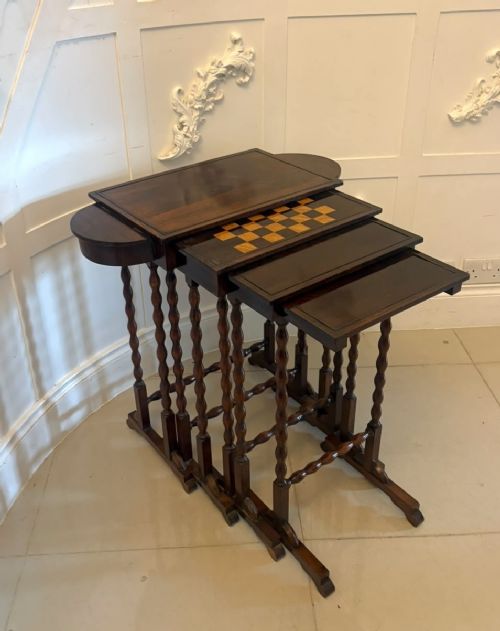
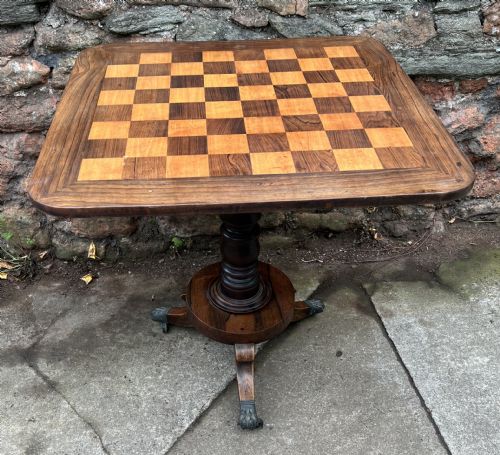
The most frequent pieces met on this page include games tables with inlaid chequer-board tops and separate carved boxwood sets. Forms range from occasional tripod tables and nest of four tables to folding boards and specimen marble table tops.
Origins represented in the current selection include English and Italian workshops, employing traditional woodworking and marquetry techniques. Each piece integrates the practical requirements of the game with the decorative standards of its specific decade.
Materials and construction
Makers utilised dense timbers such as rosewood, mahogany, boxwood, and ebony for tables and playing pieces, ensuring durability during frequent play. Grain contrasts were naturally exploited to form the alternating squares of the boards.
Decorative surfaces frequently incorporated satinwood inlay, Sorrento marquetry, or painted glass, alongside brass mounts and giltwood bases featuring carved lion head and paw detailing. Construction methods balanced structural stability with intricate surface ornamentation.
Nineteenth Century Chess Retail Price Guide 2026
Typical asking prices for nineteenth century chess among the pieces listed under this phrase on Sellingantiques today, from the lower quarter to the upper quarter. They describe what is for sale here now, not the wider market.
Some nineteenth-century players enjoyed their matches on tables that neatly hid away inside nests, proving that portable gaming is far from modern.
Assessing quality
Quality in these items is determined by the precision of the wood inlay and the crispness of the carved details on both tables and pieces. Superior examples demonstrate tight joints, well-matched timber grains, and sophisticated execution of decorative motifs like marquetry or brass mounting.
Simpler pieces rely on straightforward scumbled finishes or standard folding designs, whereas high-end items incorporate elaborate materials such as specimen marble or integrated nest structures. The integration of the games top into multi-functional furniture also marks the distinction between standard utility and superior cabinet-making.
The Nineteenth Century Chess Glossary
- Chequer-board
- A squared grid pattern of alternating dark and light tiles used for games such as chess and draughts. This surface is typically inlaid into the top of a table or constructed as a folding board.
- Marquetry
- Decorative patterns formed by fitting small pieces of veneer into a wooden support. Sorrento marquetry is particularly associated with Italian decorative woodworking of the period.
- Tripod table
- A small freestanding table supported by a central pillar resting on three feet. These often feature tilt-top mechanisms or inlaid games boards.
- Quartetto nest
- A set of four graduating tables that fit neatly inside one another. Regency examples sometimes integrate a chess board top into the design.
- Calvert Pattern
- A specific nineteenth century style of turned chess set design, typically executed in boxwood and ebony. These sets are defined by their distinct proportions and piece architecture.
Nineteenth Century Chess: Frequently Asked Questions
What periods do these chess items cover?
The selection covers the nineteenth century, extending from the Regency period through the Victorian era to Edwardian times.
Individual items are dated across this broad span, showing stylistic shifts from brass-mounted rosewood to later glass boards and folding sets.
Were these tables used only for chess?
Many tables served multiple functions in the nineteenth-century home, doubling as occasional furniture, tea tables, or writing surfaces.
Integrated chequer boards often appeared on tilt-top tables, nest of tables, and games tables that could be cleared when play ended.
How do I identify a Regency chess table?
Regency pieces frequently feature rosewood timbers, brass mounts, and inlaid satinwood or rosewood chequer boards.
Structural details like octagonal tripod bases or scumbled finishes also point directly to this distinct early nineteenth-century design phase.
What materials were used for the chess sets?
Sets from this era were commonly turned from contrasting woods such as boxwood and ebony.
These traditional materials provided the necessary durability and visual distinction between opposing sides during play.
Can these tables be used today?
These tables are designed for everyday domestic use, functioning as practical pieces of furniture as well as historical objects.
Careful placement away from direct heat sources helps preserve the delicate inlays and polished wood surfaces.