


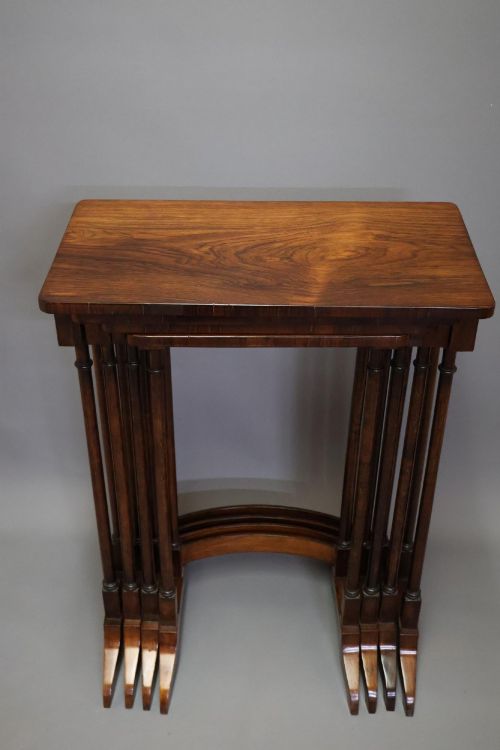


Nesting Lamp Tables
Nesting lamp tables offer clever space-saving design in mahogany, oak, and rosewood, perfect for flexible living.
Nesting Lamp Tables
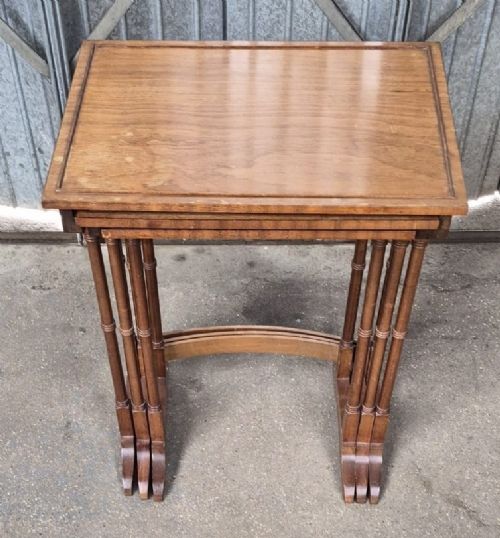
When searching for nesting lamp tables, buyers encounter sets of graduating occasional tables designed to slide neatly beneath one another when not in use. These pieces serve multiple domestic purposes, pulling out easily to hold drinks, books, or small lamps beside seating.
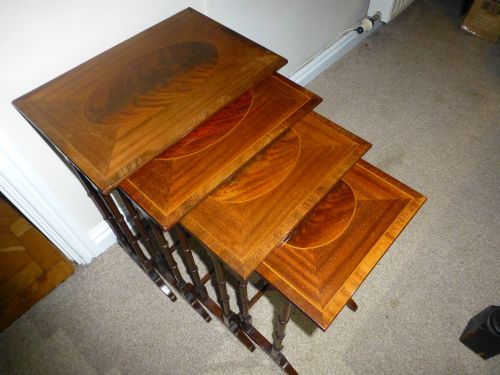
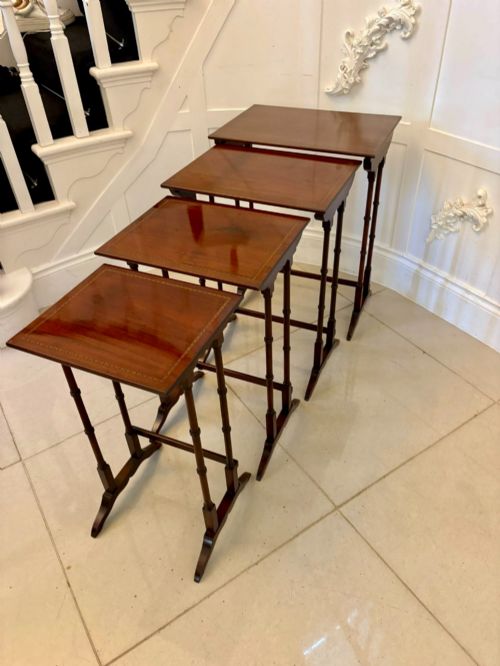
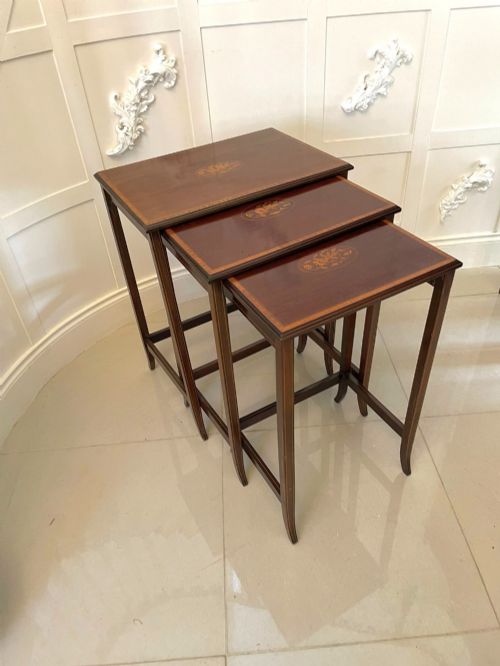
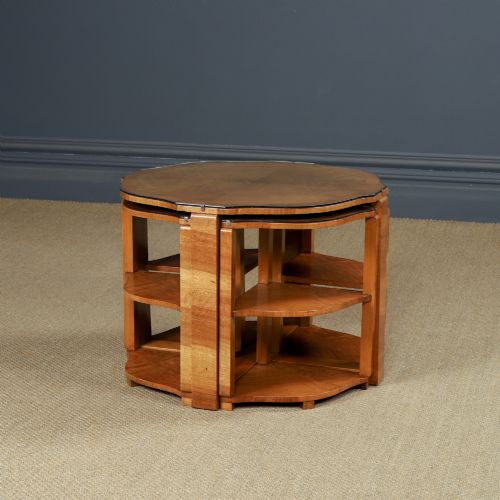
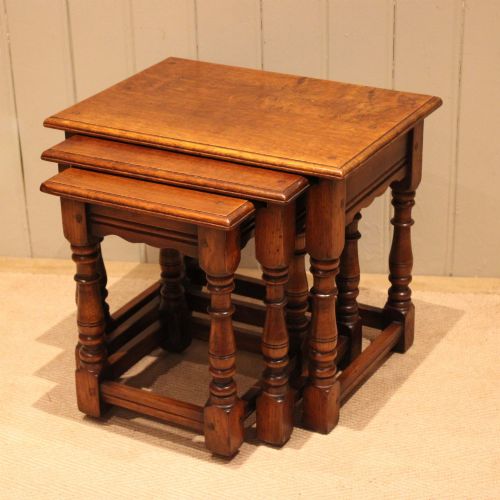
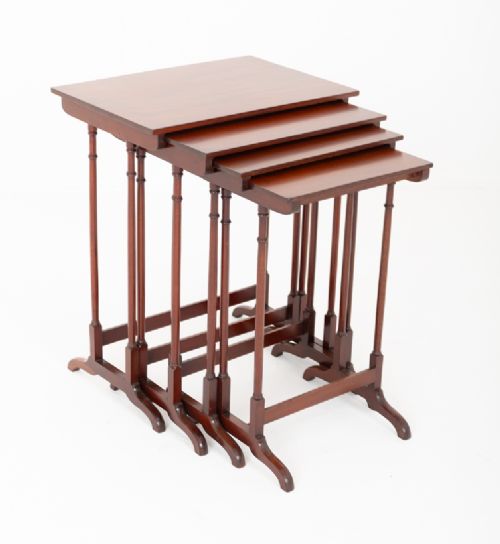
The pieces on this page appear in various historical forms, from Edwardian mahogany quartetto sets to round Art Deco configurations and 19th-century lacquered or hardwood designs. Edwardian examples in mahogany with satinwood inlay predominate, alongside robust oak versions and decorative Chinoiserie decorated sets.
Originating primarily from the 19th century through the Edwardian era and into the 1930s, these tables reflect shifting interior needs for adaptable furniture. They range from simple sets of three utilitarian oak tables to elaborate quartetto sets of four.
Materials and Construction
Cabinet makers utilised dense timbers such as mahogany, walnut, rosewood, and oak to construct the frames, ensuring stability across graduating sizes. Satinwood inlay and gilt painting frequently decorate the tops of finer Edwardian and Victorian pieces.
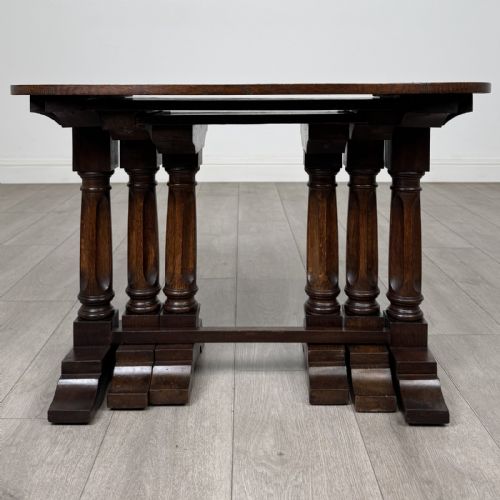
Construction techniques include turned legs, stacking frames, and specialised lacquer work, as seen in Chinoiserie and Oriental hardwood examples. Each smaller table is engineered with slightly reduced dimensions to clear the frame of the table above it.
Nesting Lamp Tables Retail Price Guide 2026
Typical asking prices for nesting lamp tables among the pieces listed under this phrase on Sellingantiques today, from the lower quarter to the upper quarter. They describe what is for sale here now, not the wider market.
Listings feature woods spanning mahogany, satinwood, oak, walnut, rosewood, and oriental hardwood across Edwardian, Victorian, and Art Deco periods.
Quality and Craftsmanship
Quality reveals itself in the choice of timber figure, the precision of the satinwood inlay, and the crispness of turned legs or gilt painted details. Sets featuring four graduating tables, known as quartettos, often demonstrate finer joinery than simpler three-piece sets.
Finer examples maintain structural integrity across all tiers, ensuring the tables slide smoothly without binding while retaining rigid joints. Signed pieces or those with specialised Chinoiserie decoration represent the higher end of manufacture.
E. Daligny
The Nesting Lamp Tables Glossary
- Quartetto
- A set of four graduating occasional tables designed to nest together. This traditional term frequently appears in Edwardian and Victorian furniture descriptions.
- Satinwood inlay
- A contrasting light wood decorative technique embedded into darker timber surfaces. It provides refined detail on Edwardian mahogany table tops.
- Chinoiserie
- European decorative style reflecting Chinese artistic motifs. Pieces utilising this technique often feature lacquered surfaces and painted ornamentation.
- Stacking frames
- The structural arrangement allowing multiple tables to slide into a single footprint. This mechanism defines the core utility of nesting sets.
Nesting Lamp Tables: Frequently Asked Questions
What are nesting lamp tables?
Nesting lamp tables are sets of graduated occasional tables that stack inside one another to save floor space.
They pull apart individually when extra surface area is required beside seating areas.
How were nesting tables used?
Historical households utilised these tables to serve tea, hold lamps, or accommodate books without cluttering the room.
Servants moved them easily around the drawing room as guests required temporary surfaces.
How do I date a nesting table?
Dating relies on identifying timber choices, decorative styles such as satinwood inlay, and construction methods like turned legs.
Edwardian and late Victorian pieces show distinct polish and joinery characteristics compared to 1930s Art Deco examples.
Can I use them as coffee tables?
Individual tables function well as small coffee or side tables when separated around a seating arrangement.
Stacked together, they occupy the footprint of just a single small table.