



Neoclassical Revival Chair
These neoclassical revival chair selections bring classical symmetry and refined ornament into modern rooms through time-honoured cabinet-making traditions.
Neoclassical Revival Chair
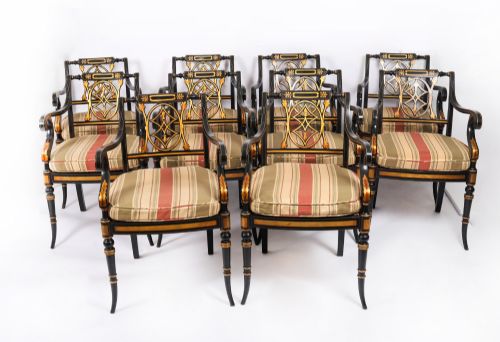
A neoclassical revival chair draws on the enduring geometry and classical motifs of ancient Greece and Rome, filtered through later eighteenth and nineteenth-century revivals. Buyers seeking a neoclassical revival chair will encounter dining chairs, open-arm armchairs, and library seating spanning the nineteenth and early twentieth centuries.
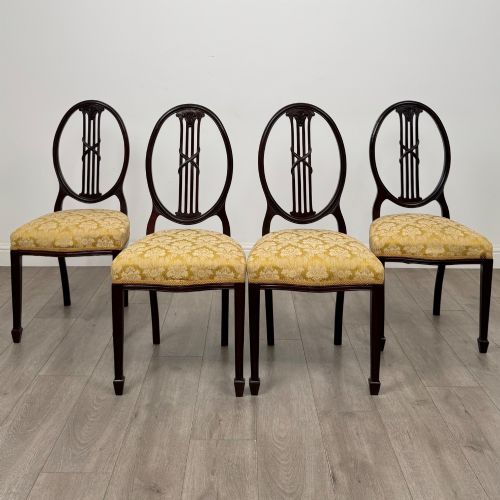
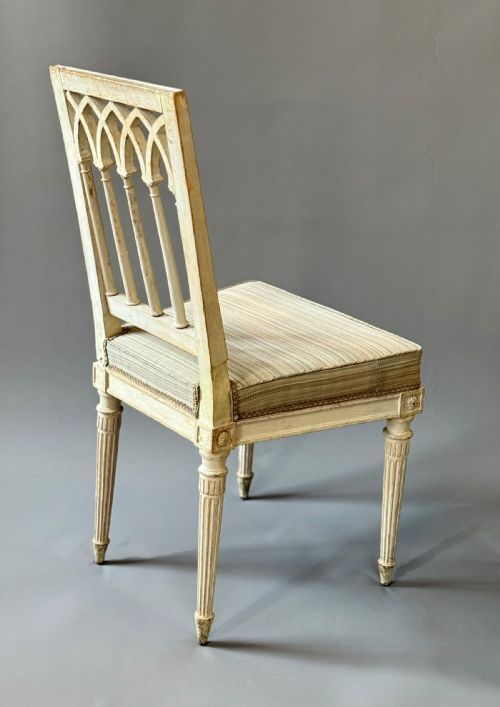
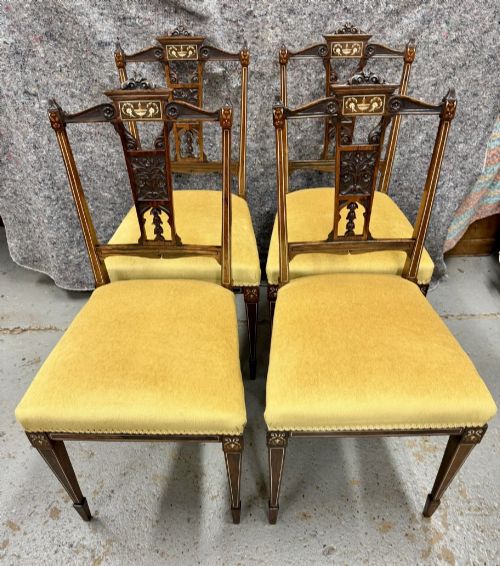
The selections on this page range from Sheraton and Hepplewhite revival dining sets to French Empire and Louis XVI revival armchairs. Walnut, mahogany, and satinwood provide the structural foundation for these seating forms, often enhanced by painted surfaces or gilt bronze mounts.
Many examples date from the Edwardian era and the early twentieth century, though nineteenth-century interpretations appear frequently. These pieces function successfully in contemporary interiors as desk chairs, salon seating, or additions to existing dining tables.
Materials and Construction Techniques
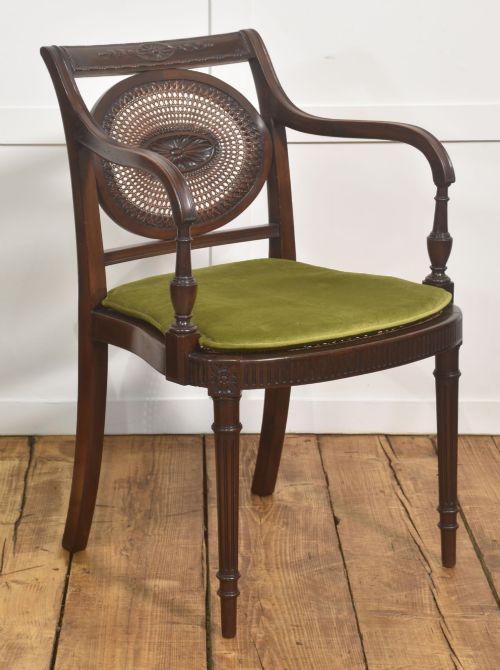
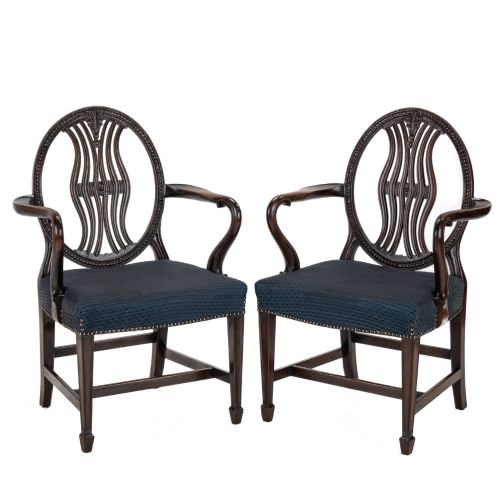
Makers utilised dense hardwoods including mahogany, walnut, and satinwood to build these chairs, frequently incorporating cane work or upholstery in fabric, leather, velvet, and textile. Structural integrity relied on traditional joinery techniques suited to supporting the carved and pierced splat backs or shield backs characteristic of the revival styles.
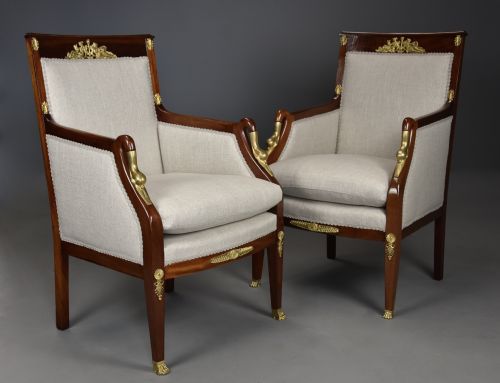
Decorative embellishment often involved cast or chased ormolu and brass mounts applied to mahogany and ebonised frames, particularly in French Empire pieces. Painted finishes, gilding, and fine wood inlays further defined the surface decoration across Sheraton, Hepplewhite, and Louis XVI revival examples.
Neoclassical Revival Chair Retail Price Guide 2026
Typical asking prices for neoclassical revival chair among the pieces listed under this phrase on Sellingantiques today, from the lower quarter to the upper quarter. They describe what is for sale here now, not the wider market.
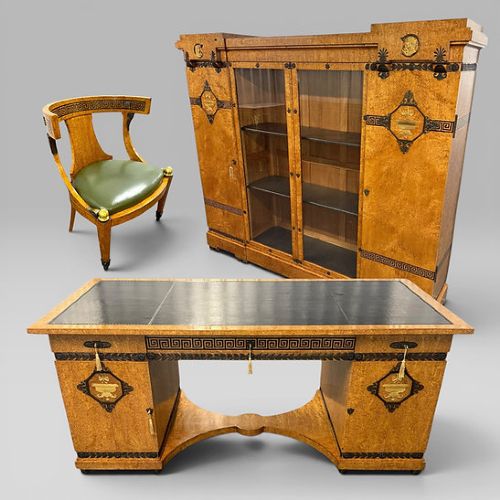
One grand desk chair comes bundled with a matching cabinet and desk, ready for an emperor of paperwork.
Factors Distinguishing Quality
Quality in a neoclassical revival chair rests upon the crispness of the carving, the selection of timber veneers, and the precision of any ormolu or brass mounts. Finer examples display well-defined classical details, tight joinery in the frame, and balanced proportions across suites or pairs.
The execution of secondary decorative elements, such as intricate cane work, hand-painted motifs, or high-grade upholstery fabrics, separates standard production from superior pieces. Workshop origin also influences standing, as evidenced by pieces carrying attribution to established makers like Mercier Frères or Brights of Nettlebed.
Mercier Frères·Brights of Nettlebed
The Neoclassical Revival Chair Glossary
- Ormolu
- Gilded bronze used for decorative mounts on furniture frames. This technique was favoured by nineteenth-century French makers interpreting earlier Empire designs.
- Splats
- The vertical wooden strip down the centre of a chair back. Pierced splats feature carved cut-outs that form ornamental patterns.
- Shield Back
- A chair back shaped like a heraldic shield, popularized by Hepplewhite and frequently adopted in later revival pieces.
- Cane
- Woven rattan material used for chair seats and backs. It provides a lightweight, resilient surface often seen on library armchairs.
- Ebonised
- Wood finished with a dark stain or polish to imitate ebony. This treatment creates a formal contrast with gilt highlights or upholstery.
Neoclassical Revival Chair: Frequently Asked Questions
What defines a neoclassical revival chair?
A neoclassical revival chair incorporates classical motifs such as urns, lyres, columns, and symmetrical geometry into seating designs originally inspired by ancient Greek and Roman art. These pieces draw primarily on eighteenth-century aesthetics reinterpreted during the nineteenth and early twentieth centuries.
Makers utilised timber frameworks in mahogany, satinwood, and walnut, often applying painted finishes, gilt bronze mounts, or delicate inlay to achieve the characteristic refined appearance.
How do I identify the period of a chair?
Dating relies on examining the timber species, construction methods, and stylistic revival cues visible in the frame and upholstery. Nineteenth-century examples often feature heavy ormolu mounts and dense mahogany, while Edwardian pieces may present lighter satinwood frames and refined inlay work.
Comparing the specific stylistic sub-category, such as Sheraton Revival or French Empire, against known production eras helps narrow down the manufacturing date.
Were these chairs made as single pieces?
While many survive as individual salon or library armchairs, numerous examples were originally produced as part of larger dining sets, parlour suites, or office sets. Sets ranging from four to ten chairs appear alongside complete lounge suites and matching desks.
Individual armchairs often functioned as carvers at the head of a dining table or as standalone desk chairs in a study.
How should I integrate these chairs into a room?
Neoclassical revival seating adapts well to diverse interior schemes by introducing architectural lines and classical ornament. An armchair with ormolu mounts works effectively as an accent piece in a modern living space or bedroom.
Dining and side chairs pair successfully with antique or contemporary tables, adding structural contrast through shield backs, oval backs, or pierced splats.