



Neoclassical Relief Art
Neoclassical relief art brings classical antiquity into interior spaces through framed plaster casts, carved wood, and detailed engravings.
Neoclassical Relief Art
Neoclassical relief art consists of sculptural wall plaques, framed intaglios, and architectural engravings that draw upon ancient Greek and Roman motifs. These objects reflect a sustained cultural fascination with classical antiquity, particularly through Grand Tour souvenirs and scholarly folios.
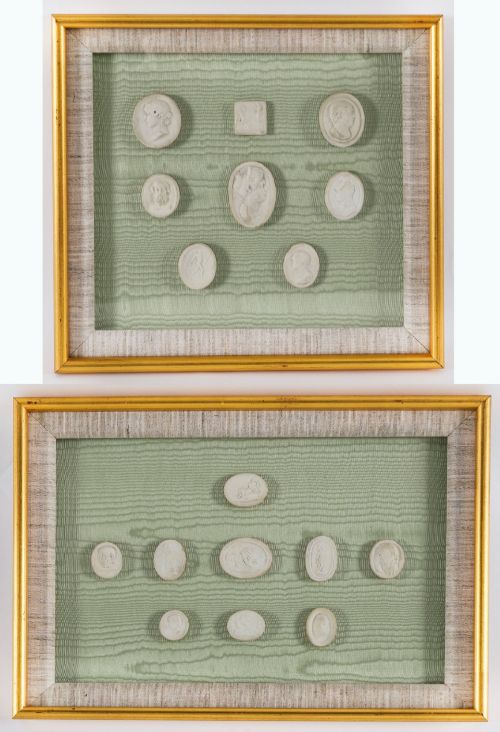
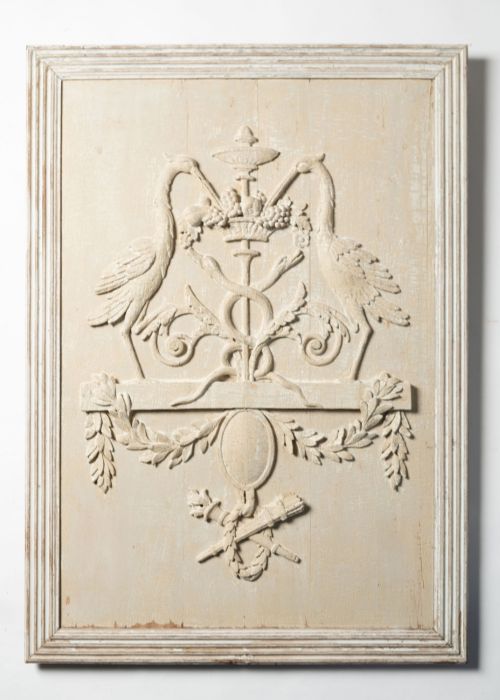
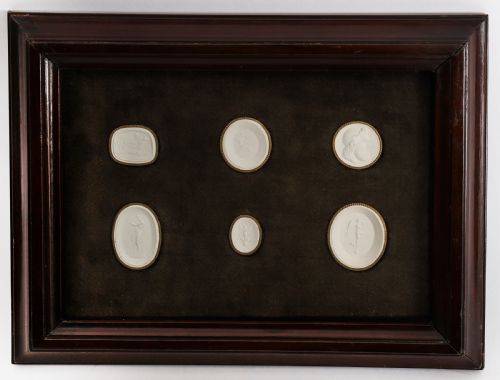
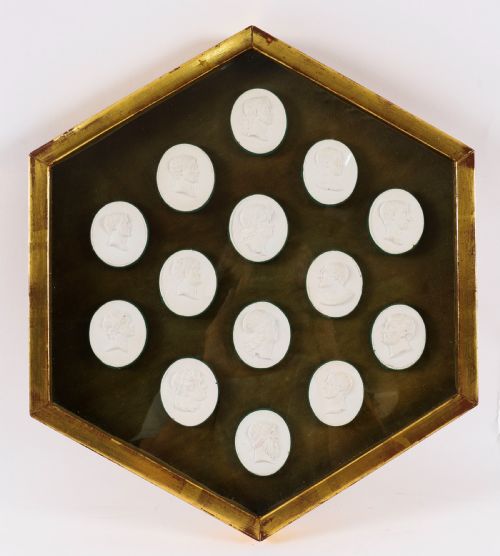
The pieces encountered on this page span several centuries, with a strong representation of 18th-century architectural engravings and 19th-century plaster casts. Buyers frequently find framed sets of classical intaglios alongside carved wooden panels and bronze plaques depicting mythological figures.
Forms range from intimate framed collections of plaster medallions to large wall friezes and trompe l'oeil paintings of cherubs. The diversity of objects allows collectors to choose between flat graphic works on paper and three-dimensional sculptural reliefs.
Materials and methods of construction
Plaster, marble dust, and carved wood form the primary three-dimensional mediums for these reliefs. Makers cast plaster into detailed moulds or carved wooden panels by hand to achieve crisp classical profiles and figures.
Graphic works utilise paper, ink, and engraving techniques, often produced by pressing inked plates to record architectural details and mythological scenes. Frames incorporate glass, velvet backgrounds, and gilt wood to present and protect the works.
Neoclassical Relief Art Retail Price Guide 2026
Typical asking prices for neoclassical relief art among the pieces listed under this phrase on Sellingantiques today, from the lower quarter to the upper quarter. They describe what is for sale here now, not the wider market.
Winged gods, architectural serpents, and playful cherubs gaze out from these centuries-old walls.
Factors determining quality
The quality of presentation and framing significantly influences the character of these items. Pieces mounted within period velvet-lined frames or retaining original maker labels demonstrate greater historical integrity.
Giovanni Liberotti·James Basire·Edward Rooker·J. Brown
The Neoclassical Relief Art Glossary
- Intaglio
- An engraved gem or cast where the design is incised below the surface. These are frequently mounted in framed collections originating from the Grand Tour.
- Frieze
- A long, narrow band of sculpture decorating a wall or architectural feature. Plaster examples often depict classical processions or mythological figures.
- Engraving
- A printmaking technique where an image is incised into a metal plate with a cutting tool. 18th-century architectural plates often record ancient Athenian monuments.
- Plaster cast
- A reproduction of a sculptural work made by pouring plaster into a mould. 19th-century examples capture the appearance of ancient marble carvings.
- Trompe l'oeil
- An art technique that creates an optical illusion of three-dimensional space. Painted panels in this style depict figures such as cherubs playing against flat backgrounds.
Neoclassical Relief Art: Frequently Asked Questions
What are grand tour intaglios?
Grand tour intaglios are small carved gems or plaster casts collected by travellers during educational tours of Europe. They typically show classical busts, mythological scenes, and ancient architecture.
Collectors mounted these miniature reliefs in custom wooden boxes and frames for display in libraries and studies during the 18th and 19th centuries.
How should I hang heavy plaster reliefs?
Heavy plaster reliefs and wooden panels require secure wall fixings distributed evenly across the weight of the frame. Wall plugs and proper screw placement into studs ensure safe support for dense materials.
Because plaster is brittle, avoid hanging these pieces in areas prone to vibration or direct temperature fluctuations.
Are architectural engravings original 18th-century prints?
Architectural engravings from this period are printed directly from copper plates produced to record ancient structures. Works such as those documenting the antiquities of Athens capture archaeological discoveries of the era.
Paper quality, plate marks, and typographic details help confirm the period origin of these graphic works.
How do I care for framed plaster art?
Framed plaster art requires stable indoor humidity and protection from direct sunlight to prevent discolouration of the plaster and backing materials. Glazing protects the delicate surfaces from dust and accidental touch.
Cleaning should be limited to dusting the exterior frame gently with a soft dry cloth.