








Neoclassical Painted Dresser
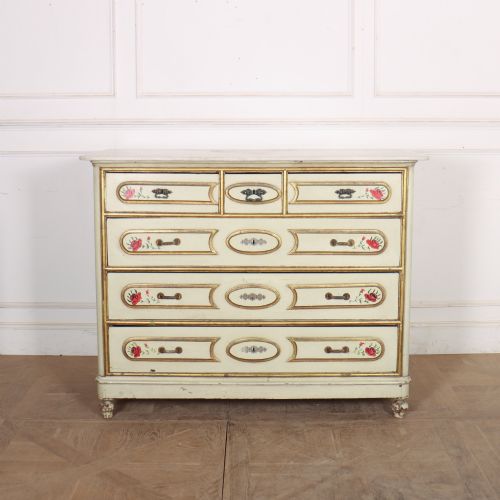
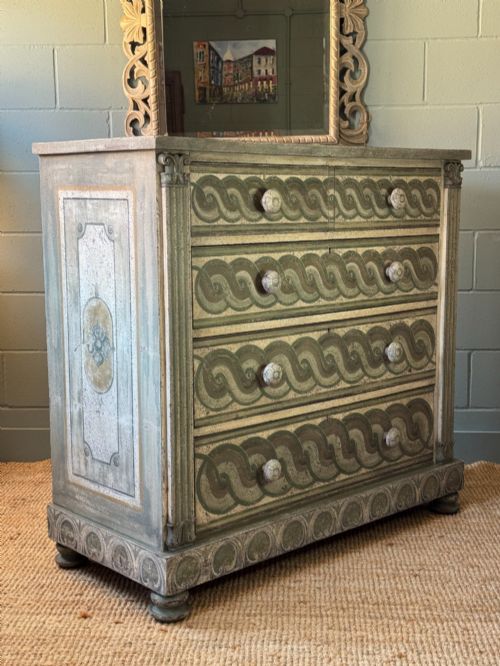
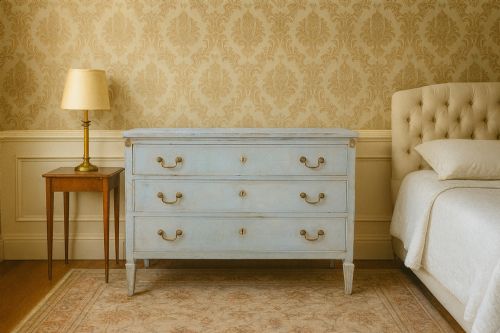
These neoclassical painted dresser examples offer restrained classical lines and soft decorative finishes, bringing continental elegance to a room.
Neoclassical Painted Dresser
A neoclassical painted dresser typically takes the form of a chest of drawers or commode, originating from various European centres during the eighteenth and nineteenth centuries. You encounter Swedish Gustavian pieces alongside Italian, Dutch, Spanish, and French examples.
The aesthetic relies on symmetry, muted colour palettes, and classical motifs applied to timber carcasses. Most items on this page span the eighteenth and nineteenth centuries, with occasional twentieth-century revival pieces.
Materials and construction
Construction relies on traditional cabinet-making timbers such as oak, pine, and general wood carcasses prepared to receive layered paint and gesso decoration. Surface finishes range from distressed painted wood to bleached walnut and marble tops.
Brass hardware often provides contrasting detail against the painted surfaces, while carved elements draw directly on classical architectural vocabulary.
Neoclassical Painted Dresser Retail Price Guide 2026
Typical asking prices for neoclassical painted dresser among the pieces listed under this phrase on Sellingantiques today, from the lower quarter to the upper quarter. They describe what is for sale here now, not the wider market.
The listings span the eighteenth, nineteenth, and early twentieth centuries, incorporating materials such as marble, brass, gesso, and painted pine.
Determining quality
Quality reveals itself in the restraint of the proportions and the handling of the painted surface over time. Original paint layers and authentic surface patination hold significantly more appeal than later re-paintings.
The crispness of the carving and the integration of marble tops or brass fittings distinguish finer workshop production from standard domestic furniture.
The Neoclassical Painted Dresser Glossary
- Commode
- A low chest of drawers or cabinet, frequently associated with eighteenth-century French and Italian neoclassical design. The form usually stands on relatively tall legs.
- Gustavian
- The Swedish interpretation of neoclassical style, characterised by lighter proportions, pale paint finishes, and restrained classical detailing. This style emerged during the late eighteenth century.
- Gesso
- A plaster-like mixture applied to wood surfaces as a base for paint or gilding. It allows for crisp decorative mouldings.
- Breakfront
- A piece of furniture whose central section projects forward from the flanking sections. This architectural arrangement adds depth and visual rhythm to commodes.
Neoclassical Painted Dresser: Frequently Asked Questions
Where were these dressers made?
The pieces originate from across Europe, with strong representation from Sweden, Italy, France, Spain, and the Netherlands during the eighteenth and nineteenth centuries.
Each regional workshop adapted neoclassical design principles using locally available timbers and distinct decorative painting traditions.
Are the paint finishes original?
Surface finishes vary between original historic paint layers, patinated historic schemes, and later decorative updates applied during subsequent revival periods.
Examining the wear patterns and the interaction between the paint and the underlying wood helps determine the age of the surface.
How do I care for a painted commode?
Keep the piece away from direct sunlight and significant temperature fluctuations to protect the timber carcass and the historic paint layer.
Dust gently with a dry, soft cloth and avoid chemical cleaning products that might damage the surface.
What is the difference between Gustavian and French styles?
Gustavian pieces from Sweden favour a more austere, pale palette with simplified classical motifs suited to Nordic interiors.
French empire and chateau pieces tend to display heavier proportions, richer materials like bleached walnut, and more assertive decorative brass mounts.