



Neoclassical Lion Statues
Neoclassical lion statues bring scholarly classical dignity and imposing presence to a room, drawing directly on ancient Roman and Venetian sculpture traditions.
Neoclassical Lion Statues
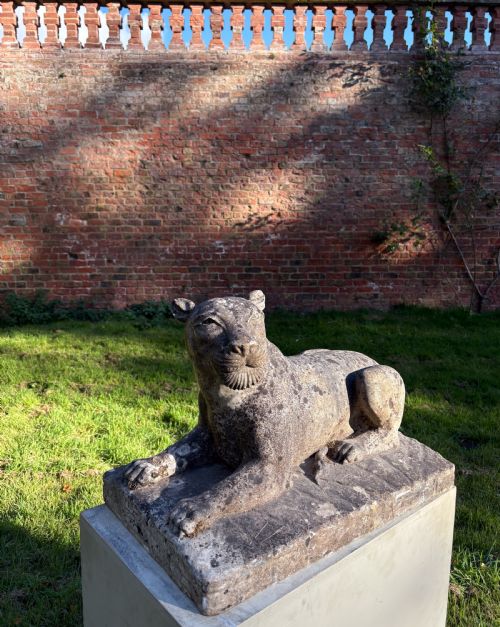
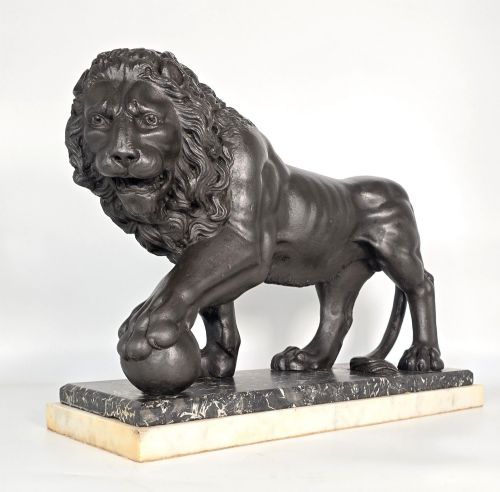
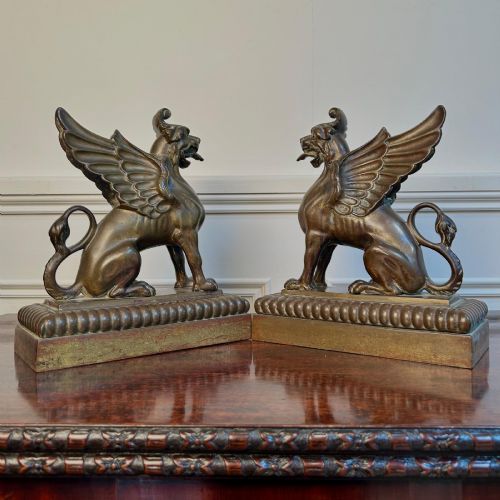
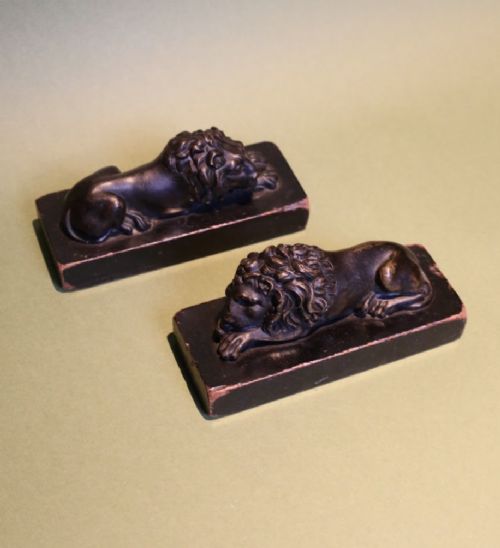
When you search for neoclassical lion statues, you encounter sculptural works that reproduce or reinterpret ancient models associated with the Grand Tour and classical antiquity. These pieces draw heavily on famous prototypes such as the Medici lions, the Canova lions, and the winged lion of Saint Mark.
The versions most commonly met on this page date from the nineteenth and early twentieth centuries, spanning the Georgian, Victorian, and later periods. They manifest primarily as pairs of bronze or marble figures, often mounted on plinths or bases.
Forms range from mantel sculptures and desk models to monumental garden statues and fountain heads. They reflect the nineteenth-century passion for classical archaeology and Italian travels.
Materials and construction
The makers of these pieces utilised durable materials such as bronze, white marble, stone, and serpentine, frequently employing patinated metal for cast works. Bronze figures were cast to capture fine musculature and facial detail, then finished with varying patinations.
Marble and stone sculptures were carved by hand, utilising solid blocks to render complex figures and plinths. Serpentine and coloured marbles provided contrasting bases for bronze models.
Many bronzes rely on careful casting techniques that preserve the texture and form of the original monumental prototypes found in Italy.
Neoclassical Lion Statues Retail Price Guide 2026
Typical asking prices for neoclassical lion statues among the pieces listed under this phrase on Sellingantiques today, from the lower quarter to the upper quarter. They describe what is for sale here now, not the wider market.
Listings feature works in bronze, marble, stone, and serpentine, spanning the Georgian period through the early twentieth century.
Judging quality in neoclassical sculpture
The quality of the marble or stone base contributes significantly to the overall presence of the object, with integrated plinths and matched pairs demonstrating greater sculptural ambition. Weight, proportion, and the depth of the patination further distinguish higher-grade works from later, simplified reproductions.
The Neoclassical Lion Statues Glossary
- Grand Tour
- A traditional trip through Europe, chiefly Italy, undertaken by upper-class young men in the eighteenth and nineteenth centuries to study the arts. Travellers frequently acquired small bronzes and sculptures as souvenirs.
- Medici lions
- A pair of marble lion sculptures, one antique and one sixteenth-century addition, located in the Loggia dei Lanzi in Florence. They served as the primary model for numerous neoclassical reproductions.
- Canova lions
- Sculptures designed by the neoclassical artist Antonio Canova for the tomb of Pope Clement XIII in Saint Peter's Basilica. These recumbent lions became celebrated subjects for nineteenth-century Grand Tour bronze casters.
- Capitoline lion
- An antique marble sculpture in the Capitoline Museums in Rome depicting a lion attacking a stag. Replicas of this subject were popular among collectors of classical antiquities.
- Patinated metal
- Metal that has been treated with chemical solutions or heat to alter its surface colour and appearance. This finish protects the metal and simulates age.
Neoclassical Lion Statues: Frequently Asked Questions
What are neoclassical lion statues?
These sculptures are nineteenth-century and early twentieth-century decorative and fine art objects modeled after famous classical monuments in Italy. They range from small desk models to large garden figures.
Created during periods of renewed interest in classical antiquity, they served as both decorative furnishings and tangible records of European travel.
How were these lion statues used historically?
Historically, these figures served as decorative accents in libraries, studies, and drawing rooms, often displayed in symmetrical pairs on mantels or furniture. Larger examples stood in hallways, vestibules, or gardens.
They demonstrated the owner's classical education, refined taste, and familiarity with the cultural sites of Italy.
How do I date a nineteenth-century bronze lion?
Dating relies on examining the quality of the casting, the nature of the patination, and the material of the base. Nineteenth-century pieces often exhibit hand-finished details and patinas that reflect period foundry practices.
Compares closely with dated Grand Tour records and the specific types of marble used for the plinths.
How should I care for marble and bronze sculptures?
Bronze sculptures require periodic dusting with a soft cloth and occasional light application of microcrystalline wax to protect the patina. Avoid abrasive cleaners or moisture.
Marble pieces should be cleaned gently with a dry or barely damp cloth, taking care to avoid harsh chemicals that can etch or stain the stone surface.