

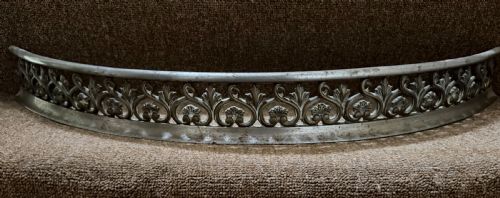


Neoclassical Fire Guard
A neoclassical fire guard protects the hearth while bringing classical order and symmetry to the room.
Neoclassical Fire Guard
A neoclassical fire guard stands before the hearth to block sparks and embers while framing the fireplace with formal design. Buyers searching for a neoclassical fire guard will encounter items dating from the Georgian period through the Victorian era and up to nineteen-ten.
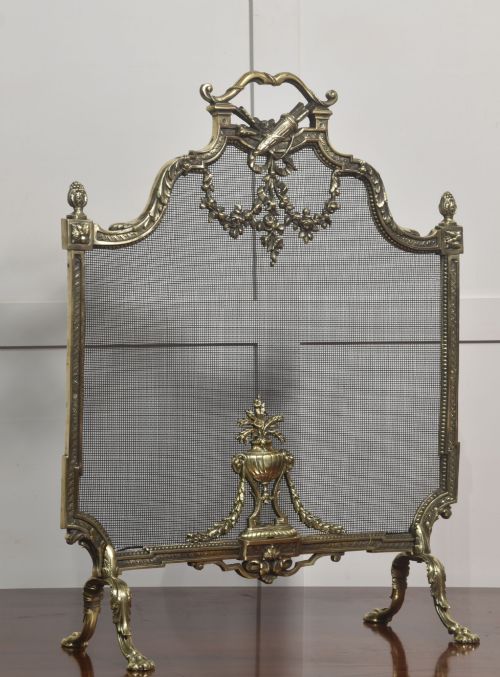
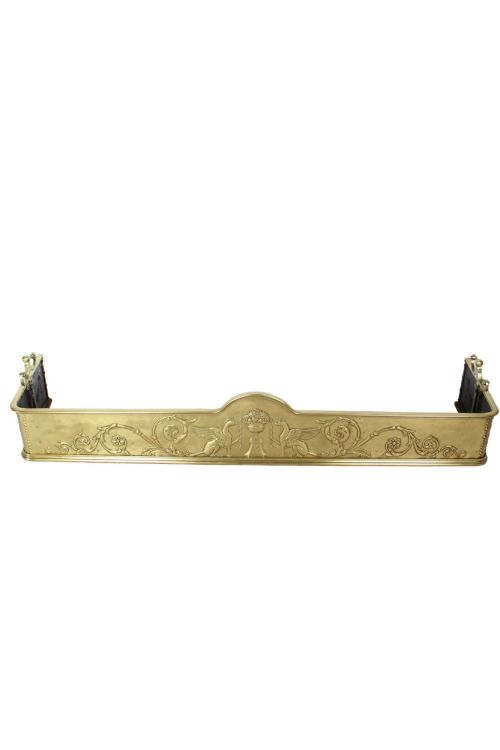
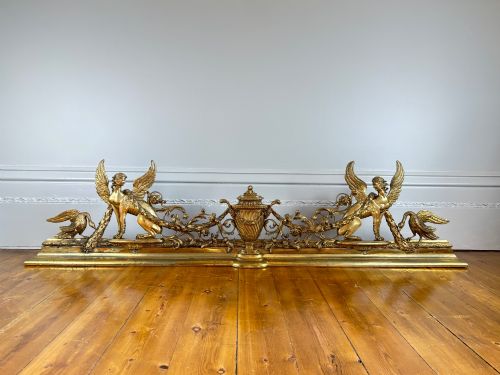
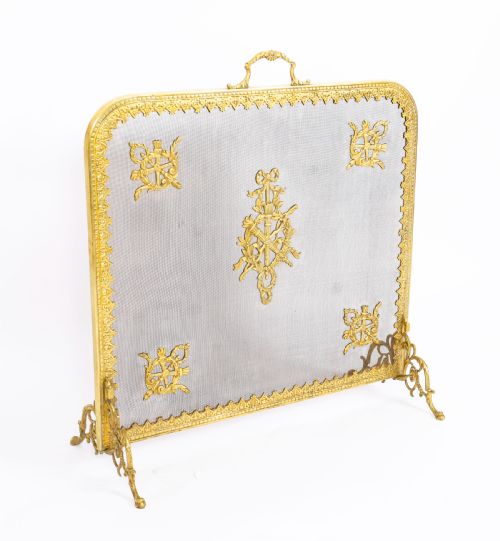
The selection here includes both low fireplace fenders and upright fire screens designed for the hearth. These pieces draw on French Louis XVI, French Empire Revival, and Victorian neoclassical revival styles.
Most examples take the form of metal fenders or folding screens positioned to protect the room from stray ash. They range from compact domestic hearth accessories to large architectural fenders measuring over four feet in length.
Materials and construction
Metalworking forms the basis of every piece, utilising brass, polished brass, gilt brass, gilt bronze, ormolu, steel, iron, and wire mesh. Smiths and founders cast, forged, and pierced these metals to achieve crisp classical motifs.
Gilding and polishing highlight the metallic surfaces, while wire mesh provides the practical barrier needed for a working hearth. Makers combined heavier bronze or iron frames with delicate openwork brass mesh and decorative mounts.
Materials in these listings span brass, gilt bronze, ormolu, steel, iron, and wire mesh.
Assessing quality
Quality reveals itself in the crispness of the cast ornamentation and the weight of the metal used in the frame. Finer examples display deeply chased classical trophies and well-defined classical motifs rather than soft, shallow casting.
The choice of material also marks the difference between standard production and exceptional work, with heavy gilt bronze and polished steel representing the upper tier of craftsmanship.
E F Caldwell New York
The Neoclassical Fire Guard Glossary
- Fender
- A low metal guard placed on the hearth in front of an open fire. It keeps rolling logs and embers contained.
- Ormolu
- Gilded bronze applied to decorative hardware and furniture mounts. This technique creates a rich golden finish on metalwork.
- Serpentine
- A curved line or shape featuring a convex centre flanked by concave sides. This profile is frequently seen on Georgian hearth fenders.
- Trophy
- A decorative grouping of arms, musical instruments, or agricultural symbols used as a classical motif. These arrangements often appear on French revival screens.
Neoclassical Fire Guard: Frequently Asked Questions
What is a neoclassical fire guard?
A neoclassical fire guard is a decorative metal barrier placed before a fireplace to stop sparks from reaching the floor. These items use classical symmetry, urns, and foliate scrolls taken from ancient Greek and Roman design.
They appear as low hearth fenders or upright folding screens made of brass, bronze, steel, or wire mesh. Each piece balances practical hearth safety with formal decorative style.
How do I measure for a fire fender?
Measure the width of your fireplace opening and the hearth stone where the fender will rest. Leave enough clearance on all sides so the metal piece sits squarely on the floor.
Check the depth from the front of the fireplace surround outward into the room. This ensures the fender leaves adequate space for walking and tends to the fire safely.
What is the difference between a fender and a screen?
A fender is a low frame that sits directly on the hearth around the base of the fireplace. It primarily stops rolling logs and direct embers from escaping the hearth.
A screen stands upright to block radiant heat and flying sparks across the entire opening. Many designs combine a low fender base with wire mesh panels for complete hearth protection.
How do I clean polished brass and bronze?
Dust the metal surface regularly with a soft dry cloth to prevent soot buildup. Avoid harsh chemical cleaners that strip historical patinas and protective finishes from antique metalwork.
Consult a specialist before applying metal polish to gilt bronze or ormolu surfaces. These delicate finishes require gentle care to preserve their original appearance.