

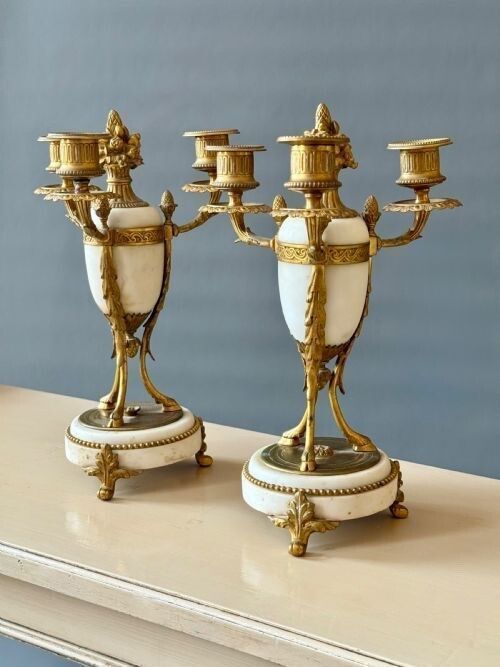


Neoclassical Bronze Decor
Neoclassical bronze decor brings classical proportion and mythological weight into a room, offering enduring forms rooted in antiquity.
Neoclassical Bronze Decor
Neoclassical bronze decor encompasses ornamental metalwork and sculptures inspired by ancient Greek and Roman design. The selection includes candelabra, fireplace fenders, tazzas, candlesticks, wall plaques, decorative urns, and portrait busts.
Most examples date from the nineteenth century, drawing heavily on French Empire, Louis XVI, and Grand Tour aesthetics. Pieces frequently pair cast bronze with white marble, sienna marble, olive wood, or gilt plaster bases.
Materials and construction
Objects are formed from cast bronze, frequently finished with fire gilding or ormolu to create a bright golden surface. Details are sharply chased by hand after casting to define drapery, hair, and architectural motifs.
Marble plinths in white or sienna provide heavy, contrasting foundations for candlesticks and vases, while olive wood serves as a warm natural base for animal figures.
Neoclassical Bronze Decor Retail Price Guide 2026
Typical asking prices for neoclassical bronze decor among the pieces listed under this phrase on Sellingantiques today, from the lower quarter to the upper quarter. They describe what is for sale here now, not the wider market.
Materials recorded across the inventory include gilt bronze, ormolu, sienna marble, white marble, olive wood, and gilt plaster.
Judging quality
The integration of secondary materials dictates overall refinement, seen in the precise fitting of bronze mounts onto polished sienna and white marble plinths.
E F Caldwell New York
The Neoclassical Bronze Decor Glossary
- Ormolu
- Gilt bronze, where finely ground gold is amalgamated with mercury and applied to a bronze base by heat. This historical technique produces a durable, rich metallic lustre.
- Tazza
- A shallow saucer-shaped vessel raised on a stem and foot, frequently utilised for display in classical interiors. These pieces often feature classical relief decoration.
- Grand Tour
- Souvenirs and works of art acquired by wealthy travellers exploring the cultural sites of Italy and Europe during the nineteenth century. These items typically replicate ancient sculptures and architectural bronzes.
- Caryatid
- A sculpted female figure serving as an architectural support or decorative shaft. They frequently appear supporting the stems of nineteenth-century candlesticks.
- Sienna marble
- A decorative yellow marble quarried in Italy, featuring deep purple or brown veining. It provides a luxurious contrasting base for dark bronze mounts.
Neoclassical Bronze Decor: Frequently Asked Questions
What is neoclassical bronze decor?
Neoclassical bronze decor includes items such as candlesticks, tazzas, fenders, and busts created during the nineteenth century in the classical revival style.
These pieces draw inspiration from ancient Greek and Roman art, utilising materials like bronze, ormolu, and marble to bring historical character to interior spaces.
How were these decorative items used?
Many of these objects served practical functions in nineteenth-century homes, such as providing illumination through candelabra and candlesticks or protecting hearths with heavy fenders.
Other pieces, including Grand Tour vases, wall masks, and portrait busts, were purely ornamental displays reflecting classical education and travel.
How do you date nineteenth-century bronzes?
Dating relies on examining the casting technique, the sharpness of the hand-chasing, and the character of the associated materials like marble and wood.
Nineteenth-century pieces often reflect specific revivals such as the French Empire period or Grand Tour aesthetic, aligning with the stylistic markers recorded in the evidence.
What materials are typical for these pieces?
The primary material is cast bronze, frequently enhanced with gilt finishes or ormolu to highlight decorative details.
Secondary materials commonly include white marble, sienna marble, olive wood bases, and painted elements that support or complement the central bronze sculpture.