






Needlepoint Top Stool
These needlepoint top stool examples combine sturdy timber frames with hand-worked textile upholstery, offering a practical seat and a decorative touch.
Needlepoint Top Stool
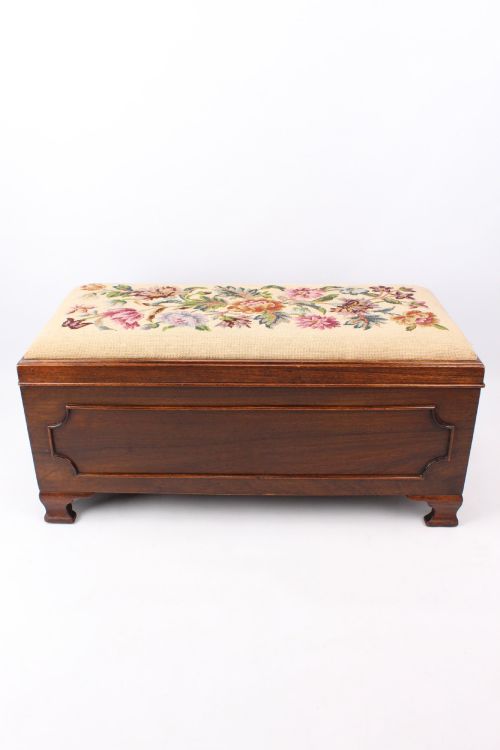
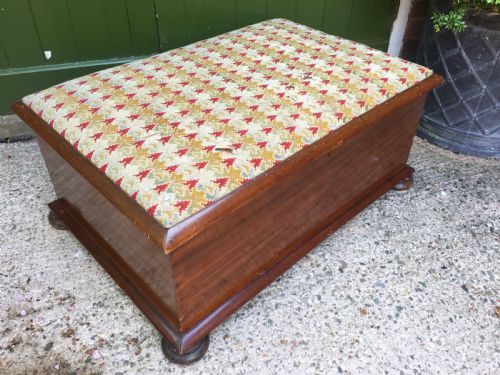
When you search for a needlepoint top stool, you are looking at low seating furniture featuring stitched textile tops resting upon wooden bases. These items serve as footstools, dressing table seats, and small ottomans.
The versions you are most likely to meet on this page hail from the nineteenth century, including Victorian and Regency periods, alongside later early twentieth-century interpretations of older styles.
Forms range from compact dressing stools in walnut and mahogany to larger ottomans and Scottish Baronial pieces. Frames follow traditional English, Chippendale, Queen Anne, and Georgian design influences.
How they were made
Frames are constructed from solid hardwoods such as mahogany, walnut, and rosewood, occasionally ebonised or painted. Joinery techniques secure the structural integrity of these low-slung seating forms.
Upholstery involves durable textile tops worked in wool, often utilising tapestry, gros-point, or needlepoint techniques. These covers are stretched tightly over padded seat foundations and secured to the wooden frames.
Needlepoint Top Stool Retail Price Guide 2026
Typical asking prices for needlepoint top stool among the pieces listed under this phrase on Sellingantiques today, from the lower quarter to the upper quarter. They describe what is for sale here now, not the wider market.
Design styles represented here include Victorian, Regency, Georgian, Chippendale, and Scottish Baronial.
What varies in quality
The crispness of the timber carving and the sophistication of the frame's silhouette set finer examples apart from simpler utilitarian pieces. Dense hardwoods like mahogany and rosewood indicate superior cabinet-making ambition.
The tightness, complexity, and visual depth of the wool needlework dictate the artistic merit of the top. Original textile work preserved in good condition commands greater attention than later replacement covers.
The Needlepoint Top Stool Glossary
- Needlepoint
- A type of counted thread embroidery stitched onto a stiff open-weave canvas. It forms the decorative patterned seat covers seen on these stools.
- Gros-point
- A coarse needlepoint stitch worked on canvas using heavy wool yarn. This technique produces durable, textured geometric or floral patterns.
- Ottoman
- A low, upholstered seat or footstool without a back or arms. Larger examples often function as coffee tables or centrepieces.
- Scottish Baronial
- A nineteenth-century revival style drawing on medieval Scottish architecture and furniture motifs. It yields robust, imposing wooden frames.
- Ebonised
- Timber treated with a chemical stain or finish to imitate ebony. This process gives the wood a deep black, uniform appearance.
Needlepoint Top Stool: Frequently Asked Questions
Where do I put a needlepoint top stool?
These versatile seats fit easily at the foot of a bed, beside a fireplace, or in front of a dressing table. Smaller versions work well as movable footstools in a living room.
Larger ottoman formats can sit centrally in a room to function as low coffee tables or extra casual seating when guests arrive.
How do I clean the wool top?
Gently vacuum the needlepoint surface using a low suction setting with a soft brush attachment. This removes trapped dust without pulling the wool fibres.
Avoid soaking the textile or applying harsh chemical cleaners, as moisture can damage both the wool and the hidden internal padding.
Are these stools sturdy enough to sit on?
Most examples are built from solid hardwoods like mahogany and walnut, making them structurally sound for regular sitting or propping feet. Their low centre of gravity adds stability.
Heavier ottomans and larger frames handle daily use comfortably, though delicate decorative dressing stools are better suited for light sitting.
How do I tell a Victorian stool apart from a Regency one?
Regency pieces often display classical proportions with refined rosewood frames influenced by ancient Greek and Roman furniture. They lean towards sleek lines and subtle decorative restraint.
Victorian examples tend to be heavier, featuring darker walnut or mahogany timbers, more exuberant carving, and occasionally ebonised finishes or Scottish Baronial influences.