



Needlepoint Salon Chair
A needlepoint salon chair brings a textural layer of hand-stitched tapestry and carved nineteenth-century timber into a modern interior.
Needlepoint Salon Chair
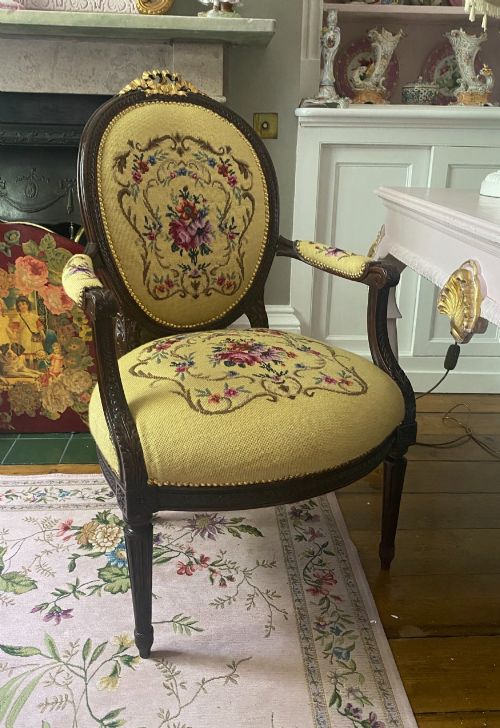
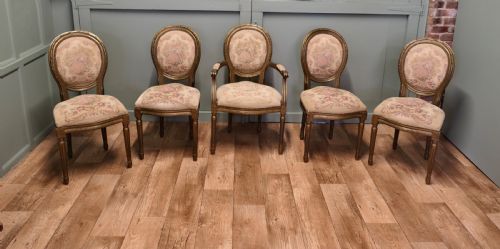
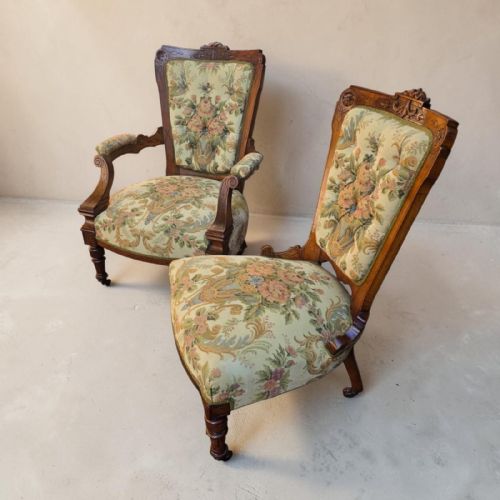
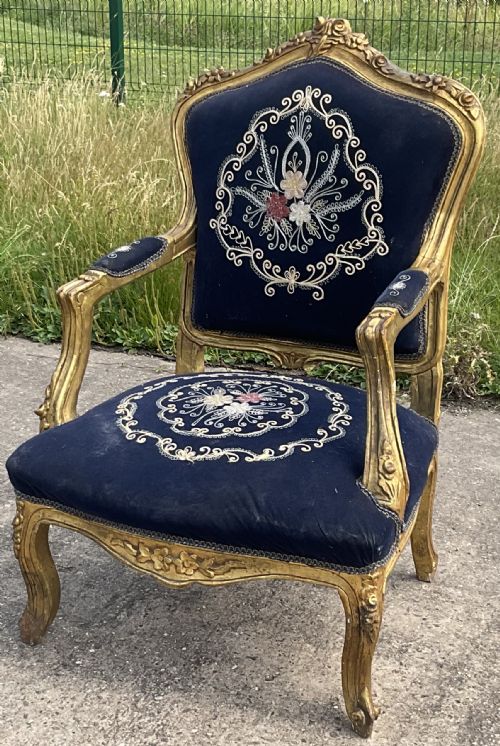
When you search for a needlepoint salon chair, you are looking at nineteenth-century seating upholstered in hand-stitched tapestry, spanning the Victorian and Edwardian eras. These pieces include open armchairs, fauteuils, spoonback chairs, and side chairs designed for reception rooms and parlours. Walnut, mahogany, and rosewood frames dominate the selection, often carrying French revival or rococo influence through carved woodwork.
The version you are most likely to meet on this page is a Victorian or Edwardian walnut salon armchair featuring floral or figurative needlepoint panels. French-inspired frames appear frequently, ranging from ebonized side chairs to giltwood open armchairs with detailed tapestry upholstery. These seats served as decorative yet functional furniture in period drawing rooms and boudoirs.
How they were made
Makers constructed the frames of these chairs using dense hardwoods such as walnut, mahogany, rosewood, and kingwood, occasionally incorporating giltwood, brass, or ormolu mounts. Joinery relied on traditional pinned mortise and tenon construction to ensure rigidity across slender cabriole and turned legs.
The upholstery consists of hand-stitched tapestry and needlepoint panels fixed over traditional stuffing and webbing. Frames exhibit hand carving, ebonising, or painted finishes, reflecting the prevalent French and English revival styles of the nineteenth and early twentieth centuries.
Needlepoint Salon Chair Retail Price Guide 2026
Typical asking prices for needlepoint salon chair among the pieces listed under this phrase on Sellingantiques today, from the lower quarter to the upper quarter. They describe what is for sale here now, not the wider market.
Materials across these listings include walnut, mahogany, giltwood, and brass, paired with hand-stitched tapestry and fabric upholstery from the nineteenth and early twentieth centuries.
What varies in quality
The quality of a needlepoint salon chair depends heavily on the crispness of the timber carving and the density of the hand-stitched tapestry work. Superior examples exhibit deeply sculpted frames in solid walnut or mahogany rather than simpler turned mouldings.
Attention to detail in the needlepoint itself sets finer pieces apart, showing subtle colour shading and tight, even stitching that withstands close inspection. The integration of quality framing materials, such as ormolu mounts or giltwood accents, further distinguishes the top tier of production.
Holland and Sons
The Needlepoint Salon Chair Glossary
- Needlepoint
- A type of canvas work embroidery stitched by hand using yarn to create pictorial or floral patterns. It forms the primary decorative upholstery seen on these salon chairs.
- Fauteuil
- An open-arm armchair with upholstered back and seat, originating in France. The wooden armrests typically feature padded elbow rests.
- Ormolu
- Gilded bronze mounts applied to furniture for decorative effect. This technique appears frequently on French-influenced nineteenth-century pieces.
- Spoonback
- A padded chair back shaped like the bowl of a spoon to fit the human spine. This form is particularly common in mid-nineteenth-century walnut seating.
- Ebonisation
- A chemical or paint process applied to timber to imitate ebony. It creates a dense black finish popular on Victorian salon furniture.
Needlepoint Salon Chair: Frequently Asked Questions
Where did people use needlepoint salon chairs?
These chairs originally stood in Victorian and Edwardian parlours, drawing rooms, and reading spaces where guests were received. They functioned as occasional seating rather than heavy, everyday lounge furniture.
Their relatively compact scale allowed them to be moved easily around a room to facilitate conversation or musical performances.
How do I care for antique needlepoint upholstery?
Protect the hand-stitched panels by keeping the chair out of direct sunlight to prevent the wool and silk threads from fading. Regular, gentle vacuuming through a mesh screen helps remove dust without damaging the old fibres.
Avoid placing these chairs in damp rooms, as moisture weakens both the internal stuffing and the wooden frame joints.
Are these chairs comfortable for daily sitting?
While usable for sitting, nineteenth-century salon chairs were built with upright postures in mind rather than deep lounging. The original padding materials are firmer than modern foam cushioning.
They work well for desk use, reading corners, or brief periods of sitting in a living space.
How do I distinguish Victorian from Edwardian chairs?
Victorian pieces, dating from the mid to late nineteenth century, often feature darker woods, heavier carving, and ebonised finishes. Walnut and rosewood frames with spoonback designs are typical of this period.
Edwardian chairs from around 1900 tend to use lighter mahogany frames, sometimes with simpler satinwood inlay or more restrained carving styles.